 Odette Caplan
$7.25/hr. Seventeen years. The federal minimum wage hasn't moved since July 24, 2009 — and neither has Texas's. While New Mexico raised its floor to $12.00, Arkansas to $11.00, and California to $16.50, the Texas minimum wage in 2026 remains exactly where it landed during the first year of the Obama administration. This timeline traces how Texas arrived at that number, what the neighboring state comparison looks like, and what — if anything — could change it in the near future.
2009: The Last Federal Minimum Wage Increase
July 24, 2009: The federal minimum wage increased to $7.25 per hour under the Fair Minimum Wage Act of 2007 (Public Law 110-28), signed by President Bush in 2007 with a phased implementation. This was the third and final step of a three-year increase from $5.15/hr (2006).
Texas, which has no separate state minimum wage law, automatically adopted the federal rate. The Texas Minimum Wage Act (Texas Labor Code, Chapter 62) sets the state minimum wage at the federal rate — but does not add to it. When the federal rate is $7.25, Texas's rate is $7.25.
What $7.25/hr means in 2026 purchasing power: Adjusted for inflation using the Consumer Price Index, $7.25 in 2009 is equivalent to approximately $10.45 in 2026 dollars [Bureau of Labor Statistics, CPI-U, April 2026]. A worker earning the Texas minimum wage today earns roughly 31% less in real terms than a worker earning the same nominal wage in 2009.
2012-2019: The "Fight for $15" Movement and Texas Non-Response
As the "Fight for $15" movement gained momentum nationally — winning major increases in California, New York, Washington, and dozens of cities — the Texas Legislature repeatedly declined to act.
- 2013: Seattle becomes the first major city to legislate a path to $15/hr. Texas does not respond.
- 2015: California and New York announce $15/hr minimum wage trajectories.
- 2016-2019: Multiple Texas cities (Austin, Dallas, San Antonio) attempt local minimum wage ordinances. Texas courts and the Legislature affirm that state law preempts local wage mandates.
The Texas Minimum Wage Act's preemption clause (Texas Labor Code §62.0515) bars cities from setting minimum wages above the state floor. This was tested and affirmed in court multiple times during this period.
2026: Texas Minimum Wage in Regional Context
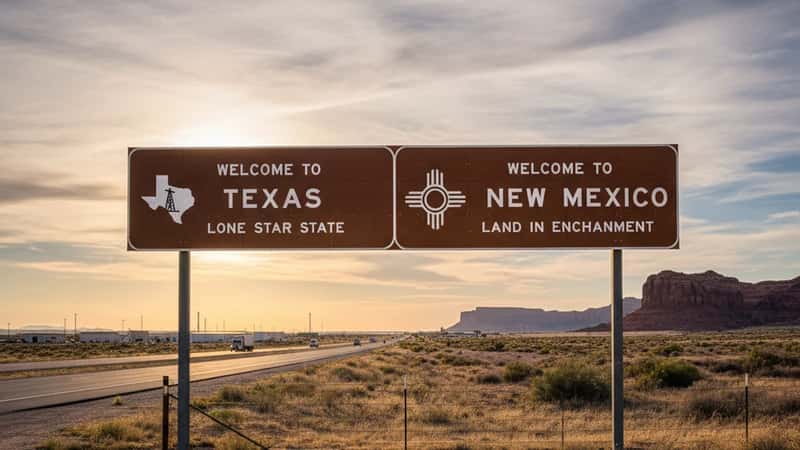
As of April 2026, Texas's $7.25/hr minimum wage is one of the lowest in the nation among states with significant populations. All four of Texas's nearest neighbors have either the same federal floor (Oklahoma) or a notably higher rate:
| State | 2026 Minimum Wage | Last Increase | Tipped Minimum |
|---|---|---|---|
| Texas | $7.25/hr | 2009 (federal) | $2.13/hr |
| Oklahoma | $7.25/hr | 2009 (federal) | $2.13/hr |
| New Mexico | $12.00/hr | 2024 | $3.00/hr |
| Arkansas | $11.00/hr | 2023 | $2.63/hr |
| Louisiana | $7.25/hr | 2009 (federal) | $2.13/hr |
For comparison, the two states that bookend America's minimum wage spectrum:
- California: $16.50/hr general (fast food workers covered under AB 1228: $20.00/hr) [California DIR, 2026]
- Georgia and Wyoming: $5.15/hr (state rate, but FLSA $7.25 applies to covered workers)
The Case of Maria: A Minimum Wage Worker in Two States
Maria is a 29-year-old food prep worker. She earns the minimum wage. In 2026:
- If she works in El Paso, Texas: $7.25/hr → $290 gross for a 40-hour week → $15,080/year before taxes
- If she works in Albuquerque, New Mexico (250 miles away): $12.00/hr → $480 gross for a 40-hour week → $24,960/year before taxes
For the same work, same hours, and same cost of living pressure, Maria earns $9,880 less per year on the Texas side of the border. New Mexico's higher minimum wage is partly designed to attract and retain workers from border communities in exactly this situation [New Mexico DOL, 2024].
Key fact: Texas's minimum wage gap relative to New Mexico is now $4.75/hr — the largest it has ever been. In 2009, when both states adopted the federal rate, the gap was zero.
The Tipped Wage: Texas at the Federal Floor
Texas's minimum cash wage for tipped employees — $2.13/hr — is the federal minimum established by the FLSA's tip credit provision. Texas has not modified it upward. Provided that tips bring the employee's total hourly compensation to at least $7.25, the $2.13 direct wage is lawful.
If tips are insufficient to reach $7.25 in any given workweek, the employer must make up the difference. This obligation is frequently violated — the DOL Wage and Hour Division consistently lists tip credit violations among the most common restaurant industry FLSA infractions [DOL WHD, 2026].
New Mexico eliminated the subminimum tipped wage entirely: all workers, including tipped employees, receive the full $12.00/hr floor as their direct wage, with tips on top. States taking this approach argue it reduces wage theft risk and administrative complexity; Texas employers argue the tip credit provides flexibility that supports restaurant and hospitality viability.
2026 and Beyond: Will the Texas Minimum Wage Change??
Federal route (most likely path): The Texas minimum wage increases automatically if Congress raises the federal minimum wage. Several bills — including the Raise the Wage Act — have proposed phased increases toward $17/hr, but none have cleared the Senate as of early 2026. A bipartisan infrastructure on wage legislation remains elusive.
State legislative route (historically unlikely): Texas Republicans in the Legislature have consistently opposed state minimum wage increases above the federal floor, citing concerns about small business impact, employment effects, and market distortions. No minimum wage bill has advanced in the Texas Legislature in recent sessions.
Local route (legally blocked): Texas Labor Code §62.0515 and HB 2127 (2023) preempt local minimum wage ordinances. Austin and Dallas cannot set their own floors above the state rate, regardless of local cost of living.
For workers in Texas, the practical 2026 reality is that the minimum wage floor is $7.25 — but many Texas employers, particularly in competitive urban markets (Austin, Houston, Dallas), offer starting wages significantly above that floor. The Texas unemployment rate of approximately 4.1% [TWC, March 2026] creates upward wage pressure in many sectors without legislative action.
For a comprehensive comparison across all 50 states, the state minimum wage laws comparison for 2026 provides current rates, indexed-wage structures, and increase timelines. For comparison with a more regulated labor market, New York Labor Law covers the New York approach, including the city-specific wage tiers that raise the New York City floor well above the statewide rate.
What Texas Minimum Wage Workers Can Do in 2026
For workers earning the minimum wage in Texas, the legal landscape in 2026 offers limited options for wage increases through legislation — but practical options remain:
- Track your hours and pay carefully: Minimum wage violations (underpayment, tip credit violations, overtime underpayment) are the most commonly enforced FLSA violations in Texas. If your effective hourly rate falls below $7.25, you have a federal claim
- File a DOL complaint for violations: The DOL Wage and Hour Division investigates minimum wage and tip credit violations at no cost
- Negotiate: Many Texas employers pay above minimum wage in practice — the labor market is competitive
- Consider state comparison: Texas workers near the New Mexico or Arkansas borders should be aware that a short relocation may substantially increase their legal wage floor
Legal Disclaimer: This article provides general information about Texas minimum wage law and federal FLSA requirements. It does not constitute legal advice. For guidance specific to your situation, contact the Texas Workforce Commission (twc.texas.gov) or the U.S. Department of Labor Wage and Hour Division (dol.gov/agencies/whd).
Texas Minimum Wage Timeline: 2006–2026
| Year | Federal Rate | Texas Rate | Key Event |
|---|---|---|---|
| 2006 | $5.15/hr | $5.15/hr | Baseline before Fair Minimum Wage Act |
| 2007 | $5.85/hr | $5.85/hr | Phase 1 increase |
| 2008 | $6.55/hr | $6.55/hr | Phase 2 increase |
| 2009 | $7.25/hr | $7.25/hr | Phase 3 — current rate established |
| 2012 | $7.25/hr | $7.25/hr | "Fight for $15" begins nationally |
| 2016 | $7.25/hr | $7.25/hr | CA/NY announce $15 increase trajectories |
| 2019 | $7.25/hr | $7.25/hr | TX local PSL ordinances struck down |
| 2023 | $7.25/hr | $7.25/hr | HB 2127 preempts local labor ordinances |
| 2026 | $7.25/hr | $7.25/hr | No change — 17th year at the same rate |
The Texas minimum wage has been unchanged for 17 consecutive years. Whether it changes depends almost entirely on federal legislative action: state pathways are closed by preemption, local pathways are closed by HB 2127, and the Texas Legislature has shown no appetite for independent action.
For workers in Texas's growing cities — where market wages often exceed the legal floor — this static minimum has less day-to-day impact than it does for rural Texas workers, seasonal laborers, and workers in industries where the minimum wage is the effective market rate (certain agricultural and domestic work categories).