 Davis Caesar
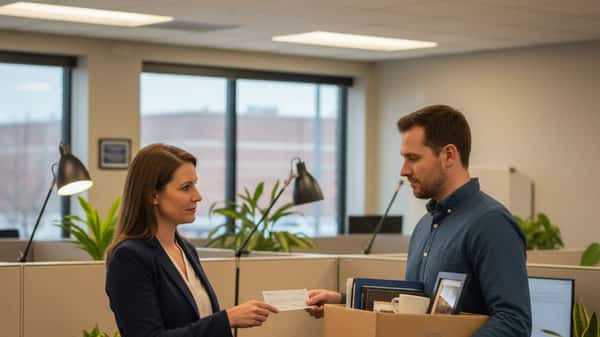
When Marcus Chen opened his second fast-casual restaurant in Overland Park in early 2024, he assumed minimum wage compliance would be the simplest part of running a multi-location Kansas business. He was wrong — not because the Kansas rate is complex (it mirrors the federal $7.25/hr), but because payroll systems, tip credit rules, and cross-state operations created compliance gaps his accountant hadn't flagged. By late 2024, he was facing a Kansas Department of Labor investigation triggered by a single employee complaint about a tip credit calculation error.
This case study reconstructs the compliance journey of a fictional but representative Kansas food service employer with two locations — one in Wichita, Kansas, and one in Kansas City, Kansas (KCK) — navigating minimum wage rules, tip credits, youth wages, and the operational changes required to achieve consistent compliance. Names are fictional; the compliance issues are common.
The Business: Two Locations, One Problem
"Marcus" operates two locations with 35 total employees — a mix of full-time managers (salaried, exempt), part-time servers (tipped, hourly), kitchen staff (non-tipped, hourly), and summer workers under 20. His Wichita location runs a standard payroll system. His KCK location was added mid-year with a separate timekeeping setup.
The compliance problems that emerged over 18 months:
- Tip credit miscalculation at the Wichita location (servers' tips not always bridging the gap to $7.25/hr)
- Youth wage overstay at the KCK location (two workers paid $4.25/hr youth minimum wage for more than 90 consecutive calendar days)
- Off-the-clock work — a closing manager (non-exempt despite title) routinely doing 30-45 minutes of post-close paperwork not recorded on timesheets
None of these were intentional violations. All three are among the most common FLSA and Kansas wage issues for food service operators.

Problem 1: Tip Credit — The Rule Kansas Follows (and How It Goes Wrong)
Kansas applies the federal FLSA tip credit without modification. Tipped employees (those who regularly receive more than $30/month in tips) may be paid a direct cash wage of $2.13/hr, provided their tips bring total compensation to at least $7.25/hr for every hour worked in the workweek.
The math must work on a workweek basis, not an annual average. If a server works 30 hours in a slow January week and earns only $50 in tips:
- Direct wage: 30 × $2.13 = $63.90
- Total compensation: $63.90 + $50 = $113.90
- Required minimum: 30 × $7.25 = $217.50
- Shortfall: $103.60 — this week violates the tip credit
Marcus's payroll system was applying the tip credit uniformly each week without checking whether tips were bridging the gap in low-traffic weeks. During the KDOL investigation, investigators identified 11 workweeks over 18 months where at least one server's hourly total fell below $7.25. The back wages owed totaled $1,847 across five employees.
The fix Marcus implemented: Weekly automated payroll checks that compare direct wage + actual tips per workweek against minimum wage requirement. If any server's total falls below $7.25/hr, the system automatically calculates and adds a "tip credit makeup" entry on that pay cycle.
Problem 2: Youth Minimum Wage — The 90-Day Clock
The FLSA permits employers to pay workers under 20 a youth minimum wage of $4.25/hr for the first 90 consecutive calendar days of employment. After 90 calendar days, the full minimum wage of $7.25/hr applies — regardless of how many hours the youth worker actually worked.
Two 19-year-old summer hires at the KCK location were hired May 15 and continued working through September 30. The 90 consecutive calendar days expired on August 13 — but payroll continued at $4.25/hr through August and September. The violation covered 6 weeks of underpayment for two workers.
Key nuance Marcus missed: The 90-day count is calendar days (including days the worker doesn't work), not days worked. A summer hire who starts June 1 transitions to $7.25/hr on August 30, even if she only worked three days per week.
The fix: Marcus added automatic rate escalation triggers in both payroll systems — when an employee under 20 passes their 90th calendar day of employment, the system flags a mandatory rate review and increases to full minimum wage automatically.
Problem 3: Off-the-Clock Work — When "Manager" Doesn't Mean Exempt
Marcus classified his closing manager at Wichita as exempt under the FLSA's executive exemption, paying him a flat weekly salary. The manager spent roughly 70% of his shifts on the floor — taking orders, cleaning, and operating the register alongside hourly employees — and approximately 30% on supervisory and administrative tasks.
Under the FLSA's primary duty test, this closing manager did not qualify for the executive exemption. His primary duty was not management — it was production work. When the KDOL investigator reconstructed the manager's actual time allocation from security footage and staff testimony, the case for exemption collapsed.
The back wages calculation: for the 48 weeks in the investigation period, the manager worked approximately 52 hours per week. The FLSA back wages were calculated at his effective hourly rate for 12 overtime hours per week, totaling $8,640.
À retenir: Job title and salary alone do not create exempt status. Kansas and federal FLSA enforcement focuses on actual job duties. Any employee who spends more than 50% of their time on non-management tasks is unlikely to satisfy the primary duty test for executive exemption — even if they manage two or three employees on their shift.
The Investigation and Resolution
The KDOL investigation was triggered in October 2024 by a single server who noticed her pay stub showed $2.13/hr and she had earned only $45 in tips that week — a clear shortfall she raised first with management, then with the KDOL after no action.
Marcus cooperated fully with the investigation, which lasted approximately four months. The outcomes:
| Violation | Back Wages | Workers Affected |
|---|---|---|
| Tip credit shortfall | $1,847 | 5 servers |
| Youth wage overstay | $592 | 2 workers |
| Overtime for misclassified manager | $8,640 | 1 manager |
| Total | $11,079 | 8 employees |
Because Marcus cooperated, provided records, and remediated payroll immediately, the KDOL did not pursue liquidated damages (equal to back wages). For willful violations, both the KDOL and federal WHD can add liquidated damages equal to 100% of back wages owed — a doubling of the liability Marcus avoided through transparency and prompt correction.
Lessons for Kansas Employers with Multiple Locations
The issues Marcus encountered are not unique to food service. Any Kansas employer with multiple locations, variable tipping, seasonal youth workers, or salaried frontline managers faces the same risks.
Four compliance actions that prevent most minimum wage violations:
- Weekly tip credit verification: Don't assume servers' tips are sufficient in slow weeks. Build the math check into payroll processing.
- Calendar-day tracking for youth wages: Track start dates and 90-day escalation automatically — don't rely on manual reminders.
- Annual exemption audits: Review every exempt employee's actual job duties against the FLSA duties tests. If the duties have drifted, reclassify proactively.
- Timekeeping for everyone: Even salaried employees should log their time if the employer is not certain of exempt status. The cost of a time clock is trivial compared to overtime back wages.
Kansas employers can also use the Kansas Department of Labor's wage payment resources to review compliance obligations and verify current minimum wage rates.
Legal disclaimer: This case study presents a fictional scenario based on common Kansas minimum wage compliance issues. It does not constitute legal advice. For specific legal guidance about your wage practices, consult a licensed Kansas employment attorney or contact the US Department of Labor Wage and Hour Division.
Kansas Minimum Wage: The Numbers in Context for 2026
Kansas's $7.25/hr minimum wage — unchanged since the federal floor last rose in 2009 — represents a growing gap with actual labor market costs. The Kansas Department of Labor's current wage data shows average hourly wages for food service and retail in the Wichita metro substantially above minimum wage, which means many Kansas employers are already paying above the legal floor due to competitive pressure, not legal requirement.
Still, the compliance risks Marcus encountered are not hypothetical. The WHD's enforcement statistics show that food service is consistently the most cited industry for FLSA minimum wage violations nationwide. For Kansas employers in that sector, the compliance checklist matters even when average wages are above $7.25/hr — because tip credit math, youth wages, and exemption classification create violations even in above-minimum-wage shops.
For context, Kansas's neighboring states offer a range of minimum wage environments:
- Missouri: $12.30/hr in 2025, indexed to inflation annually
- Colorado: $14.42/hr in 2026, with regular annual increases
- Nebraska: $13.50/hr in 2026
Kansas employers who operate near state borders — particularly the Kansas City metro, which spans both Kansas and Missouri — must be careful about which state's minimum wage applies to which employees based on where work is performed, not where the business is incorporated.