
 Davis Caesar
Hawaii overtime law requires employers to pay non-exempt employees at least 1.5 times their regular rate of pay for every hour worked beyond 40 in a workweek [HRS § 387-3]. Unlike California, Hawaii imposes no daily overtime threshold — the 40-hour weekly standard is the only trigger under state law. A critical advantage for Hawaii workers: the state's statute of limitations for unpaid overtime claims is six years under HRS § 388-11, compared to two years under the federal Fair Labor Standards Act (FLSA). That means employees who discover underpaid overtime have significantly more time to recover back wages in Hawaii than under federal law.
This guide covers eligibility, the five white-collar exemptions, the step-by-step calculation of overtime pay, special industry rules, and what to do when an employer fails to pay.
How Hawaii Overtime Law Differs from the Federal FLSA
Hawaii's overtime law and the federal Fair Labor Standards Act (FLSA) operate in parallel. Both require overtime at 1.5 times the regular rate for hours beyond 40 in a workweek. The key differences favor Hawaii employees.
Statute of Limitations: 6 Years vs. 2 Years
The most significant difference is the limitations period. Under the FLSA, employees have two years to file a claim for unpaid overtime, or three years if the violation was willful [29 U.S.C. § 255]. Under HRS § 388-11, Hawaii employees have six years from the date of the violation. That extra time matters: employees who endured systematic overtime violations for years — misclassification, off-the-clock work, tip credit miscalculation — can recover far more back pay under Hawaii law than under the FLSA alone.
Remedies and Penalties
Hawaii also provides broader remedies. Under HRS § 388-10, an employer who fails to pay wages including overtime is liable for the unpaid amount plus:
- A penalty equal to the unpaid wages (effectively doubling the award)
- Reasonable attorney's fees and court costs
The FLSA provides liquidated damages equal to unpaid wages for willful violations. Hawaii's penalty structure is comparable but applies without the willfulness requirement, making it easier for employees to recover doubled damages.
No Daily Overtime Standard
Hawaii does not require overtime for working more than 8 hours in a single day (unlike California, which mandates daily overtime at 8+ hours and double time at 12+ hours). Hawaii's overtime obligation is purely a function of total weekly hours — an employee who works six 7-hour days (42 hours total) is owed 2 hours of overtime, regardless of daily distribution.
Who Is Eligible for Overtime Pay in Hawaii?
Hawaii overtime law applies to all employees who are not specifically exempt. Determining eligibility is a two-part analysis: the employee's classification (exempt vs. non-exempt) and the employer's coverage under HRS Chapter 387.
Covered Employers
HRS Chapter 387 applies to employers engaged in business in Hawaii with at least one employee. There is no minimum employee-count threshold for most wage and hour obligations — even a single-employee business must comply with overtime requirements.
Non-Exempt Employees
A non-exempt employee is any worker who does not meet one of the statutory exemption criteria. Non-exempt employees are entitled to overtime regardless of whether they are paid hourly, salaried, or on a piece-rate or commission basis. The payment method does not determine exemption status — only the duties test and, where applicable, the salary level test determine whether an exemption applies.
Common non-exempt roles in Hawaii's largest industries:
- Hotel housekeeping, front desk, and banquet staff
- Restaurant servers, cooks, and kitchen workers
- Retail sales associates and cashiers
- Healthcare aides, CNAs, and LPNs (most hospital and clinic support staff)
- Construction laborers and trade helpers
- Agricultural field workers not otherwise exempted under HRS § 387-4
Part-Time Employees
Part-time employees are entitled to overtime if their total hours in a workweek exceed 40 — regardless of whether they work at multiple job sites or for multiple departments of the same employer. If a hotel employs a worker in both housekeeping (25 hours) and laundry (20 hours) in the same workweek, that worker's 45 combined hours trigger 5 hours of overtime at 1.5x their blended regular rate.
Temporary and Seasonal Workers
Temporary and seasonal employees receive the same overtime protections as regular employees. Duration of employment does not affect eligibility. An employer who hires resort workers for a 90-day peak season must track and pay overtime during every week of that engagement.
How to Calculate Overtime Pay in Hawaii (Step-by-Step)

Overtime pay in Hawaii is based on the employee's regular rate of pay — not simply the base hourly wage. The regular rate is a blended rate that must include most forms of compensation received during the workweek. Many overtime underpayment violations occur because employers use only the base hourly wage and exclude bonuses, shift differentials, or commissions from the calculation.
Step 1: Identify All Compensation for the Workweek
Add up all wages earned during the workweek, including:
- Base hourly wages or salary for the week
- Non-discretionary bonuses (bonuses tied to performance metrics, attendance, or production targets)
- Shift differentials (extra pay for evening, overnight, or weekend shifts)
- Piece-rate earnings
- Commissions earned during the week
Exclude from the regular rate:
- Gifts and payments for occasions not dependent on hours or output (holiday bonuses, birthday gifts)
- Discretionary bonuses (employer retains full discretion in granting and amount)
- Expense reimbursements
- Premium pay for overtime hours already worked
Step 2: Calculate Total Hours Worked
Count all hours the employee was "suffered or permitted" to work, whether or not formally scheduled. Under HRS § 388-1 and FLSA principles applied in Hawaii, hours worked include:
- All authorized hours on-site
- Pre-shift and post-shift work performed with employer's knowledge
- Short rest breaks of 20 minutes or less
- Required training time and meetings
- Travel time between job sites during the workday
Exclude from hours worked: Bona fide meal periods of 30+ minutes where the employee is completely relieved of duties.
Step 3: Compute the Regular Rate of Pay
Divide total compensation (Step 1) by total hours worked (Step 2):
Regular rate = Total compensation ÷ Total hours worked
Example: A hotel banquet server in Honolulu earns $16/hr base wage and receives a $60 non-discretionary productivity bonus for the week. Total hours worked: 46 (including a Saturday event).
Regular rate = ($16 × 46 + $60) ÷ 46 = ($736 + $60) ÷ 46 = $796 ÷ 46 = $17.30/hr
Step 4: Calculate the Overtime Premium
Overtime hours = Total hours (46) − 40 = 6 hours
Overtime premium = 0.5 × Regular rate × Overtime hours
= 0.5 × $17.30 × 6 = $51.90
(Note: The employee already received $17.30 × 6 = $103.80 for the actual overtime hours worked at the regular rate; the premium is the additional 0.5× portion.)
Step 5: Total Pay for the Workweek
Total = Base compensation ($796) + Overtime premium ($51.90) = $847.90
An employer who simply pays $24/hr ($16 × 1.5) for the 6 overtime hours and ignores the bonus underpays the worker by $51.90 × (17.30 − 16.00)/16.00 × 6... which works out to $7.83 underpayment per week — a figure that accumulates to over $400 across a 50-week year, all recoverable under HRS § 388-11's six-year window.
The Five White-Collar Exemptions Under Hawaii Overtime Law
HRS § 387-1 recognizes five primary white-collar overtime exemptions, each with a duties test and, for most, a salary level requirement. Misclassifying an employee as exempt is one of the most common — and most expensive — wage violations employers face in Hawaii.
Executive Exemption
An employee qualifies for the executive exemption if:
- The employee is compensated on a salary basis at a rate not less than $684/week
- The employee's primary duty is managing the enterprise, or managing a customarily recognized department or subdivision
- The employee customarily and regularly directs the work of at least two or more full-time employees (or their equivalent)
- The employee has the authority to hire or fire other employees, or their recommendations regarding hiring, firing, advancement, or other status changes carry particular weight
A shift supervisor who schedules workers and handles scheduling disputes but lacks any actual hiring or firing authority — and whose recommendations on personnel are routinely ignored — likely does NOT qualify. The title of "supervisor" or "manager" is irrelevant; the duties and authority determine the exemption.
Administrative Exemption
The administrative exemption requires:
- Compensation at the $684/week salary threshold
- Primary duty involves office or non-manual work directly related to management or general business operations
- Primary duty includes the exercise of discretion and independent judgment with respect to matters of significance
Hawaii courts apply "matters of significance" strictly. A customer service representative who handles complaints under a detailed company script — with limited ability to deviate from procedures or authorize refunds above a set threshold — likely fails the discretion-and-judgment test despite having an "administrative" job title.
Professional Exemption
Two variants of the professional exemption apply:
Learned professional: Primary duty requires advanced knowledge in a field of science or learning customarily acquired by a prolonged course of specialized intellectual instruction (e.g., physicians, attorneys, CPAs, registered nurses above a certain level). Salary threshold: $684/week.
Creative professional: Primary duty requires invention, imagination, originality, or talent in a recognized field of artistic or creative endeavor (e.g., artists, writers, performers). Salary threshold: $684/week.
Licensed attorneys and physicians are often separately exempt under the FLSA's "highly compensated" provisions; in Hawaii, the professional exemption remains the primary category.
Outside Sales Exemption
No salary requirement applies to the outside sales exemption. The employee must:
- Have a primary duty of making sales or obtaining orders or contracts for services
- Customarily and regularly work away from the employer's place of business
Inside sales representatives — who work from a call center, hotel office, or employer's location to sell products or services — are NOT exempt under this provision, regardless of how their compensation is structured.
Computer Employee Exemption
Computer employees may be exempt either on a salary basis ($684/week) or on an hourly basis ($27.63/hr or higher). The primary duty must involve:
- Application of systems analysis techniques to determine hardware, software, or system functional specifications; OR
- Design, development, documentation, analysis, creation, testing, or modification of computer programs related to machine operating systems; OR
- Similar highly technical systems or programming work
A help desk technician who follows troubleshooting scripts to resolve hardware issues does not meet this exemption. A software engineer who designs and develops original application code does.
Special Categories: Agricultural Workers, Domestic Employees, and Other Exemptions
Agricultural Workers
HRS § 387-4 creates a partial exemption for certain agricultural workers. Employees engaged in agriculture are exempt from the overtime provisions of HRS § 387-3 if they are employed on a farm that did not use more than 500 man-days of agricultural labor in any calendar quarter of the preceding calendar year. This exemption reflects Hawaii's historical dependence on sugarcane and pineapple plantation labor, though the modern agriculture sector has shifted significantly.
Workers in food processing facilities — including facilities that pack or can farm produce — are generally NOT covered by the agricultural exemption and remain subject to standard overtime rules. Employers in Hawaii's diversified agriculture sector should audit their workforce classifications carefully, as the 500-man-day threshold must be recalculated annually.
Domestic Service Employees
Employees providing companionship services for the elderly or infirm in a private home are generally exempt under the FLSA's companion exemption as interpreted in Hawaii. However, home care workers employed by a third-party agency are covered by the FLSA overtime rules per a 2015 Department of Labor rule — and Hawaii's own broader coverage extends overtime protections to these workers under HRS Chapter 387 as well. Employers operating home care agencies in Hawaii must pay overtime for hours beyond 40/week.
Retail and Service Establishment Exemption
Hawaii recognizes a limited exemption for employees of retail or service establishments who meet specific earning thresholds. Under the FLSA Section 7(i) provision applied in Hawaii, a retail worker is exempt from overtime if:
- The employer is a retail or service establishment
- The employee's regular rate of pay exceeds 1.5× the applicable minimum wage for every hour worked during the workweek
- More than 50% of the employee's compensation for a representative period represents commissions on goods or services
This commission sales exemption is narrow and fact-specific. An automotive service advisor whose base wage plus commission regularly exceeds $24/hr ($16 × 1.5) and whose earnings are more than 50% commission-based may qualify; an employee whose commissions are sporadic and total compensation fluctuates below the threshold does not.
Employer Obligations: Recordkeeping, Notices, and Anti-Retaliation
Recordkeeping Requirements
Employers covered by HRS Chapter 387 must maintain accurate records of hours worked by all non-exempt employees. Required records include:
- Employee's full name and identifying information
- Total daily and weekly hours worked
- Regular hourly rate of pay
- Total straight-time earnings and overtime earnings per workweek
- Deductions made and reasons for each deduction
- Total wages paid per pay period
Records must be retained for at least six years to align with Hawaii's limitations period under HRS § 388-11. Many employers default to a 3-year retention schedule following the FLSA minimum — a dangerous oversight in Hawaii, where the six-year SOL means older records may be relevant to a claim.
"The most common recordkeeping failure we see is employers retaining only two or three years of payroll records because that's what their software defaults to. In Hawaii, that leaves them without evidence to defend against claims going back to year four or five." — Hawaii labor law practitioner, HSBA seminar materials, 2024.
Required Labor Law Postings
Employers must display, in a conspicuous location accessible to all employees, the Hawaii minimum wage poster issued by the DLIR Wage Standards Division. The poster must be updated to reflect each scheduled minimum wage increase. For the January 1, 2026 increase to $16/hr, updated posters should be in place before that date. Posters are available at no cost from labor.hawaii.gov.
Anti-Retaliation Protections
Employers are prohibited from retaliating against an employee who files a wage complaint, participates in a DLIR investigation, or exercises any right under HRS Chapter 388. Retaliation includes termination, demotion, reduction in hours, or any other adverse action. An employee who experiences retaliation within 90 days of filing a wage complaint has grounds for a separate retaliation claim, which can compound the employer's exposure significantly.
How to File an Overtime Claim in Hawaii
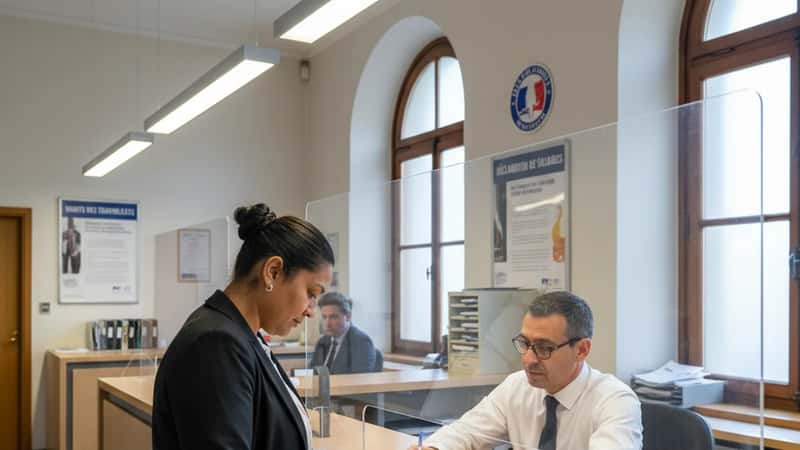
When an employer fails to pay overtime, employees have two primary avenues for recovery: a complaint to the Hawaii DLIR Wage Standards Division, or a private lawsuit.
Filing with the Hawaii DLIR Wage Standards Division
The Wage Standards Division (WSD) investigates wage claims at no cost to the employee. To file:
- Gather documentation — Collect pay stubs, time records, work schedules, and any written communications with the employer about hours worked or pay disputes. If you don't have records, the employer is required to provide them upon request.
- Complete a wage claim form — Available at the DLIR office at 830 Punchbowl Street, Honolulu, or downloadable from labor.hawaii.gov. Claims can also be initiated by calling the WSD.
- File within six years — Hawaii's six-year limitations period under HRS § 388-11 is generous, but don't delay — documents and witnesses become harder to obtain over time.
- Cooperate with the investigation — The WSD will notify the employer and request records. If a violation is found, the Division can order payment of back wages plus the HRS § 388-10 penalty.
Private Lawsuit
Employees may also file a civil lawsuit without going through DLIR first. A successful plaintiff recovers unpaid wages, the equal-amount penalty under HRS § 388-10, attorney's fees, and court costs. Attorney fees can be recovered without proof of willfulness — making it financially viable for attorneys to take contingency-fee overtime cases even when the underpayment amount is relatively modest.
The [New Jersey Overtime Law](https://expert-zoom.com/us/magazine/lawyers/labor-law/new-jersey-labor-law/new-jersey-overtime-laws) Model: Comparison
New Jersey, like Hawaii, provides overtime protections that exceed the federal FLSA standard in certain respects. Both states impose penalties beyond the raw unpaid amount, creating meaningful deterrence for employers. Hawaii's six-year limitations period remains one of the longest in the country for wage claims.
Frequently Asked Questions About Hawaii Overtime Law
Does Hawaii have daily overtime?
No. Hawaii law does not require overtime for working more than 8 hours in a single day. The overtime obligation under HRS § 387-3 is triggered only when an employee's total hours in a workweek exceed 40. An employee who works 10-hour days for 4 days (40 hours total) owes no overtime pay under Hawaii state law.
Are salaried employees automatically exempt from overtime in Hawaii?
No. Being paid on a salary basis is a necessary but not sufficient condition for most white-collar exemptions. The employee must also pass the duties test — the salary alone does not create an exemption. A salaried retail supervisor who does not exercise genuine managerial authority or discretion is likely non-exempt despite being on salary.
Can my employer give me comp time instead of overtime pay?
No, for private-sector employees. Compensatory time in lieu of overtime pay is generally not permitted for private employers under Hawaii wage law. Employers who offer "comp time" instead of paying overtime are violating HRS § 387-3. Public-sector employees may receive comp time under certain conditions established by their collective bargaining agreements.
What if my employer requires off-the-clock work before or after my shift?
Any work performed with the employer's knowledge — including pre-shift setup, post-shift cleanup, or answering work messages — must be counted as hours worked. Under the "suffered or permitted to work" standard, if the employer knows or has reason to know the employee is working, those hours are compensable and count toward the 40-hour overtime threshold.
How far back can I claim unpaid overtime in Hawaii?
Six years from the date of the violation under HRS § 388-11. This is significantly longer than the two-year federal FLSA window. For employees who were systematically underpaid, the six-year lookback period can result in substantial recovery of back wages and penalties.
Disclaimer: This article is for general informational purposes only and does not constitute legal advice. Hawaii overtime law is fact-specific. Contact the Hawaii DLIR Wage Standards Division or a qualified Hawaii employment attorney for guidance on your specific situation.