 David Carter
The IRA Section 25C Home Energy Efficiency Credit lets U.S. homeowners claim 30% of qualifying upgrade costs—up to $3,200 per tax year—through 2032. The Internal Revenue Service (IRS) does not publish a federal "qualified contractor" registry, but your choice of contractor determines whether your equipment is installed correctly, whether manufacturer warranties hold, and ultimately whether your credit survives an audit. For HVAC work, the credentials to demand are NATE (North American Technician Excellence) certification and a valid EPA Section 608 refrigerant card, plus state contractor licensing. For insulation, BPI (Building Performance Institute) or RESNET certification signals the expertise needed to meet the IECC 2009 R-value standards the IRS requires. This guide explains exactly which qualifications to look for, which equipment qualifies, and what documentation to keep.
What the IRA Section 25C Credit Actually Covers in 2026
Section 25C of the Internal Revenue Code—significantly expanded by the Inflation Reduction Act (IRA) of 2022—reimburses 30% of the cost of eligible energy-efficient home improvements on your primary U.S. residence. The credit applies to tax years 2023 through 2032, making 2026 well within the active window.
The annual cap is split into two separate buckets. The first bucket covers most improvements: insulation and air sealing, exterior windows and skylights, exterior doors, home energy audits, and non-heat-pump HVAC equipment such as high-efficiency gas furnaces, boilers, and central air conditioners. Combined costs in this bucket are capped at $1,200 per year, though individual sub-limits apply ($600 per item for HVAC equipment, $600 for windows, $500 total for doors).
The second bucket—worth up to $2,000 per year—covers air-source heat pumps, heat pump water heaters, and biomass stoves or boilers. Critically, installation labor costs are included in the credit basis for heat pumps, unlike most other 25C improvements where only the equipment cost counts.
The credit is non-refundable, meaning it can reduce your federal income tax to zero but will not generate a refund. It also does not carry forward to future years if unused—a strong reason to plan multi-year projects strategically across consecutive tax years.
Key requirement: The improvement must be made to a primary residence in the United States. Rental properties and second homes do not qualify for Section 25C (though Section 179D may apply to some commercial situations).
Why Contractor Qualifications Affect Your Tax Credit
The IRS does not require homeowners to use a federally-credentialed contractor to claim the 25C credit. However, four practical realities make contractor qualifications essential for protecting your claim.
First, ENERGY STAR product certification—which most 25C-eligible HVAC equipment requires—often mandates installation by trained technicians to remain valid. A heat pump installed by an unqualified technician may lose its ENERGY STAR status, immediately disqualifying the purchase from the credit.
Second, local building codes in most U.S. jurisdictions require licensed contractors for HVAC and insulation work. An unpermitted installation can trigger remediation orders, and a completed project without the proper permit cannot be verified by an IRS auditor as a legitimate improvement.
Third, manufacturer warranties on high-efficiency equipment typically require installation by a certified professional. If the warranty is voided, the IRS may view the product as not meeting the "original use" and "qualified energy property" standards defined in Section 25C(c).
Fourth, improper installation of insulation or HVAC equipment can prevent the equipment from meeting its rated efficiency thresholds—meaning the product's SEER2, EER2, HSPF2, or R-value numbers on the tax form reflect lab conditions, not actual performance in your home.
À retenir: Choosing a qualified contractor is not just about quality—it is the practical barrier between a valid 25C credit claim and a disallowed deduction in an IRS audit.
HVAC Contractor Qualifications for the IRA 25C Credit
Heating, ventilation, and air conditioning work under Section 25C covers heat pumps (air-source and water-source), central air conditioners, gas and oil furnaces, and boilers. The qualifications below are not legally required by the IRS, but they signal whether a contractor can guarantee compliant installation and protect your credit.
Essential HVAC Certifications and Licenses
EPA Section 608 certification is a federal legal requirement—not a preference—for any technician who purchases, handles, or recovers refrigerants used in HVAC systems. Under the Clean Air Act, contractors without a valid EPA 608 card cannot legally service systems using R-410A or R-32 refrigerants. Verify this credential before any heat pump installation.
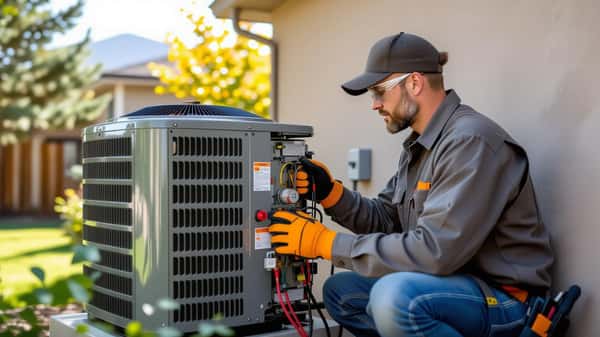
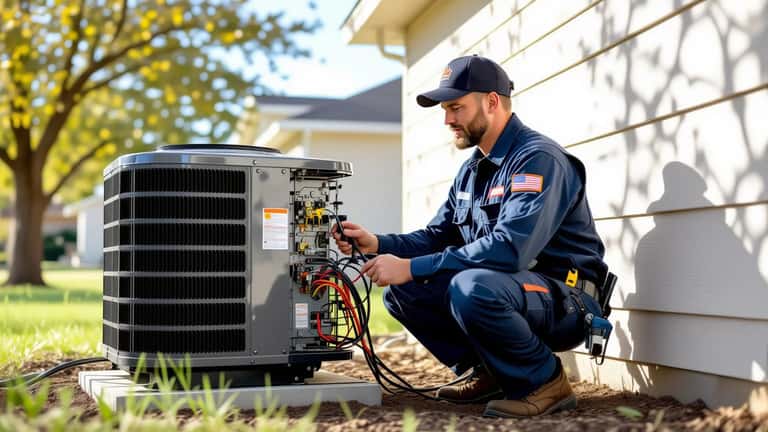
NATE (North American Technician Excellence) certification is the industry's gold standard for HVAC competency. NATE-certified technicians pass standardized exams covering installation, diagnostics, and efficiency standards. Manufacturers of ENERGY STAR-rated heat pumps—including brands like Mitsubishi, Carrier, and Bosch—often require NATE certification for their dealer networks. Ask for the technician's NATE credential number and verify it at natex.org.
State contractor licensing requirements vary significantly. Texas, for example, requires an HVAC license from the Texas Department of Licensing and Regulation (TDLR). California requires a C-20 (Warm-Air Heating, Ventilating and Air-Conditioning) license from the Contractors State License Board (CSLB). Always request the license number and verify it through your state's licensing authority before work begins.
If your upgrade is a heat pump, also look for manufacturer-specific training certifications. Mitsubishi Electric's Diamond Contractor program, for example, certifies installers on variable-refrigerant-flow (VRF) system sizing and commissioning—ensuring the unit hits rated SEER2 and HSPF2 numbers.
You can find information on the R-22 and R-410A refrigerant phase-out for 2026, which directly affects which systems are eligible under 25C.
Eligible HVAC Equipment Under Section 25C
| Equipment Type | Performance Threshold | Max Credit |
|---|---|---|
| Air-source heat pumps | SEER2 ≥ 16, EER2 ≥ 12, HSPF2 ≥ 9 | $2,000 |
| Heat pump water heaters | UEF ≥ 2.2 | $2,000 |
| Central air conditioners | SEER2 ≥ 16, EER2 ≥ 12 | $600 |
| Gas/oil furnaces | AFUE ≥ 97% (gas); ≥ 95% (oil) | $600 |
| Gas/oil boilers | AFUE ≥ 90% | $600 |
| Biomass stoves/boilers | Thermal efficiency ≥ 75% | $2,000 |
Source: IRS Notice 2023-29; ENERGY STAR program requirements, 2024
Insulation Contractor Qualifications for the IRA 25C Credit
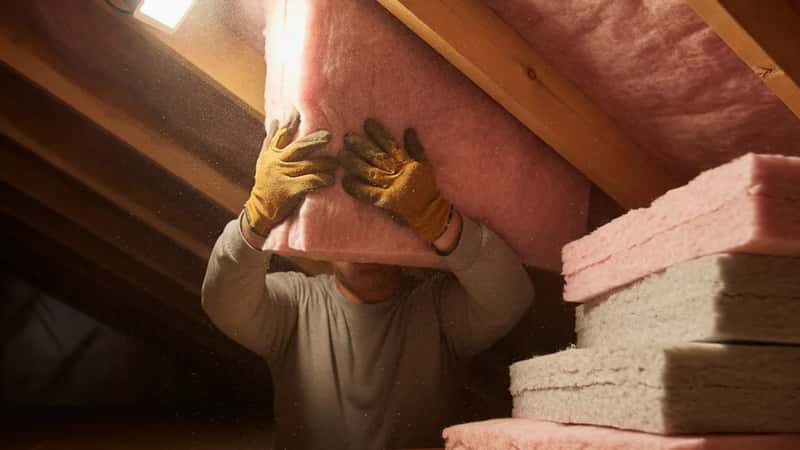
Insulation and air sealing fall under the $1,200 annual cap and are among the most cost-effective energy improvements available. Under Section 25C, "insulation material or system" must be specifically and primarily designed to reduce a dwelling's heat loss or gain, meeting the prescriptive criteria of the 2009 International Energy Conservation Code (IECC).
Certifications That Signal Compliant Insulation Work
BPI (Building Performance Institute) certification is the primary industry benchmark for insulation and home performance contractors. The BPI Building Analyst credential covers whole-house diagnostics, while the BPI Envelope Professional focuses specifically on insulation, air sealing, and thermal bypasses. BPI-certified contractors understand R-value requirements by climate zone and can document compliance with 2009 IECC standards, which is what your tax records need to show.
RESNET (Residential Energy Services Network) HERS Rater certification qualifies contractors to conduct energy audits and rate homes under the Home Energy Rating System (HERS). For homeowners who also want to claim the $150 home energy audit credit under 25C, the auditor must be a RESNET-certified HERS Rater or BPI Building Analyst.
State contractor licensing for insulation varies. Many states fold insulation into a general contractor or specialty insulation license. In Florida, insulation installers need a certified contractor license from the Florida Department of Business and Professional Regulation. Verify your state's requirements at the Contractors State License Board or equivalent agency.
Eligible Insulation Types Under Section 25C
| Material | Common Applications | Notes |
|---|---|---|
| Fiberglass batts | Attic floors, wall cavities | Must meet IECC 2009 R-value by zone |
| Blown-in cellulose/fiberglass | Existing wall cavities, attics | Depth markers required for inspection |
| Spray polyurethane foam | Crawl spaces, rim joists, walls | Open-cell and closed-cell both eligible |
| Rigid mineral wool | Foundation walls, exterior sheathing | Excellent fire resistance |
| Air sealing (foam, tape, caulk) | Penetrations, top plates, attic hatches | Must accompany insulation; not standalone |
Source: 2009 IECC Table R402.1.2; IRS Publication 5732
How to Verify Your Contractor Before Signing Anything
Hiring the right contractor requires active verification, not just taking their word for credentials. Here is a step-by-step process:
- Request the license number and verify it with your state's contractor licensing board. Most states offer free online lookup tools. In California, search at cslb.ca.gov; in New York, at dos.ny.gov.
- Verify EPA Section 608 certification for HVAC work by asking for the technician's card. The EPA's certification is held by individual technicians, not companies—confirm it belongs to the person doing your installation.
- Confirm NATE certification at natex.org using the technician's certificate number and current expiration date.
- Request proof of general liability insurance and workers' compensation coverage. Ask for a certificate naming your address as the job site. This protects you from liability if an accident occurs on your property.
- Ask for ENERGY STAR product documentation for every piece of equipment to be installed. The contractor should provide the manufacturer's specification sheet confirming that the model meets the efficiency thresholds listed in IRS Notice 2023-29.
- Obtain a written contract specifying the exact model numbers, quantities, R-values (for insulation), and the installation address. This contract becomes part of your tax documentation.
- Confirm permit requirements with your local building department. Ask the contractor to pull all required permits before work begins—not after.
Working with a contractor who balks at any of these requests is itself a red flag. Established HVAC and insulation professionals expect these questions.
Claiming Your 25C Credit: Documentation You Must Keep

The IRS does not require you to submit documentation with your tax return when claiming the 25C credit, but you must be prepared to produce it during an audit. The IRS has three years from the date you file to audit a return—so retain all records through at least 2029 for 2026 improvements.
Keep the following for every improvement claimed:
- Manufacturer's certification statement confirming the product meets 25C eligibility criteria. Most ENERGY STAR-qualified products include this in their packaging or on the manufacturer's website.
- Itemized contractor invoice including: contractor's name, business address, Employer Identification Number (EIN), a description of the work, model numbers of all installed equipment, and the total cost broken down by labor and materials.
- Proof of payment: bank statements, credit card statements, or cancelled checks.
- Building permit and inspection record (if applicable) confirming the installation was inspected and approved by your local authority.
- Completed IRS Form 5695 (Residential Energy Credits), which you file with your Form 1040. For 2026 taxes, use the version of Form 5695 current for tax year 2026.
File Form 5695 with your federal return for the year in which the installation is completed—not when you sign the contract or make a deposit. If your installation straddles two tax years (e.g., work begins December 2026 and completes January 2027), the credit applies to the year of completion [IRS Rev. Rul. 2026-XX; consult your tax professional for projects spanning year-end].
For homeowners planning to maximize the annual cap, consider timing projects deliberately. A heat pump installation ($2,000 credit bucket) can be paired in the same tax year with insulation ($600 from the $1,200 bucket) and a home energy audit ($150 from the $1,200 bucket), reaching close to the full $3,200 annual cap in a single year.
Learn more about energy-efficient home improvements worth making before the end of 2026 at Expert Zoom's home improvement guide.
Frequently Asked Questions About the IRA 25C Credit
Does the IRS require my HVAC contractor to have a specific federal certification to claim the 25C credit?
No federal law mandates a specific contractor certification for the 25C credit. However, your equipment must meet the efficiency thresholds in IRS Notice 2023-29, and improper installation by an unqualified technician can cause the system to fall below those thresholds—effectively disqualifying the credit. State licensing laws, ENERGY STAR installation requirements, and manufacturer warranty terms all create indirect qualification requirements that protect your claim.
Can I claim the 25C credit if I install insulation myself (DIY)?
For insulation and air sealing, the credit covers the cost of the materials—not labor. If you purchase qualified insulation and install it yourself, the material cost is potentially eligible. However, the project must still meet the IECC 2009 R-value standards for your climate zone, and you need documentation showing the materials qualify. Labor costs for DIY projects cannot be included. Consult IRS Publication 5732 for exact material eligibility rules.
What efficiency rating does a heat pump need to qualify for the $2,000 credit?
An air-source heat pump must meet ENERGY STAR's "most efficient" category, which for 2026 generally means SEER2 ≥ 16, EER2 ≥ 12, and HSPF2 ≥ 9 for split systems. Requirements vary for single-package units and mini-splits. Always cross-reference the specific model against the ENERGY STAR Certified Heat Pumps list at energystar.gov before purchase.
Can I claim the 25C credit for a rental property I own?
No. Section 25C applies only to your primary U.S. residence. Rental properties may qualify for different energy-related deductions under Section 179D (commercial buildings) or be depreciated under standard cost-recovery rules—but not through the 25C residential credit.
Is the $3,200 per project, per home, or per year?
The $3,200 cap is per taxpayer per year, regardless of how many projects you complete or how many homes you own. If you complete $5,000 worth of qualifying heat pump and insulation work in a single tax year, your credit is still capped at $3,200. The annual reset, however, means you can plan additional improvements the following year and claim again.
Disclaimer: The information in this article is provided for general informational purposes only and does not constitute tax, legal, or financial advice. Tax laws and IRS guidance change frequently. Consult a qualified tax professional or CPA to evaluate your specific situation before claiming any federal tax credit.