 Daniel Davies
Storm Dave is battering the United Kingdom this Easter weekend, with gusts of up to 90 mph expected in exposed coastal areas and Scotland — and home insurers are already bracing for a flood of claims. Named on 2 April 2026, Dave is the fourth named storm of the season, driven by an unusually powerful jet stream that has funnelled Atlantic energy directly over the British Isles.
What Is Storm Dave and Where Is It Hitting?
The Met Office has issued yellow severe weather warnings for mainland Scotland, Northern Ireland, northern England, and North Wales, covering Saturday 5 and Sunday 6 April 2026. Forecasters warn of 50 to 60 mph gusts across most warning zones, rising to 60 to 70 mph in exposed hillside locations, and 80 to 90 mph on Scottish coastal headlands. Up to 20 centimetres of snow is forecast for northwest Highland hills, bringing blizzard conditions to higher ground.
Householders in southern England will largely escape the worst of the wind, though a cold and blustery Easter Sunday is expected throughout the country. For millions of families in the north and in Scotland, however, the message from authorities is clear: secure outdoor furniture, avoid unnecessary travel, and check your roof before the storm arrives.
Three Home Vulnerabilities That Storm Dave Will Expose
1. Roof Tiles and Flashings
Loose or aging roof tiles are the single most common source of storm damage in UK homes. A gust of 60 mph exerts roughly 15 kilograms of force per square metre on a pitched roof — enough to dislodge any tile that has lost its bedding mortar or that was improperly fixed during a previous repair. The vulnerable points are ridge tiles (which sit at the apex and are not mechanically fixed), hip tiles, and lead flashings around chimney stacks. If a flashing lifts during the storm, rainwater can penetrate the roof space within minutes and saturate insulation and ceilings before the leak becomes visible indoors.
2. Gutters, Downpipes, and Soil Stacks
Storm Dave will bring heavy rain alongside wind in most affected areas. Blocked gutters overflow onto fascia boards, which can rot within a single season if left wet. More seriously, a downpipe that detaches from its wall fixings during high winds can pull the gutter with it, stripping the fascia board from the rafter feet. A qualified tradesperson can clear gutters and resecure downpipe brackets in under two hours — a preventive spend that typically costs far less than replacing a section of fascia and soffit after the damage is done.
3. Outbuildings and Extensions
Detached garages, flat-roofed extensions, and garden studios built before 2010 frequently have mineral felt roofs that have started to lift at the edges or crack along seams. Storm-force winds can peel back a felt section entirely, exposing the substrate to rain. EPDM rubber roofing and modern torch-on felt systems are significantly more resilient, but only a professional inspection will identify which sections of an older felt roof are at risk before a storm arrives.
What Damage Counts as "Storm Damage" for Insurance Purposes?
Many homeowners discover after a storm that their insurer applies a specific threshold before accepting a claim. According to the Association of British Insurers, most standard buildings insurance policies define storm damage as damage caused by wind speeds of at least 48 mph (force 10 on the Beaufort scale), accompanied by either heavy rain, hail, or snow. Storm Dave easily exceeds that threshold in all warning areas.
However, insurers routinely dispute claims on the grounds that the damage was caused by pre-existing wear and tear rather than the storm itself. A loose tile that falls during Storm Dave may be attributed to age rather than wind speed — unless a tradesperson can provide a written report confirming that the tile was originally fixed correctly and that storm-force wind was the proximate cause of failure. Commissioning a post-storm structural assessment from a qualified builder or roofer therefore serves two purposes: it identifies urgent repairs, and it creates the documented evidence your insurer needs to settle the claim without dispute.
What to Do in the Next 48 Hours
Before the storm arrives (today and tomorrow):
- Move garden furniture, trampolines, and bins indoors or lash them securely
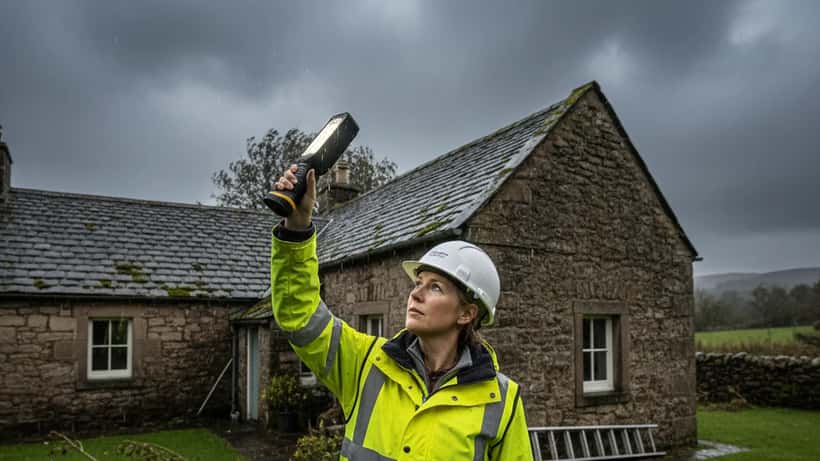
- Check roof from the ground with binoculars — visible cracked or displaced tiles should prompt an urgent call to a roofer
- Clear gutters of autumn debris if not done since winter
- Identify your stop tap and know how to turn off the water supply in case a pipe bursts
After the storm passes (Sunday evening onwards):
- Walk the property perimeter before re-entering any outbuildings
- Photograph all visible damage on your smartphone before starting any temporary repairs — this is critical evidence for any insurance claim
- Do not climb onto the roof yourself; use a qualified tradesperson with the correct scaffolding or access equipment
- Contact your insurer promptly, as many policies require notification within 30 days of damage occurring
Related reading: After the Storm: How to Inspect Your Home and When to Call a Professional
When Should You Call a Professional?
The short answer: immediately after the storm if you see any of the following — water stains spreading on ceilings, cracked render on external walls, a chimney stack that appears to have shifted, or any section of guttering that has detached from the wall. Each of these warrants an urgent inspection, not because the house is necessarily unsafe, but because delays allow secondary damage (damp, mould, structural movement) to compound the original problem.
For most households affected by Storm Dave, the right professional is a qualified general building contractor or roofing specialist. They can carry out an emergency assessment, provide a written report for your insurer, and carry out temporary weatherproofing — typically boarding a damaged roof section or applying a temporary tarpaulin — on the same day. On ExpertZoom, you can connect directly with vetted tradespeople operating in your area, with availability confirmed for post-storm emergency work.
YMYL Notice
This article provides general guidance on home safety and storm preparedness. It does not constitute professional structural, legal, or financial advice. Consult a qualified tradesperson before undertaking any repairs, and contact your insurer directly for advice specific to your policy.
