 Stephen Hall
Hundreds of flood warnings remain active across England on 24 March 2026, with groundwater flooding continuing in the South and river flooding threatening parts of the North — weeks after Storm Chandra struck in late January. If your property was affected, knowing what to check and what to fix first can prevent far more expensive damage later.
The flooding picture across the UK right now
Storm Chandra, which struck on 27–28 January 2026, broke rainfall records across southwest England. East Devon recorded 67mm of rain in just 12 hours. In Somerset, 355 properties flooded and a major incident was declared. Some areas saw 216mm of total rainfall — 184% of the long-term average.
As of today, the Environment Agency has active warnings for:
- Groundwater flooding in the South Winterbourne Valley, Bourne Valley, and parts of West Dorset
- Surface water and river flooding risks across parts of North England
- East London, which the Environment Agency identifies as carrying high or medium flood risk for 13% of its properties
According to the Environment Agency's live flood warnings service, over 250 flood warnings and alerts have been issued since the storm. The Met Office continues to issue unsettled weather forecasts through the end of March.
What a tradesperson checks first after flooding
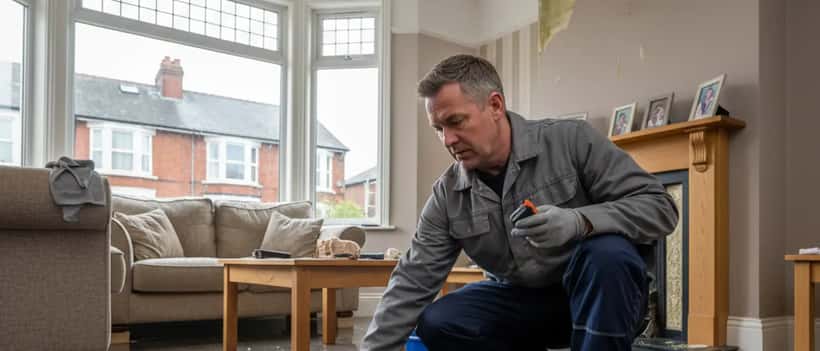
If your home has been flooded — even partially — the visible damage is rarely the most dangerous. A qualified tradesperson or structural surveyor follows a specific order of checks. Here is what they look for:
1. Structural integrity
Prolonged moisture weakens wall ties, affects cavity insulation, and can cause timber frames to warp. Cracks appearing near window frames or door edges after flooding are a warning sign. These are not cosmetic — they can indicate deeper structural movement.
2. Electrics and gas
Water and electricity are lethal. Before re-entering a flooded property, the electrics must be checked by a qualified electrician. Similarly, gas pipes can shift or corrode. Never switch power back on without a professional inspection, even if the water appears to have receded.
3. Floors and subfloor structure
Floorboards and joists absorb water and can retain moisture for weeks. Without proper drying (using industrial dehumidifiers), mould sets in within 24–48 hours. Tile adhesive fails. Underfloor heating systems can be permanently damaged.
4. Walls and insulation
Cavity wall insulation, once wet, loses its insulating properties and can actually trap moisture. This accelerates damp penetration and mould growth. In some cases, the insulation needs to be professionally removed and replaced.
5. Roof and guttering
Heavy rainfall and wind can loosen roof tiles, block gutters, and damage fascias. Standing water on flat roofs accelerates membrane deterioration. A roofer should check for water ingress paths that may not be immediately visible inside.
For more guidance on what UK tradespeople check after storms, see After the Storm: How to Inspect Your Home and When and March 2026 Storms: What a Tradesperson Checks Before You.
The insurance picture: why you need to act quickly
The Association of British Insurers (ABI) estimates a 20% jump in flood insurance claims in a single year. The Flood Re scheme — which keeps flood insurance affordable for high-risk properties — is under pressure as reinsurance costs rose £100 million in three years.
There are two critical things to do within days of flooding:
Document everything before you clean up. Photograph or video every room, every damaged item, every watermark. Insurers may reject or reduce claims if damage has been cleared without evidence.
Notify your insurer immediately. Most home insurance policies require you to report flooding within a set number of days (often 30, sometimes less). Missing this window can void your claim.
A tradesperson who has seen flood-damaged properties before can help you prepare a comprehensive list of remediation work — which is exactly what insurers and loss adjusters need to calculate the correct payout.
What about uninsured properties?
According to a 2026 report, 63% of flood victims experienced financial impacts beyond what insurance covered, and 48% struggled to access additional financial help. Many properties in high-risk areas are now unable to get affordable flood cover.
If you are uninsured or underinsured:
- Flood Recovery Guidance is available via GOV.UK for local authority support schemes
- Rebuild cost assessments from a surveyor can help you negotiate with your insurer
- Legal advice may be relevant if a third party (a neighbour, developer, or local authority) contributed to your flooding risk
When to call in a professional
It is tempting to dry out and redecorate as quickly as possible. But rushing remediation often leads to trapped moisture, structural issues emerging months later, and mould problems that are far more expensive to fix than the original flood damage.
A qualified tradesperson — whether a builder, plumber, or structural engineer — can tell you:
- Whether the property is structurally sound to re-occupy
- Which repairs are urgent vs. which can wait
- What evidence to gather for insurance or legal claims
- Whether specialist drying equipment is needed before any work begins
On Expert Zoom, you can connect with vetted tradespeople and home repair specialists across the UK to get an honest assessment of your flood damage and a clear remediation plan.
