 James Harrison
UK homeowners faced another week of unpredictable March weather in 2026, with the Met Office issuing yellow wind and rain warnings across England and Wales. Property insurers paid out a record £6.1 billion in weather-related claims in 2025 — and early 2026 shows the trend is not slowing. Before the next storm hits, a qualified tradesperson can save you thousands.
March 2026 Weather: Why "It'll Be Fine" Is No Longer a Safe Bet
The UK's weather in March 2026 has continued the pattern established over the past several years: unpredictable shifts between mild spells and sharp Atlantic storms, with gusts regularly exceeding 60 mph across exposed coastal areas and high ground. The Met Office recorded above-average rainfall in February 2026, leaving many soils saturated and drainage systems under strain heading into spring.
According to the Association of British Insurers (ABI), storm damage alone cost UK insurers £244 million in 2025 — a 32% increase on the previous year. The average storm claim stood at £2,450 per home, up from £1,700 in 2024. Flooding claims averaged £30,000 per property, a 60% increase year-on-year. These are not fringe events. They are becoming the baseline.
What a Professional Tradesperson Looks for Before a Storm
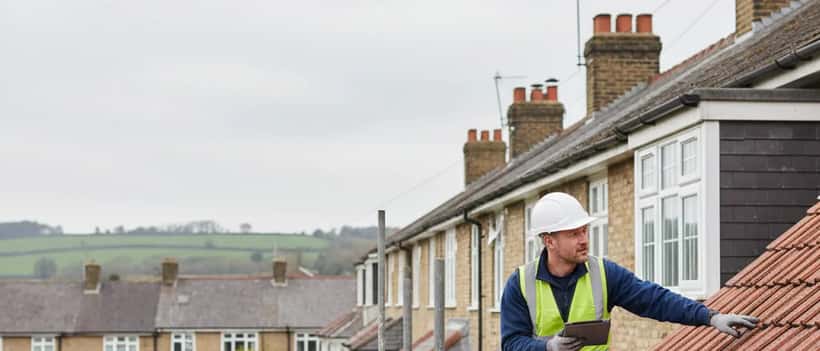
Most homeowners wait until after the damage happens to call a professional. A qualified tradesperson — whether a roofer, builder, or general contractor — will carry out a pre-storm assessment that looks at entirely different things from a cosmetic inspection.
The roof is the priority. After any significant wind event, loose or cracked roof tiles are the most common source of damage. A professional will check not just visible tiles but the pointing (mortar joints) around ridge tiles and chimney stacks, the condition of lead flashings around skylights and dormers, and the state of flat roof membranes if applicable. A single loose ridge tile, dislodged by 60 mph winds, can cause tens of thousands of pounds of internal water damage if it falls and breaks through a lower roof section.
Gutters and drainage. Blocked gutters are responsible for a significant share of water ingress claims each year. Leaves and debris from winter accumulate in gutters and downpipes, meaning that when heavy spring rain arrives, water backs up and overflows against fascias and into roof spaces. A tradesperson will check not just whether gutters are clear, but whether brackets are secure and whether joints are sealed.
Brickwork and pointing. In older UK properties — particularly Victorian and Edwardian terraces — deteriorated mortar pointing allows moisture to penetrate cavity walls. After a wet winter, this problem often goes undetected until damp patches appear on internal walls months later. A professional will spot the signs early: powdery mortar, staining on brickwork, or paint bubbling near external walls.
Fences and garden structures. These are frequently underestimated sources of liability. A fence panel that fails in high winds and injures a neighbour or damages their property can create a civil liability situation that a professional can flag during a pre-storm check.
The True Cost of Waiting Until After the Storm
Many homeowners delay calling a professional because they want to assess the damage themselves first. This can be a costly mistake — not just financially, but legally.
Insurance policies typically require homeowners to take reasonable steps to prevent further damage after an incident. If you spot a broken tile and wait several weeks to address it — during which time water ingress causes substantial internal damage — your insurer may question whether the additional damage was preventable. A professional report documenting the timeline of damage can make a significant difference to a claim outcome.
Beyond insurance, there is a health and safety consideration. Working at height on a wet or damaged roof is among the most dangerous home maintenance tasks. The Health and Safety Executive (HSE) consistently reports falls from height as a leading cause of serious injury in domestic settings. A qualified tradesperson carries their own liability insurance and is trained to work safely at height — and in March conditions.
When Storm Damage Becomes a Legal Matter
In some cases, storm damage creates disputes between neighbours or between tenants and landlords. If a landlord's property causes damage to a tenant's belongings — because of a roof leak the landlord failed to address — that can give rise to a claim for compensation. Similarly, a shared boundary wall or fence that collapses onto a neighbouring property raises questions about maintenance responsibility and liability.
Under the Party Wall Act 1996, work on shared structures requires specific notifications and agreements with neighbours. A tradesperson who has carried out a pre-storm assessment can provide documentation that is useful in these disputes — showing what state the structure was in before the storm and what repair was recommended.
How to Find a Qualified Tradesperson Before the Next Storm Arrives
Not all tradespeople are equal. When commissioning a pre-storm inspection or post-storm repair, look for:
- Gas Safe registration if any work involves boilers or heating (not applicable to roofing but relevant if flooding reaches boiler plant)
- NICEIC or NAPIT registration for any electrical work following flooding
- A written quote before work begins, specifying what is included
- Evidence of public liability insurance — a minimum of £1 million is standard; £5 million is preferable for larger projects
Expert Zoom connects UK homeowners with vetted Home Improvement professionals — including roofers, builders, and general contractors — who can carry out pre- and post-storm assessments quickly and reliably. In the aftermath of a named storm, demand for tradespeople surges and lead times extend significantly. Booking an inspection during a calm period is almost always faster and cheaper than waiting for the emergency.
Three Things to Do Right Now
The Met Office's March 2026 weather forecasts suggest continued instability through the end of the month. Here are three actions you can take today:
- Check your roof from ground level using binoculars — look for obviously displaced or missing tiles, sagging gutters, or debris collected around valley gutters and flat roof areas.
- Clear visible gutter blockages from ground level where safely accessible — do not climb ladders on wet ground.
- Book a professional inspection now, before any weather event — this is almost always faster and cheaper than commissioning emergency repairs during or immediately after a storm.
The £6.1 billion UK property insurance payout in 2025 was not inevitable. A significant proportion of those claims could have been reduced — or prevented — with timely professional intervention. This March, make sure your home is one that is ready.
This article is for informational purposes only and does not constitute legal or financial advice. For specific disputes or insurance matters, consult a qualified professional.
