 Grace Davies
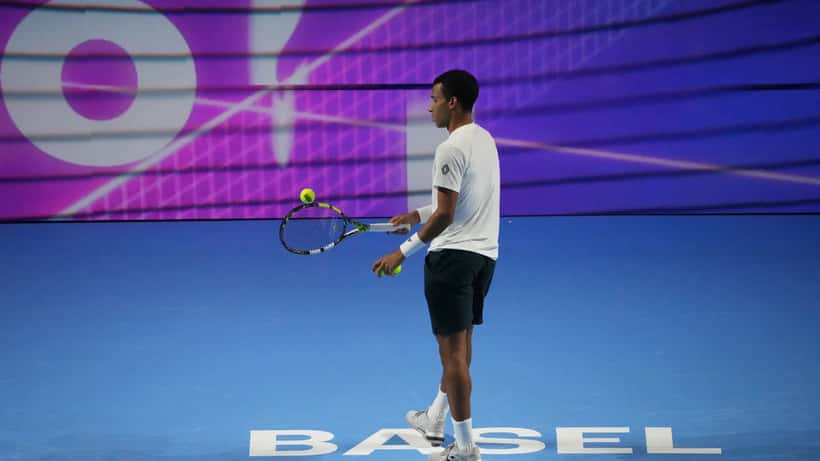
Felix Auger-Aliassime spent four hours and seven minutes on Court Philippe-Chatrier on 26 May 2026 before he could call himself a winner. The Canadian fourth seed beat Daniel Altmaier 4-6, 6-4, 4-6, 6-1, 7-6 (10-7) — a five-set first-round survival that pushed him to 20 tour-level wins for the season and made him the first Canadian man to reach that mark in 2026.
For sports physicians watching at home, the match was a textbook stress test of what professional tennis still asks of an elite male body — and how thin the line is between winning a marathon and breaking down before the next round.
What actually happened on Chatrier
Auger-Aliassime led the head-to-head 2-0 but trailed 4-1 in the deciding set against the German qualifier. According to the official Roland Garros report and ATP Tour coverage, the No.4 seed found a break, levelled at 6-6, and edged through the 10-point match tiebreak 10-7. Burruchaga of Argentina is his second-round opponent — and the section of the draw opened up further with Medvedev's earlier exit.
Four hours is on the long side of average for a five-set Grand Slam match. The longer story is what those four hours do to the body in the 48 hours that follow.
Why marathon tennis is different from football or rugby fatigue
A five-set tennis match on clay is roughly 200-250 strokes per set, hundreds of stop-start sprints, and roughly 2,500-3,500 kcal expended depending on conditions. Unlike team sports, there are no substitutions and the rest intervals are short — 20 seconds between points and 90 seconds at changeovers.
That combination produces a physiological pattern sports doctors recognise immediately:
- Glycogen depletion in fast-twitch muscle by hour two
- Sodium loss of 1.5-3 g for a heavy sweater across the match
- Core temperature climbing 1.5-2°C above baseline
- Eccentric muscle damage in the quadriceps from repeated deceleration on clay
The NHS advice on dehydration is calibrated for ordinary daily life. Elite tennis blows past those thresholds inside the first set on a warm Parisian afternoon.
Three things sports doctors watch in the 24 hours after a 4-hour match
For an athlete who has just won in five sets, the medical team's clock starts the moment the racquet is back in the bag.
1. Urine colour at the 90-minute mark. Players are weighed before and after matches; the rule of thumb is to replace 150% of body-mass loss in fluids over the next four hours, with electrolytes proportional to sweat sodium concentration. Dark urine at 90 minutes post-match suggests rehydration is behind target and increases the cramping risk in the next session.
2. Calf and adductor tightness on day one. The eccentric loading on clay disproportionately hits the calves and the adductor magnus. Specialists tend to look for asymmetric tightness on day one — the leg that pushed off harder on serves often shows it first. The pattern is similar to the Achilles strain story we covered around Holger Rune at Monte-Carlo 2026, where a low-grade niggle in the first round became a withdrawal by the quarter-finals.
3. Sleep quality on night one. Elite tennis players routinely sleep badly after long matches — adrenaline and elevated cortisol keep heart rate variability suppressed for 12-18 hours. Wearable data from ATP players over the last two seasons shows the recovery clock effectively does not start until night two.
What the next 48 hours actually look like
Auger-Aliassime is scheduled to play Burruchaga inside the standard 48-hour turnaround. The medical team's protocol over those two days is unglamorous and tightly controlled:
- 0-2 hours post-match: cold-water immersion, weighed rehydration, light carbohydrate refeed
- Evening of match day: protein at 1.2-1.5 g/kg body mass, anti-inflammatory food (not NSAIDs, which dull adaptation), magnetic field or compression therapy as available
- Day one: 60-90 minutes light hit, soft-tissue work, blood markers reviewed if available
- Day two: tactical session, match-pace serves, final pre-match medical check-in
- Match day: warm-up calibrated to recovery state, not to opponent
Three decades of sports medicine research have made this protocol more predictable, but they have not made fatigue disappear. The pattern of players returning after long five-setters and losing in straight sets remains one of the strongest predictors in tennis betting models — for very real physiological reasons.
When the body does not recover in time — and what older athletes do differently
The 2026 season has already produced multiple examples of elite tennis players misjudging their own recovery. Our coverage of how Elina Svitolina manages her body at 31 shows the changes that veteran players make compared with their younger selves: lower training volume, more sleep, earlier intervention on niggles, and a sports medicine team that is brought in days early rather than days late.
There is also the question of what happens when fatigue runs into illness. Emma Raducanu's withdrawal from the 2026 Italian Open was a recent case where post-viral fatigue compounded a normal training load into a clinical problem — the recovery pathway from post-viral illness is not the same as the recovery pathway from a 4-hour match, and conflating them is one of the most common amateur mistakes.
For club players and weekend warriors
The 4-hour Chatrier match is not just a story for tour-level athletes. Club players who pull a five-set match at a county weekend and then drive home to a desk job on Monday face a scaled-down version of the same physiological problem — and tend to get less specialist input than they need.
Three steps a sports medicine doctor will usually recommend after any long match:
- Weigh in and weigh out. A 2 kg deficit needs 3 L of fluid replaced with electrolytes over four hours, not water alone.
- Walk before sleep. Ten minutes of easy walking the evening of a long match reduces overnight cramping risk more than any supplement currently on sale.
- Book a check-in if calf tightness lasts more than 72 hours. Mid-grade calf tears in recreational players almost always have a missed warning at the 72-hour mark.
Auger-Aliassime has 48 hours to recover before Burruchaga. The recovery he runs over those two days will decide more about Wednesday's result than any tactical change. ExpertZoom connects UK players, parents and club-level athletes with vetted sports medicine doctors who handle exactly this recovery question every spring and summer.
Roland Garros 2026 is still in its first week. The real test of his draw — and his body — starts on Wednesday.
