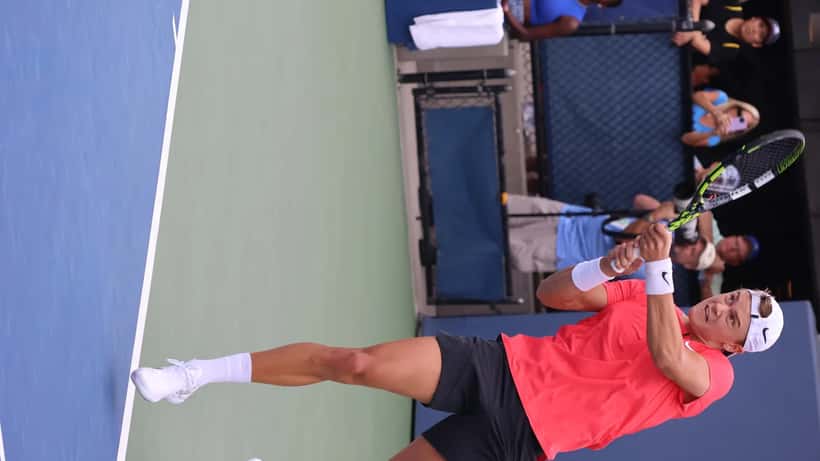
Holger Rune has withdrawn from the Monte-Carlo Masters 2026 due to an Achilles tendon injury, the latest in a string of high-profile player absences that have defined the early clay-court season. As Jannik Sinner and Carlos Alcaraz dominate the draws at Roquebrune-Cap-Martin this week, sports doctors are highlighting a critical question: why does the transition to clay expose even elite athletes to serious injury risk?
Why Clay Courts Are a Hidden Danger
The switch from hard courts to clay is one of the most demanding transitions in professional tennis. Unlike the relatively predictable bounce of acrylic hard courts, clay surfaces require rapid deceleration, sharp lateral changes of direction, and sustained low-stance positioning — all of which place intense stress on the Achilles tendon, calf muscles, and plantar fascia.
According to research published by the International Journal of Sports Medicine, the incidence of lower-limb tendon injuries increases by up to 40% during the clay-court swing for professional players who come directly from hard-court tournaments. The issue isn't just the surface itself — it's the accumulated fatigue from months of hard-court play meeting a completely different biomechanical demand.
Rune, 22, has struggled with Achilles problems since late 2025. His withdrawal is a reminder that Achilles tendinopathy is not simply an overuse injury that rest alone can resolve; it requires specific assessment, load management, and often physiotherapy-guided rehabilitation to return safely to full performance.
What Berrettini's Comeback Actually Reveals
Matteo Berrettini's stunning 6-0, 6-0 destruction of Daniil Medvedev at Monte-Carlo on 9 April 2026 attracted global headlines — and not just because Medvedev smashed his racket in frustration. Berrettini's performance is remarkable given that he has spent significant portions of the last three years managing injuries, including knee and abdominal issues.
His return to form tells a different story to the one about tennis being uniquely kind to those who simply rest and wait. Berrettini's comeback was the result of disciplined injury management, structured physiotherapy, and careful load progression — working closely with sports medicine professionals who understood both the demands of clay-court tennis and his individual injury history.
For amateur players watching from the sidelines, the lesson is clear: elite athletes don't recover well by accident.
The Most Common Clay-Court Injuries — and When to Seek Help
Sports doctors treating amateur tennis players report a consistent set of injuries that spike each spring when recreational players dust off their rackets:
Achilles tendinopathy: A gradual-onset pain and stiffness in the Achilles tendon, typically worse in the morning or after rest. Unlike an acute rupture, tendinopathy is a degenerative process that responds poorly to prolonged rest. Graded loading exercises, assessed by a sports medicine professional, are the gold standard treatment. If you're experiencing morning stiffness in your Achilles heel, don't ignore it.
Lateral ankle sprains: The sliding nature of clay play increases the risk of unexpected ankle rolls. Most sprains heal well within 6-8 weeks, but poorly rehabilitated ankles are significantly more likely to re-sprain. An assessment from a sports physician can identify proprioceptive deficits — the loss of ankle stability awareness — that simple rest won't address.
Patellar tendinopathy ("jumper's knee"): The repeated jumping and rapid direction changes in tennis place high load on the patellar tendon. Pain just below the kneecap that worsens during or after play is a warning sign. Continuing to push through patellar tendinopathy without professional assessment can turn a 6-week recovery into a 6-month problem.
Low back strain: The rotational demands of groundstrokes — particularly with clay-court topspin — generate significant forces through the lumbar spine. Localised low back pain that follows a day of intensive clay-court play should be assessed if it persists beyond 48-72 hours.
The Amateur Risk Mistake: Playing Through Pain
One behaviour separates professional players from amateur ones when it comes to injury management: professionals seek expert assessment early, while amateurs typically wait until pain becomes unbearable. Research from the NHS Sports Medicine guidance consistently shows that early intervention in sports injuries reduces recovery time and the risk of chronic problems.
The Monte-Carlo Masters serves as an annual reminder of how even athletes with access to the world's best medical teams still get injured. For a recreational player with no screening, no structured warm-up, and no recovery protocol, the risk is considerably higher.
If you've started the clay-court season and are already noticing joint discomfort, tendon stiffness, or recurring muscle soreness, don't follow the amateur instinct to "play through it." A consultation with a sports medicine doctor — available through platforms like Expert Zoom — can identify whether your symptoms require treatment, modified training, or simply a structured approach to load management before they become a serious problem.
Watching Monte-Carlo Smartly
As Alcaraz, Sinner and Berrettini battle for the Monte-Carlo title this week, the tournament is also a masterclass in what sports science looks like at the elite level. Every player on court at Roquebrune has access to physiotherapists, sports physicians, biomechanics analysts, and customised return-to-play protocols.
For anyone who plays tennis recreationally — whether that's two sessions a week at your local club or an ambitious attempt to improve your ranking — access to expert sports medicine guidance has never been more straightforward. The Carlos Alcaraz wrist scare at Miami Open 2026 is a reminder that proactive assessment, not reactive treatment, is what keeps athletes on court.
Clay season runs through June. There's still time to prepare properly — and get expert advice before the next injury becomes a withdrawal.
This article is for general information purposes only and does not constitute medical advice. If you are experiencing persistent pain or injury symptoms, please consult a qualified sports medicine professional.
