 Abigail Clarke
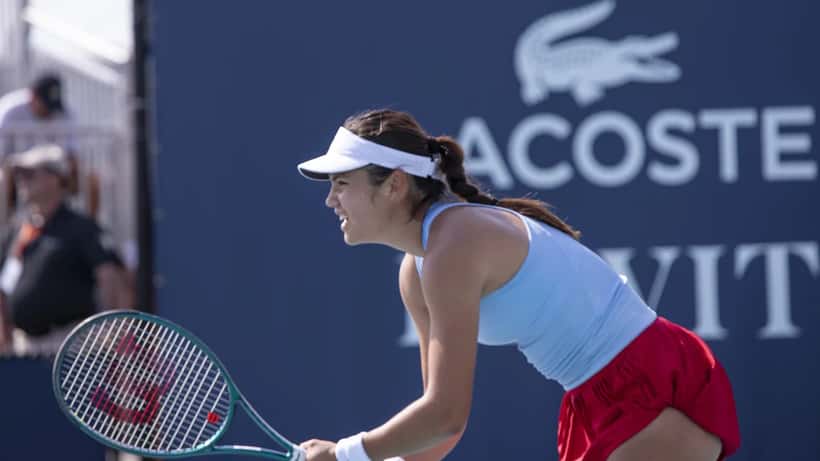
British tennis star Emma Raducanu withdrew from the 2026 Italian Open in Rome this month after falling ill during her warm-up to the clay season — the latest setback in a year shaped by a post-viral illness that has kept her off the WTA Tour since March.
Raducanu's Difficult 2026 Season
Raducanu began 2026 already managing a foot problem, but it was a viral illness she contracted in February that proved the more stubborn obstacle. She has not completed a full tournament since Indian Wells in March, and her withdrawal from the Italian Open — announced despite upbeat pre-match media appearances — confirmed that the recovery is taking far longer than initially expected.
She has been granted a wildcard for the Internationaux de Strasbourg, due to start in late May, as she attempts to accumulate match fitness before the French Open. Her ultimate target is Wimbledon's grass-court swing, where the home crowd has historically lifted her. But her wider 2026 season has illustrated something that resonates with many people far beyond professional sport: post-viral illness can be unpredictable, drawn-out, and far more complicated than a week of rest and fluids.
What Is Post-Viral Illness?
Post-viral illness refers to a constellation of symptoms — persistent fatigue, difficulty concentrating, shortness of breath, muscle pain, and disrupted sleep — that continue beyond the acute phase of a viral infection. For most people, these resolve within a few weeks. For others, they persist for months.
According to NHS England's long COVID guidance, estimates suggest that approximately 1 in 10 people who contract certain viral infections go on to experience prolonged post-viral symptoms lasting more than 12 weeks. The term post-viral fatigue syndrome, or — in its more severe long-term form — myalgic encephalomyelitis/chronic fatigue syndrome (ME/CFS), describes the more persistent end of this spectrum.
The challenge for patients is that post-viral illness rarely announces itself clearly. Energy crashes after mild exertion, brain fog that lifts and returns unpredictably, and sleep that does not restore energy are all easily attributed to stress, overwork, or simply being run-down. Waiting for spontaneous improvement — the instinctive response — can, in some cases, allow the condition to entrench rather than resolve.
When Does Post-Viral Fatigue Need Medical Attention?
Most GPs will advise rest, graduated return to activity, and monitoring in the first four to eight weeks following a viral infection. But there are clear signals that a more structured medical approach is warranted:
- Symptoms persist beyond 12 weeks with no clear trend of improvement
- Exertion — physical or cognitive — consistently worsens symptoms the following day, a pattern called post-exertional malaise
- Sleep quality deteriorates rather than improving during rest
- Concentration or memory problems are interfering with work or daily life
- You are experiencing chest tightness, palpitations, or breathlessness disproportionate to activity
- You have attempted a gradual return to activity and found it provokes setbacks
This last point is particularly relevant in athletic contexts. The instinct to push through fatigue — normal and useful in training — can be harmful in post-viral recovery. Raducanu's own experience, repeatedly attempting returns only to face further setbacks, reflects a pattern seen in many patients who return to high-intensity activity before the underlying condition has fully resolved.
What Can a Specialist Do That a GP Cannot?
A GP is the right starting point, and a thorough assessment by your primary care doctor should come first. Blood tests can rule out other causes of persistent fatigue — thyroid dysfunction, anaemia, vitamin deficiencies, and autoimmune conditions all produce overlapping symptoms.
Where specialist input adds value is when initial investigations are normal but symptoms persist, or when post-exertional malaise is a prominent feature. A specialist in infectious disease, respiratory medicine, or the growing number of dedicated post-viral or long COVID clinics across the NHS can offer:
- Structured graded exercise therapy assessments tailored to post-viral presentations
- Sleep studies if disrupted sleep is a major feature
- Cardiac monitoring if breathlessness or palpitations are present
- Psychological support addressing the anxiety and low mood that frequently accompany protracted illness
- Occupational therapy to help manage energy within daily life during recovery
The key distinction is pacing: the principle that activity must be calibrated to the current energy envelope rather than the pre-illness baseline. Getting that calibration right, and adjusting it as recovery progresses, is the core of effective post-viral management.
Why Raducanu's Story Matters Beyond Sport
Post-viral illness is not exclusive to elite athletes. Its patterns — the delayed recovery, the boom-and-bust of overdoing it followed by days in bed, the frustration of normal test results alongside very real symptoms — are recognisable to anyone who has struggled to bounce back from a viral infection.
Raducanu's willingness to speak openly about the protracted nature of her illness, rather than offering vague references to "injury", has helped normalise a conversation that patients sometimes feel embarrassed to have. People with post-viral fatigue often encounter scepticism because their illness is not visible on standard tests. Having a high-profile public figure describe the same experience — months of disrupted schedules, uncertainty about timelines, careful planning around energy — reduces the isolation many patients feel.
Celebrity health stories routinely shift public behaviour. Expert Zoom has documented how celebrity health disclosures drive consultation rates, particularly for conditions that carry stigma or are poorly understood.
What to Do If This Sounds Familiar
If you are more than eight weeks into persistent fatigue following a viral illness and have not yet spoken to a GP, that conversation is the most useful step you can take. Be specific about the pattern: when symptoms are worst, whether exertion triggers crashes, and how sleep is affecting recovery.
If you have already seen your GP but feel your case is not being managed proactively, an Expert Zoom health specialist consultation can connect you with professionals experienced in post-viral presentations who can review your situation and advise on whether specialist referral or a structured rehabilitation programme is appropriate.
Health disclaimer: This article is for informational purposes only and does not constitute medical advice. Please consult a qualified healthcare professional for diagnosis, treatment, or any health concerns.
