 Julia Vachon
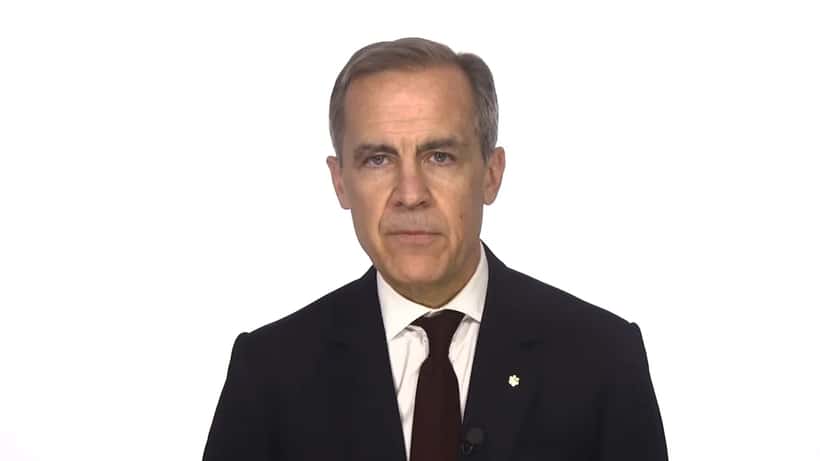
Canada's economic relationship with the United States has reached its most turbulent point in decades. Prime Minister Mark Carney declared on April 23, 2026, that the U.S. "will not dictate the terms" of any new trade deal — a direct challenge to Washington as Canada-U.S. negotiations remain effectively stalled. For the 14 million Canadians with investment accounts, RRSPs, and TFSAs, the stakes have rarely felt higher.
A Trade War Unlike Any Canada Has Seen Before
The current tariff environment is, by Carney's own admission, unlike anything since the Great Depression. The U.S. has imposed 50% tariffs on Canadian steel and aluminum, 25% on automobiles, and sweeping levies on forest products. Canada's $1 trillion investment target for 2030 — announced at the first-ever Canada Investment Summit — now hangs in balance as U.S. trade negotiations remain frozen.
According to BNN Bloomberg, a U.S. official was asked to advise the Trump administration against its "chaotic tariff regime" as of April 23, 2026 — a sign that even within the U.S. government, the current approach is viewed with alarm.
Carney's government has responded with a blunt diagnosis: Canada's close economic ties to the U.S., once considered a strength, have become a weakness. The new priority is diversification — attracting global investors, building new trade corridors, and reducing Canadian dependency on American markets.
What This Means for Your Investment Portfolio
The tariff shock is already rippling through Canadian markets. Export-heavy sectors — including forestry, auto manufacturing, and steel — are facing genuine margin compression. Companies with heavy U.S. revenue exposure are repricing risk in real time.
For individual investors, three key vulnerabilities are emerging:
1. Sector concentration risk. Many Canadian index funds are heavily weighted toward resources, financials, and industrials — sectors facing direct tariff exposure. An RRSP or TFSA automatically indexed to the TSX 60 is not necessarily a safe harbour in the current environment.
2. Currency pressure. A prolonged trade dispute puts downward pressure on the Canadian dollar, which affects the purchasing power of retirement savings, the cost of U.S.-denominated assets, and the real value of fixed-income portfolios.
3. The diversification gap. Canada's household wealth remains disproportionately concentrated in real estate and domestic equities. The current shock is an acute reminder that geographic diversification — across Europe, Asia-Pacific, and emerging markets — is not just a theory but a practical risk buffer.
Canada's financial guidance resources recommend reviewing your asset allocation periodically — and a trade shock of this magnitude qualifies as a material change in circumstances that warrants a formal review.
The Hidden Opportunity: Global Diversification
Carney's own investment choices are instructive. Publicly disclosed filings show he holds no shares in Canada's Big Six banks — a deliberate departure from the conventional Canadian portfolio. His holdings skew toward fintech, green energy, and globally diversified assets.
This doesn't mean every Canadian should restructure their portfolio to mirror the Prime Minister's. But it does signal something important: even sophisticated financial insiders recognize that Canada-centric portfolios need recalibration. The logic is straightforward. When your country's largest trading relationship is under stress, the assets most correlated to that relationship are most exposed.
For Canadians nearing retirement — with five to ten years of runway — the current volatility is especially concerning. Sequence-of-returns risk means that a major downturn in the early years of retirement can permanently reduce portfolio longevity, even if markets recover. A wealth management review now, before a potential further escalation, is far less costly than a reactive reallocation during a market correction.
Three Questions to Ask Your Wealth Advisor Right Now
A qualified wealth management expert can help you assess:
What is your real U.S. tariff exposure? This means looking beyond domestic equity funds to identify indirect exposure through supply chains, currency risk, and sector allocations.
Is your fixed income serving as a genuine buffer? In a stagflationary environment — which tariff shocks can create — traditional bonds may not provide the shelter they historically have.
Does your plan account for currency volatility? If the Canadian dollar weakens significantly, your real purchasing power in retirement may be affected even if your nominal portfolio value stays flat.
When Is the Right Time to Consult an Expert?
The answer is: before the next escalation, not after. Trade negotiations are inherently unpredictable. The CUSMA framework — the Canada-U.S.-Mexico Agreement — faces renewal pressure by July 1, 2026. If negotiations fail to produce a framework before that date, a new round of market volatility is likely.
A wealth management specialist does not need to predict the future. Their role is to ensure that whatever scenario unfolds — deal, stalemate, or further escalation — your financial position is resilient enough to absorb it. Portfolio reviews are not a sign of panic; they are the opposite. They are a form of preparation.
Disclaimer: This article is for informational purposes only and does not constitute personalized financial advice. Tax and investment situations vary. Consult a qualified wealth management professional before making investment decisions.
The Bottom Line
Mark Carney has been unambiguous: Canada is reorienting its economic strategy away from American dependency. Whether negotiations produce a favourable deal by July 2026 or not, the structural case for portfolio diversification among Canadian investors has never been clearer. An independent wealth management advisor can help you identify where your current plan is exposed — and build a roadmap that does not depend on a particular political outcome in Washington.
