 Victoria Stewart
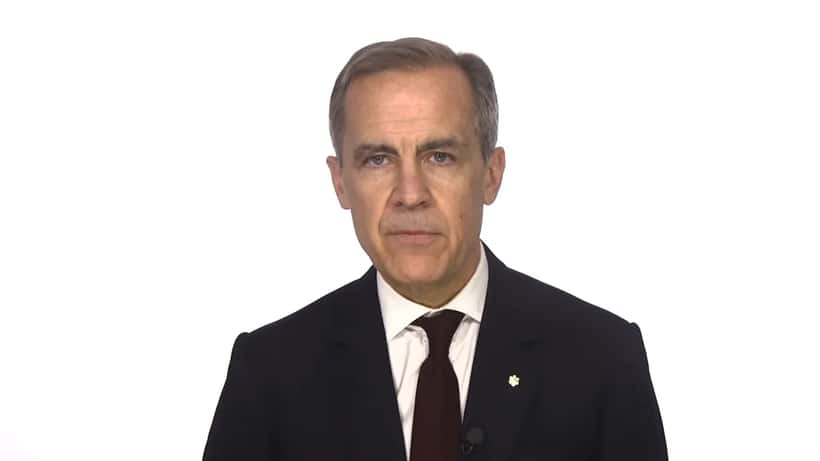
Prime Minister Mark Carney announced Canada's first sovereign wealth fund on April 27, 2026, calling it the Strong Canada Fund. The fund will finance major infrastructure projects in energy, trade, transport, data, and critical minerals — and for the first time, ordinary Canadians will be able to invest in it directly.
What Is the Strong Canada Fund?
A sovereign wealth fund (SWF) is a state-owned investment vehicle funded by government revenues. Countries such as Norway, Singapore, and the United Arab Emirates have long used SWFs to build national wealth and finance large-scale public investment. Canada has never had one — until today.
The Strong Canada Fund will co-invest alongside private capital in projects deemed to be of national interest. The federal government will provide initial seed funding, and the fund will be structured to attract institutional partners from both Canada and abroad. According to the Prime Minister's Office, the government plans to invite 100 top global investors to a summit this fall to discuss participation. The Department of Finance Canada will govern the fund's accountability and transparency framework.
Priority sectors include critical minerals — lithium, cobalt, and rare earth elements, where Canada holds significant reserves — as well as clean energy infrastructure, trade corridors, and data networks.
Canadians Can Invest Directly — Here Is the Catch
Perhaps the most striking element of the announcement: individual Canadians with "a bit of extra money" will be able to invest in the fund alongside the federal government and institutional partners. This retail participation component is unusual in global SWF design, which typically relies exclusively on government revenues.
The mechanics remain unconfirmed. Wealth advisors across Canada will be closely watching how the contribution vehicle is structured: whether holdings will be RRSP- or TFSA-eligible, what minimum investment thresholds will apply, what liquidity terms will govern withdrawals, and how returns will be calculated and distributed. Until these details are published, it is premature to redirect savings toward the fund.
What Wealth Advisors Are Watching Right Now
The launch of the Strong Canada Fund does not replace personal financial planning, but it does alter the investment landscape for Canadians with significant savings. Here is what a licensed wealth management advisor would flag immediately.
RRSP and TFSA contribution limits remain the first priority. For most Canadians, the immediate goal is to maximize contributions to existing tax-advantaged accounts before considering new government-linked vehicles. The tax sheltering and compounding benefits of registered accounts are well-established and guaranteed — unlike a fund whose return profile is yet to be defined.
Watch for portfolio concentration risk. If the Strong Canada Fund concentrates on Canadian energy and infrastructure assets, investors who already hold TSX-listed producers or infrastructure ETFs may find significant overlap. A portfolio with heavy Canadian energy equity exposure could become further concentrated if the fund also allocates heavily to the same sectors. A wealth advisor can model this before you commit capital.
Governance and transparency will determine credibility. Norway's Government Pension Fund Global — the world's largest sovereign wealth fund — publishes quarterly performance data, a detailed ethics council framework, and full investment disclosures. If Canada's fund adopts similar standards, it could become a credible long-term vehicle. If governance is opaque, institutional co-investors will hesitate. Watch the Department of Finance Canada announcements closely over the coming months.
For investors already managing uncertainty in 2026, oil price volatility and its impact on Canadian portfolios has been a key consideration. The new fund could eventually offer a stabilizing domestic infrastructure allocation — but only once the terms are clear.
The Broader Strategic Context
The Strong Canada Fund is part of Prime Minister Carney's economic agenda to accelerate nation-building and reduce Canada's dependence on the United States. With trade pressures reshaping North American supply chains in 2026, Carney's investment strategy aims to redirect capital toward domestic projects that would otherwise struggle to attract private financing at the required scale.
Critical minerals are central to this strategy. Canada holds reserves of 31 of the 50 minerals identified by the United States and the European Union as critical for clean energy and defence technology supply chains. Processing and refining capacity, however, remains underdeveloped domestically. A sovereign wealth fund that co-finances processing infrastructure could unlock significant long-term economic value — provided returns are managed transparently and not subordinated to political objectives.
The fund is also expected to play a role in attracting foreign direct investment. By demonstrating federal co-commitment through an SWF, Canada signals long-term project stability to international partners who might otherwise hesitate given political and regulatory uncertainty.
For official updates on implementation timelines, governance structure, and retail participation rules, refer to the Department of Finance Canada.
When Should You Speak to a Wealth Advisor?
If you hold savings beyond fully funded registered accounts and are considering participation once the retail component opens, now is an appropriate time to review your overall portfolio structure — not to move money yet, but to prepare.
A licensed wealth management advisor can help you:
- Assess whether your current holdings already provide sufficient Canadian infrastructure and energy exposure
- Evaluate how the fund's eventual risk-return profile compares to alternatives such as infrastructure ETFs, GICs, or balanced funds
- Determine whether participation would complement or duplicate your RRSP and TFSA strategy
- Build a contribution plan that activates only once full eligibility and liquidity terms are confirmed
The Strong Canada Fund may prove to be an important long-term addition to the Canadian investment landscape. For now, the most important step any investor can take is to get clear on where they already stand — before the retail window opens.
This article is for informational purposes only and does not constitute financial or investment advice. Please consult a licensed wealth management advisor before making any investment decisions.
