 Dimitri
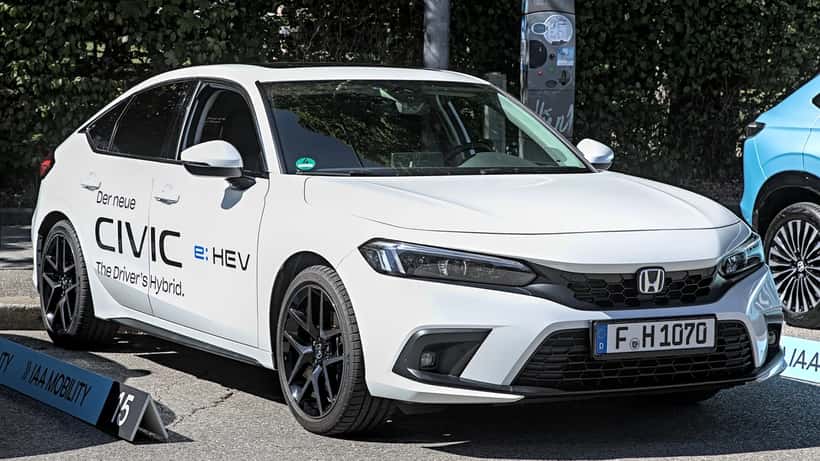
 Honda indefinitely suspended development of its $15-billion electric vehicle complex in Ontario on May 14, 2026, confirming what the auto industry had quietly anticipated for months. The company — which posted its first full-year loss in corporate history, a deficit of $3.68 billion — announced that it would redirect engineering and production resources toward hybrid vehicles rather than full battery electrics. The Alliston, Ontario, manufacturing facility where the original expansion was planned will continue operating, and Honda says existing jobs are not affected. But 1,000 jobs that were expected to materialize over the next decade will not. And for the millions of Canadians who drive or are considering a Honda, the question has shifted: if the future is hybrid rather than electric, what does that mean for your car?
Why Honda Changed Course: The EV Market Slow-Down
The logic behind Honda's pivot is straightforward, even if its consequences are significant. North American demand for fully electric vehicles has grown more slowly than major automakers projected in the early 2020s. The Trump administration's dismantling of EV tax credits in the United States removed a critical demand driver, and since a substantial portion of vehicles built in Alliston are sold across the border, that policy change hit Honda's Canadian production directly. Automotive tariffs added another layer of cost uncertainty.
Honda is not alone. Multiple major automakers have scaled back EV commitments in 2025 and 2026, citing similar pressures. What distinguishes Honda's announcement is the scale — a $15 billion project that was publicly confirmed and then publicly walked back — and the clarity of its alternative: hybrids, not pure electrics, are now the company's stated path to carbon neutrality.
Hybrid vs. EV: What Canadians Need to Know About Maintenance
The shift matters for Canadian consumers because hybrid and fully electric vehicles have meaningfully different maintenance profiles — and those differences affect both the cost and the nature of specialist advice you need.
Hybrid vehicles combine a conventional internal combustion engine with an electric motor and a battery pack. The engine still requires oil changes, timing belt or chain service, spark plug replacement, and coolant flushes on the standard schedule. The electric motor and battery add complexity without eliminating the ICE maintenance demands. Regenerative braking, used in all hybrid and EV designs, does reduce wear on brake pads — but it also introduces electronic brake system components that require diagnostic tools standard ICE mechanics may not carry.
Fully electric vehicles, by contrast, eliminate the combustion engine entirely. No oil, no spark plugs, no alternator, no transmission fluid in the traditional sense. The maintenance list is genuinely shorter. But battery health monitoring, thermal management systems, and the high-voltage systems that EVs rely on require specialized training and certification that not all Canadian garages currently have.
As EV battery costs continue to present challenges for Canadian drivers, Honda's bet on hybrids represents a practical middle ground — but one that still demands informed maintenance decisions from owners.
What Hybrid Owners Are Often Surprised By
The practical reality for hybrid drivers in Canada is that the car is neither as simple as a gas vehicle nor as low-maintenance as an EV. Several issues catch owners off-guard:
Battery degradation on older hybrids: Hybrid battery packs — particularly the nickel-metal hydride batteries in older Honda and Toyota models — lose capacity over time. Replacement costs range from $2,000 to $5,000 depending on the vehicle and whether a genuine OEM or remanufactured pack is used. A pre-purchase inspection by a mechanic familiar with hybrid systems can flag early degradation before you commit.
Software and diagnostic complexity: Hybrid and PHEV systems rely on increasingly complex energy management software. Fault codes that appear straightforward on a generic OBD-II reader often require brand-specific diagnostic equipment to interpret correctly. Owners who take a hybrid to a non-specialist shop may receive an accurate code but an incorrect diagnosis.
Cold weather performance: Canadian winters affect hybrid battery performance in ways that pure-ICE vehicles do not experience. Battery capacity at -20°C can drop noticeably, reducing the EV range component and affecting fuel efficiency. Mechanics familiar with cold-climate hybrid operation can advise on battery conditioning, pre-heating, and tire strategies that maintain efficiency through winter.
The Government Incentive Picture in 2026
Alongside Honda's announcement, it is worth noting that the federal government's new Electric Vehicle Affordability Program (EVAP), which launched on February 16, 2026, provides up to $5,000 toward the purchase of a battery-electric vehicle and up to $2,500 toward a plug-in hybrid. The program applies to vehicles valued at $50,000 or less, with no cap on Canadian-made EVs.
For consumers deciding between a Honda hybrid (not PHEV, so ineligible for EVAP), a plug-in hybrid, or a fully electric alternative, the incentive structure now creates a meaningful cost differential. A plug-in hybrid eligible under EVAP at $2,500 versus a conventional hybrid at $0 incentive represents real savings — but only if the PHEV fits your driving pattern and charging access.
This is exactly the kind of calculation that warrants a conversation with both a financial professional and a mechanic: what does the total cost of ownership actually look like over five years for each option, factoring in fuel costs, maintenance schedules, incentive capture, and your specific driving context?
When Should You Talk to a Mechanic About a New Vehicle?
The instinct for most Canadian drivers is to consult a mechanic after something goes wrong. With hybrid and PHEV technology, the more valuable consultation happens before: before a purchase, before a warranty expires, and at the first sign that fuel efficiency has changed unexpectedly.
Mechanics who specialize in hybrid systems can provide a pre-purchase inspection that goes beyond the standard checklist — assessing battery state of health, checking for hybrid-specific fault codes stored silently in the ECU, and flagging known issues on specific model years. For used hybrid purchases in particular, where battery condition is the single largest variable in long-term cost, this inspection is not optional; it is essential.
Platforms like Expert Zoom connect Canadians with certified automotive specialists available for consultations — including mechanics who can advise on hybrid system health, maintenance schedules, and what to ask a dealer before you sign.
Honda's pivot to hybrids may prove to be a prescient read of where Canadian drivers are actually heading. Whether you are buying new or maintaining what you already drive, understanding the specific demands of hybrid technology is the first step to getting that bet right.
