 Dimitri
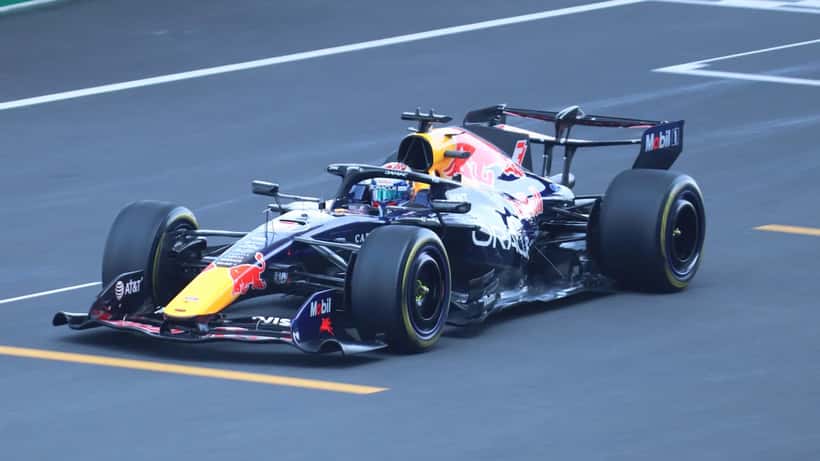
 Max Verstappen is the most searched name in motorsport in Canada right now, and not entirely for the right reasons. After three difficult races to open the 2026 Formula 1 season — including a qualifying crash in Japan that sent him 20th on the grid — the four-time champion is fighting back with the most technically demanding car in F1 history. The 2026 regulations have completely rewritten what a Formula 1 power unit looks like. And the story of how F1 engineers are managing electric and combustion power has real implications for the millions of Canadians who now drive hybrid vehicles.
What Makes the 2026 F1 Car Different
Formula 1 entered 2026 with its most dramatic technical reset in over a decade. The new power unit retains the 1.6-litre V6 turbocharged engine but triples the electrical output from the Energy Recovery System (ERS). For the first time in F1 history, the split between internal combustion and electric power is approximately 50/50.
This means cars like Verstappen's Red Bull are producing roughly half their performance from electric motors drawing energy from a battery that is recovered from braking and exhaust heat. The practical effect: cars accelerate out of low-speed corners at a rate that is increasingly driven by electrical torque, not just engine power.
The Canadian Grand Prix at Circuit Gilles-Villeneuve in Montreal — scheduled for May 22–24, 2026 — will be one of the first truly hybrid-dominant Formula 1 events Canadian fans experience live. It is also Canada's first-ever F1 Sprint race weekend, a format change that has generated significant interest from fans and bettors alike.
Why F1 Hybrid Technology Matters to Canadian Drivers
Formula 1 has always been a proving ground for technology that eventually reaches production vehicles. The seamless gearbox, carbon fibre brakes, kinetic energy recovery, and direct fuel injection all made their commercial debuts in racing before becoming standard features in everyday cars. The 2026 F1 regulations — with their emphasis on maximising electric recovery and output — mirror the direction that mainstream hybrid and plug-in hybrid vehicles have already taken.
According to Natural Resources Canada, hybrid electric vehicles make up an increasing share of new vehicle sales across Canadian provinces, with adoption accelerating particularly in Quebec, British Columbia, and Ontario. Many Canadians are now driving vehicles with ERS-like systems that recover energy under braking, manage power distribution between electric and combustion modes, and rely on high-voltage battery packs that require specialist maintenance.
The Hybrid Maintenance Gap in Canada
The rapid growth in hybrid vehicle ownership has outpaced the training and certification of specialist mechanics in many Canadian markets. While major dealer networks have factory-trained technicians for specific brands, independent mechanics — who handle the majority of vehicle servicing across Canada — often have uneven access to hybrid-specific training and diagnostic equipment.
This creates a practical problem for hybrid owners. The systems that make hybrids work — high-voltage battery management units, regenerative braking integration, electric motor cooling circuits — are distinct from traditional combustion-engine components. A mechanic who knows internal combustion thoroughly may not have the diagnostic tools or training to properly assess a hybrid battery exhibiting early degradation signs.
Common hybrid-specific issues that are often missed or misdiagnosed include:
- Battery capacity degradation: Hybrid batteries lose capacity gradually. A battery at 70% of original capacity may not trigger a warning light but will measurably reduce fuel economy and EV range.
- Inverter and converter faults: The high-voltage converter that manages power flow between the battery, electric motor, and combustion engine is a complex component that can fail subtly before showing obvious symptoms.
- Regenerative braking wear patterns: Because hybrid brakes regenerate energy under light braking, the friction brake pads wear differently than on traditional vehicles — often leading to premature glazing rather than standard wear.
- Coolant system complexity: Many hybrid systems have a separate coolant loop for the high-voltage battery and inverter, which requires specialist knowledge to service correctly.
When Should a Canadian Hybrid Owner See a Specialist?
Not every hybrid issue requires a dealer visit, but some symptoms should prompt a specialist consultation:
- Sustained drop in fuel economy (more than 10–15% from your normal baseline)
- The "Ready" light is slow to illuminate in cold weather
- Battery charge indicator fluctuates unexpectedly while driving
- Unusual engine start/stop patterns in EV mode
- Any warning light involving the high-voltage battery, electric motor, or hybrid system
A hybrid specialist or certified electric vehicle technician can run a battery state-of-health diagnostic that standard OBD-II scanners cannot replicate. In Canada, the qualification to service high-voltage systems is governed by provincial standards — in Ontario, for example, mechanics working on hybrid high-voltage systems must hold certification under the Motor Vehicle Inspection Station program.
The F1 Connection: What Engineers Know That Mechanics Are Learning
Verstappen's Red Bull Racing team employs over 1,000 engineers in Oxfordshire managing the vehicle's energy systems in real time. That depth of expertise is obviously not required for a Prius or Camry Hybrid. But the fundamental principle — that electric and combustion systems must be precisely managed, monitored, and diagnosed as integrated units, not separately — is the same.
As the 2026 F1 season unfolds and Canadians tune in ahead of the Montreal Grand Prix, it is worth remembering that every lap Verstappen runs is a test of technologies that will appear in the next generation of family vehicles. If you drive a hybrid, a qualified mechanic who understands both sides of that equation is your best maintenance partner.
This article is for informational purposes only. For specific maintenance advice, consult a certified automotive technician.
