 Dimitri
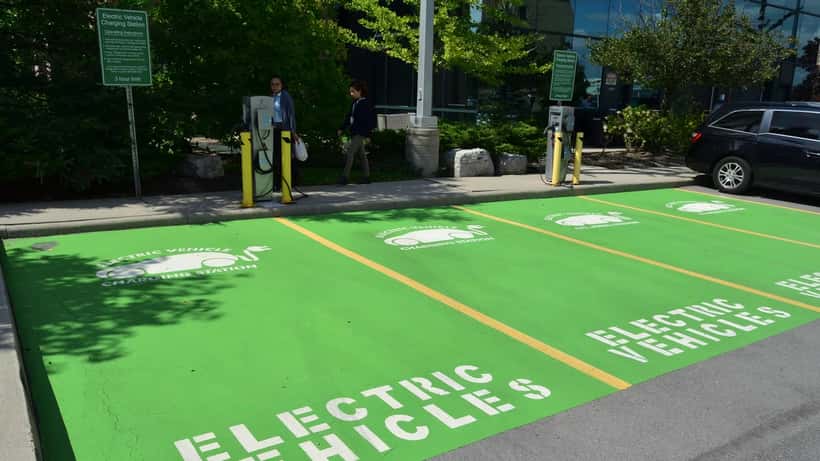
 Canada's federal government invested $11.7 million in new EV charging infrastructure on April 8, 2026 — but while Ottawa promotes electric vehicles, thousands of Canadian drivers are discovering a painful reality: EV repairs can cost more than twice what gas-powered vehicles demand, and most owners had no idea.
The Hidden Costs Behind the Green Promise
Electric vehicles are often sold on a simple promise: lower maintenance, lower fuel bills, long-term savings. And in many ways, that's true. EVs cost up to 40% less to maintain for routine servicing — no oil changes, fewer brake replacements, simpler drivetrains. Annual fuel savings average around $1,900 CAD for a typical Canadian household.
But the equation changes dramatically the moment something goes wrong with the battery.
EV repairs averaged $7,026 compared to $5,345 for gas vehicles in recent data — a gap driven almost entirely by high-voltage battery and electrical system costs. Battery pack replacement alone can run anywhere from $7,500 to $25,000 or more, depending on the make and model. And increasingly, insurance companies are writing off EVs after even minor collisions if the battery is compromised, because the repair cost exceeds the vehicle's value.
"We're seeing more and more EVs come in that owners assumed would be a straightforward fix," says a certified EV technician. "When it turns out to be a battery module issue, the sticker shock is real. Customers weren't prepared for that conversation."
Why Battery Warranties Matter More Than You Think
Most manufacturers offer battery warranties of up to 10 years or 160,000 km — a genuine protection that every EV buyer should scrutinize before signing any contract.
However, warranty coverage varies significantly between manufacturers, and the fine print matters. Some warranties cover capacity degradation only below a specific threshold (often 70% of original capacity), meaning a battery that's lost 25% of its range may not be covered. Others exclude damage from improper charging habits, extreme temperatures — a real concern in Canadian winters — or modifications.
The $5,000 federal EV rebate that returned in February 2026 has pushed more Canadians toward electric vehicles. With new brands like BYD planning 20+ dealership locations across Canada, Canadians will increasingly encounter EVs with unfamiliar warranty structures and limited local repair networks.
According to the federal government's own Natural Resources Canada investment announcement, the EV ecosystem is growing fast — but the repair infrastructure hasn't kept pace.
The Mechanic Shortage You Haven't Heard About
Not every garage can work on an EV. High-voltage battery systems require specialized training and equipment. In many smaller Canadian cities and rural areas, certified EV technicians are scarce — meaning a breakdown can result in expensive towing fees to reach a qualified shop, and longer wait times for parts.
This creates a two-tier repair landscape: EV owners in Toronto, Vancouver, and Montreal have reasonable access to qualified shops. But drivers in Saskatoon, Moncton, or Thunder Bay may face weeks-long waits and transport costs that can add hundreds to an already painful repair bill.
Industry observers note that the breakeven point for EV ownership — once estimated at five years — has improved to about 2 years and 4 months for many Canadian households. But that calculation assumes the battery stays healthy and warranty claims are honoured without dispute. When they aren't, the math shifts fast.
What to Do Before You Buy or Repair
Whether you're considering purchasing an EV or already own one, here's what certified mechanics recommend:
Before purchasing: Always obtain a pre-purchase inspection from an EV-certified mechanic, not just a visual check. Ask for a battery health report that shows current capacity percentage. Verify the exact terms of the battery warranty, including what voids it.
If something goes wrong: Don't assume the warranty covers it — get a written diagnosis from a certified technician before authorizing any work. If the manufacturer denies a warranty claim you believe is valid, you have options under Canadian consumer protection law.
For maintenance: Follow the manufacturer's charging guidelines strictly. Repeatedly charging to 100% or letting the battery drop to near-zero shortens lifespan significantly. In cold climates, pre-conditioning your battery before driving in winter temperatures can reduce degradation.
The Battery Recycling Problem Looming Ahead
Canada currently has no cohesive national regulatory framework for end-of-life EV battery recycling. Industry estimates suggest 93,000 batteries will need recycling by 2040, and up to 500,000 by 2045. Limited infrastructure exists in Quebec, Ontario, and British Columbia — but high freight costs for transporting batteries make recycling economically challenging in most other provinces.
This is worth knowing not just for environmental reasons, but because it affects resale value. An EV with an aging battery pack and limited local recycling options may be harder to sell than buyers assume.
When to Consult a Specialist
If you're dealing with an EV warranty dispute — a manufacturer refusing to replace a battery under warranty, or a dealer offering inadequate compensation for a failed component — a qualified mechanic who specializes in EVs can provide a technical assessment that supports your consumer complaint or legal claim.
Similarly, if you're buying a used EV and concerned about undisclosed battery degradation, an independent third-party inspection from an EV-certified mechanic is money well spent.
The EV transition is happening whether Canadians are ready or not. The government is investing, the automakers are expanding, and the vehicles are arriving. But the gap between EV marketing and EV reality is still wide enough to cost unprepared buyers thousands of dollars.
Knowing what questions to ask — and who to ask them to — is the difference between a smart purchase and an expensive lesson.
Note: For major warranty disputes or suspected undisclosed defects at the time of sale, consider consulting a consumer protection lawyer in addition to a qualified mechanic.
Expert Zoom connects Canadians with certified mechanics and automotive specialists who can assess EV battery health, provide pre-purchase inspections, and help navigate warranty claims.
