 Dimitri
 DriveBC 2026: BC Invests $45M in Road Resurfacing — 5 Things Mechanics Say Every Driver Must Check
British Columbia is transforming 190+ kilometres of highway infrastructure this summer, with the Province committing $45 million to road resurfacing across northern BC in 2026. While smoother roads are on the horizon, getting there safely requires preparation — and mechanics say most drivers aren't ready for what construction season actually demands of their vehicles.
DriveBC, the Province's real-time road information service at drivebc.ca, is tracking dozens of active construction zones this month. Whether you're navigating Highway 97 north of Prince George or Highway 27 near Vanderhoof, automotive experts say what you check before you leave matters far more than most drivers realize.
BC's 2026 Road Resurfacing Season: What's Actually Happening
The scale of this year's investment is significant. According to BC government releases from June 2026, the construction season covers more than 190 kilometres of northern BC roads across two major corridors.
Highway 97 between Azouzetta and Mount Solitude — two hours north of Prince George — will see 40 kilometres of asphalt resurfacing in a $10.5 million contract running through fall 2026. Highway 27 will undergo 75 kilometres of seal coating from the Highway 16 junction to the Stuart River Bridge, under a separate $6 million contract. Resurfacing is also underway along Highway 16 near the Kasiks River Bridge and along Highway 113.
There is good news alongside the construction: the Highway 1 Kamloops-to-Alberta single-lane alternating section in the Selkirk area, which ran through June 15, 2026, has wrapped up. But new projects are beginning as others end, and BC's summer construction season runs through fall — meaning months of active construction zones ahead.
Why Summer Construction Is Harder on Vehicles Than You Think
Many drivers assume summer driving is gentle on cars. In BC's northern highway corridors, the reality is different. Loose gravel kicked up by heavy construction equipment and trucks can crack windshields in seconds. Uneven pavement transitions between old and new asphalt stress suspension components repeatedly over long stretches. Long detours at reduced speeds place extra demand on cooling systems. Idling in construction zone queues during June heat adds stress to engine coolant.
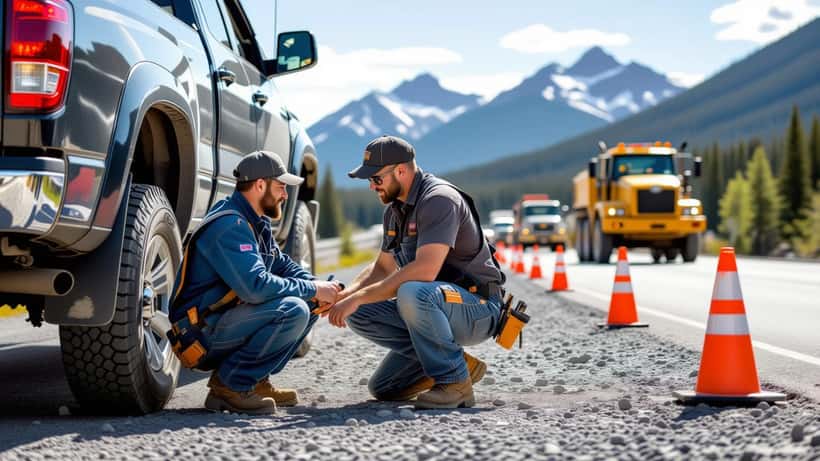
Mechanics across BC consistently report a spike in repairs tied directly to summer construction season driving — cracked windshields, low tire pressure after gravel sections, broken sway bar links from rough transitions, and overheating engines on slow northern routes.
"People come in after a weekend trip up Highway 97 and they're surprised that their tire pressure sensors are lit up or there's a fresh chip in the windshield," one BC mechanic noted. "These things are predictable. They're preventable."
5 Vehicle Checks Before You Drive BC's Construction Zones
1. Tires — tread depth and pressure
Construction zones frequently include temporary gravel stretches, rough surface transitions, and sharp debris. Low tread depth dramatically reduces your ability to brake on gravel or slick surfaces. Before any summer trip, have tire tread measured — the legal minimum in BC is 1.5 mm, but mechanics recommend replacing at 3-4 mm for northern highway summer driving. Also check tire pressure against your vehicle's door placard specification, not the tire sidewall's maximum rating.
2. Windshield condition
A small chip that seems harmless at rest can propagate into a full crack when struck by a pebble at highway speed. If you have existing chips, have them assessed before summer road trips. Chip repair is inexpensive — typically $60-$100 — and is covered under most British Columbia comprehensive insurance policies with no deductible. Full windshield replacement runs $300-$800 depending on the vehicle.
3. Brakes and brake fluid
Long descents and mountain grades near construction zones demand fully functional brakes. If you've driven more than 40,000 km since your last brake inspection, have pads checked before heading north. Brake fluid also absorbs atmospheric moisture over time, which degrades braking performance under heat — a fluid exchange adds roughly $100 to a service visit and can be critical on BC grades.
4. Coolant and cooling system
June in northern BC can mean heat. Construction zone delays mean extended idling. If your coolant is more than two years old — or if you notice any temperature gauge creeping higher than normal in traffic — have the cooling system inspected before a northern trip. An overheating engine in the middle of a single-lane closure is both dangerous and expensive to resolve roadside.
5. All lights and signals
Active construction zones require split-second communication with other drivers and flaggers. Inspect all signal lights, brake lights, and headlights before you go. Non-functioning signals in a BC construction zone aren't just a safety hazard — they are a ticketable offence under the Motor Vehicle Act, and fines in construction zones are doubled under BC law.
How to Use DriveBC Before Every Trip
DriveBC provides real-time updates on road conditions, closures, single-lane alternating sections, and anticipated delays for every BC corridor. Before any drive through northern BC this summer:
- Visit drivebc.ca to check active delays and advisories for your specific route
- Review the Bulletins section for ongoing project updates
- Save the DriveBC toll-free line (1-800-550-4997) if you'll be driving in areas with limited cell coverage
Construction zone speed limits in BC are strictly enforced, and fines are doubled. Plan additional travel time through the Highway 97 Azouzetta-to-Mount Solitude corridor, where 40 km of active resurfacing will continue through fall 2026.
If you've been dealing with recurring warning lights, new vibrations, or any concern about your vehicle's readiness, a pre-trip inspection from a licensed mechanic is a smart investment before BC's summer construction season. Canadian drivers facing rising fuel and maintenance costs are also navigating broader pressures on vehicle operating budgets — making a proactive inspection now better value than reactive repair later.
On Expert Zoom, you can connect with a licensed mechanic to discuss your vehicle's readiness for BC's summer highway construction season — or to assess any specific concern before you go.
This article is for general informational purposes. Vehicle condition and service intervals vary by make, model, and driving conditions. Consult a licensed mechanic for advice specific to your vehicle.
