 Ella Singh
Canada is fighting one of its most punishing wildfire seasons on record. As of mid-July 2026, roughly 796 fires are burning nationwide, 60 of them out of control, after more than 3,137 blazes scorched some 1.4 million hectares this season. With Environment Canada issuing heat warnings across the Northwest Territories, Manitoba, Ontario and Quebec, thousands of families are on evacuation alert — and veterinarians warn that pets are too often the last thing packed and the first to suffer.
More than 60% of Canadian households live with a companion animal, and 71% consider that animal family, according to Humane Canada. Yet in a rushed evacuation, dogs, cats, horses and backyard livestock are routinely left behind, injured or exposed to smoke that damages their lungs long after the flames are gone.
Why smoke hits animals harder than people
Wildfire smoke is not just an inconvenience for pets — it is a genuine health threat. Fine particulate matter irritates the airways of cats and dogs the same way it does ours, but animals cannot tell you when they feel unwell, and they breathe faster relative to their body size.
Watch for coughing, gagging, red or watery eyes, nasal discharge, lethargy, reduced appetite, or open-mouthed breathing in cats. Older animals and flat-faced breeds such as pugs, bulldogs and Persian cats are especially vulnerable because their airways are already compressed.
Birds are the most sensitive of all. Their efficient respiratory systems absorb airborne toxins quickly, which is why a bird in distress can decline within hours. If your animal shows laboured breathing that does not ease once it is indoors with clean air, treat it as an emergency and contact a veterinarian immediately.
Build a pet go-bag before the alert comes
The single most useful thing an owner can do is prepare an evacuation kit while there is still time to think clearly. The official Canada.ca wildfire preparedness guide advises building a household plan that accounts for every member, including pets and service animals.
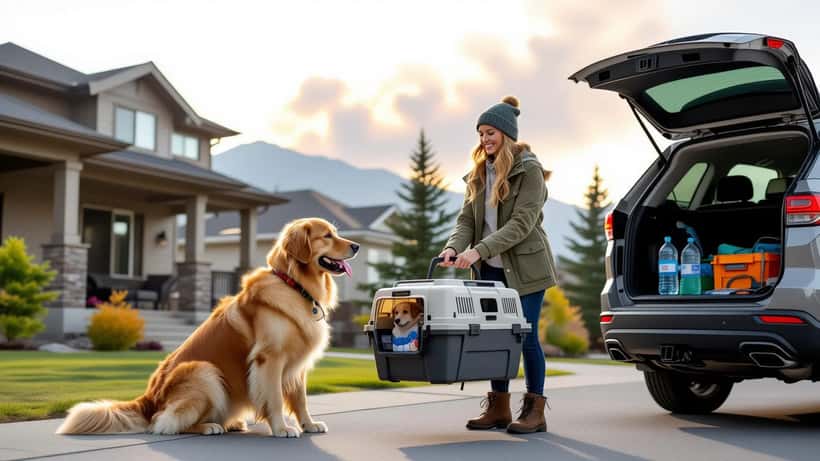
A practical pet go-bag should hold at least three days of food and bottled water, collapsible bowls, any medication with dosing instructions, a spare leash and a sturdy carrier for each animal. Add a recent photo of you with your pet — it proves ownership if you are separated — plus vaccination records, a familiar blanket or toy, and waste bags or a small litter tray.
Crucially, make sure your pet is microchipped and that the registered contact details are current. Evacuations scatter animals across shelters and foster homes, and a working microchip is frequently the only way owners and pets are reunited weeks later.
Livestock and large animals need a head start
For rural Canadians, horses, cattle and other large animals raise the stakes. You cannot load a horse trailer in five minutes, so decision-making has to happen early. If an evacuation alert is issued and you have transport, move large animals before the order becomes mandatory and roads clog.
If you genuinely cannot evacuate livestock, do not lock them in a barn that could ignite. Open gates to the largest, most cleared field available, remove halters that could snag, and mark animals with your phone number using a livestock crayon or a luggage tag braided into a mane. Provincial bodies such as the Alberta SPCA and Alberta Agriculture, together with the Regional Municipality of Wood Buffalo, are developing formal animal-response packages precisely because these situations catch owners unprepared.
What to do the moment you return
Coming home after an evacuation is not the end of the risk. Ash, debris and lingering smoke can irritate paws, eyes and lungs for days. Keep pets indoors as much as possible until air quality improves, wipe their paws and coat to remove settled particulates, and provide plenty of fresh water to help flush their system.
Book a veterinary check-up if your animal was exposed to heavy smoke or seemed off during the ordeal. Respiratory damage and stress-related conditions do not always show immediately, and a professional assessment can catch problems before they escalate. The same caution applies to the broader health risks wildfire smoke poses across Canada this summer, which doctors say families underestimate.
When to call an expert
Every household's situation is different, and generic checklists only go so far. A senior dog with a heart condition, a pregnant cat, an exotic bird or a small herd of goats each demands tailored advice that a licensed veterinarian can provide. Animal behaviour also changes under stress — frightened pets bolt, bite or hide, and understanding those warning signs your pet is under threat can prevent a second emergency during the chaos of an evacuation.
If you are unsure whether your animal's symptoms warrant a visit, or you want help building an evacuation plan specific to your species and their medical history, a veterinary professional can walk you through it. On Expert Zoom you can connect with veterinarians and animal-care specialists who help Canadian owners prepare for — and recover from — wildfire evacuations.
This article is general information and does not replace individual veterinary advice. If your pet shows signs of respiratory distress, heat stress or injury during a wildfire event, contact a licensed veterinarian or emergency animal hospital without delay.
The 2026 season is a reminder that emergency planning is not only about people and property. The animals that share our homes depend entirely on the choices we make in the minutes before we leave — so make those choices now, while the sky is still clear.
