 Adèle Chartrand
Canada is heading into its fourth consecutive year of above-average wildfire activity in 2026, and health officials are already issuing warnings about what that means for the millions of Canadians who will be exposed to wildfire smoke this summer. Whether the fires are burning in British Columbia, Alberta, or Northern Ontario, the smoke doesn't stay local — it drifts thousands of kilometres, and the health impacts are measurable even for people who never see a flame.
What the 2026 Wildfire Season Looks Like
According to CBC News reporting on federal data, Canada is coming off three consecutive severe wildfire years, with the 2024 season being the second-worst on record behind 2023, when approximately 150,000 square kilometres burned. Public Safety Canada has flagged 2026 as a year of "concerning signs" — lingering drought conditions in Western Canada and a forecast warm summer elevate the risk of another severe season.
The practical implication for most Canadians: you don't have to live near a fire to be affected. Wildfire smoke has been documented crossing provincial borders, reaching the US Midwest, and in 2023 even drifting to Europe. In Canadian cities from Vancouver to Toronto, orange-tinged skies and reduced visibility were visible hundreds of kilometres from any active fire.
Why Wildfire Smoke Is Medically Different from Other Air Pollution
The key hazard in wildfire smoke is fine particulate matter — specifically particles smaller than 2.5 micrometres (PM2.5). These particles are small enough to bypass your respiratory system's natural defences and penetrate deep into the lungs, where they enter the bloodstream.
As Health Canada documents under its wildfire smoke and air quality health guidelines, wildfire smoke also contains carbon monoxide, nitrogen dioxide, and toxic volatile organic compounds released from burning vegetation, structures, and vehicles.
Unlike urban smog, wildfire smoke can hit dangerously high levels suddenly — Air Quality Health Index (AQHI) scores can jump from moderate (3–4) to very high risk (7+) within hours, even on days that started clear.
When to Consult a Doctor: The Warning Signs
For healthy adults, short-term exposure to smoke typically causes eye irritation, coughing, and mild shortness of breath that resolve once air quality improves. These symptoms are uncomfortable but not medically urgent for most people.
However, certain signs indicate that you or someone in your household needs medical attention:
Seek medical care promptly if you experience:
- Chest pain or tightness that doesn't improve after moving indoors
- Shortness of breath at rest, not just during activity
- Wheezing or a new persistent cough that lasts more than 2 days after smoke exposure
- Heart palpitations or an irregular heartbeat
- Confusion, extreme fatigue, or signs of carbon monoxide exposure (headache, dizziness, nausea in enclosed spaces)
- Worsening of existing asthma, COPD, or heart disease symptoms despite taking prescribed medication
Call 911 immediately if you experience:
- Difficulty breathing that is severe or worsening rapidly
- Blue-tinged lips or fingertips
- Loss of consciousness
Who Is at Highest Risk?
While no one is immune to the effects of sustained smoke exposure, certain groups face significantly elevated risk:
Children under 14: Lungs are still developing, and children breathe more air per kilogram of body weight than adults. They're often outside during smoke events without parents realizing the danger.
Adults over 65: Reduced lung function and a higher prevalence of underlying cardiovascular and respiratory disease increases vulnerability. Research published in journals tracking the 2023 Canadian wildfire season showed excess emergency department visits in seniors 65+ in all provinces affected by smoke.
People with asthma, COPD, or heart disease: Wildfire smoke is a known trigger for asthma attacks and can precipitate cardiac events. Patients in this group should have an action plan in place before wildfire season begins — and should consult their physician now if they don't.
Pregnant individuals: Emerging research links heavy PM2.5 exposure during pregnancy to increased risk of preterm birth and low birth weight.
Practical Steps to Reduce Your Exposure
The most effective protective measures during active smoke events, in order of effectiveness:
Stay indoors with windows and doors closed. Air conditioning in recirculate mode filters some particulate matter. If you have a central HVAC system, upgrade to a MERV-13 or higher filter.
Use a portable air purifier with a HEPA filter in the rooms where you spend the most time — bedroom and living area. Units capable of filtering a room of 350–500 square feet are widely available and cost $100–300.
Check the AQHI before going outside. The Air Quality Health Index (1–10+) is updated hourly at weather.gc.ca. At AQHI 7 or higher, outdoor exercise should be avoided by sensitive groups. At AQHI 10+, everyone should limit outdoor time.
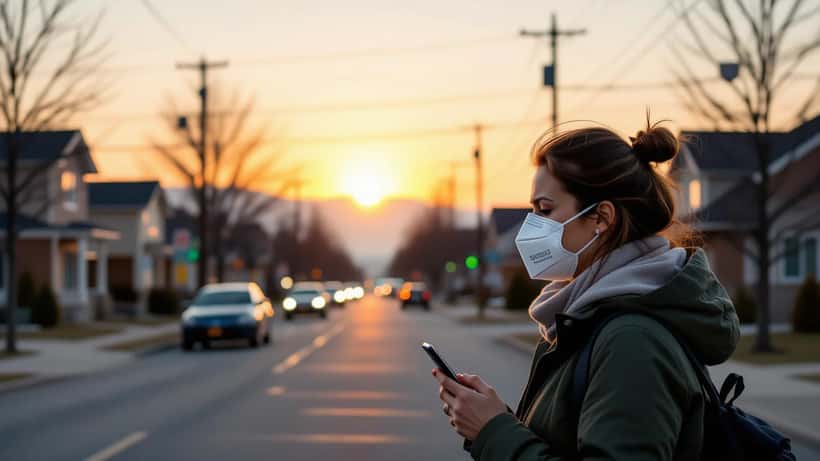
Wear an N95 or KN95 respirator if you must go outside during high-smoke periods. Surgical masks and cloth masks do not filter fine particulate matter effectively.
Keep asthma inhalers and emergency medications fully stocked. Don't wait for a smoke event to realize your rescue inhaler has expired.
When to See a Health Expert About Wildfire Smoke
If you have existing respiratory or cardiovascular conditions, the start of wildfire season — not the middle of a smoke event — is the right time to consult a health professional. A physician or respiratory specialist can:
- Review your current medication plan and adjust for summer exposure
- Prescribe a written asthma or COPD action plan specific to smoke conditions
- Advise on monitoring tools (pulse oximeters, peak flow meters) appropriate for your condition
- Identify whether your symptoms during past smoke events were managed optimally
For parents of young children and those caring for elderly family members, a preemptive consultation gives you clear thresholds and instructions before an emergency arises.
The Bottom Line for Canadian Households
Wildfire smoke is no longer a seasonal inconvenience in Canada — it's a recurring public health event. With 2026 showing early signs of another challenging fire year, now is the time to prepare.
An Expert Zoom health specialist can help you build a personal smoke exposure plan, review your medication needs, and give you clear guidance on when home management is appropriate versus when emergency care is needed.
Don't wait for orange skies to start asking questions. The smoke will come. The plan should already be in place.
See also: 5 Respiratory Symptoms to Watch After Canada's Dust Storms
This article is for informational purposes only and does not constitute medical advice. Always consult a qualified healthcare professional for medical concerns. Call 911 for life-threatening emergencies.
