 Victoria Stewart
Canada's top female golfer, Brooke Henderson, confirmed a major partnership extension with Golf Town through 2028 on April 15, 2026 — a deal spanning more than a decade of collaboration that offers a masterclass in how athletes can build financial stability that outlasts their competitive prime.
The News: Henderson and Golf Town Cement a Decade-Long Bond
On April 15, 2026, Golf Town and Brooke Henderson announced a three-year extension of their partnership, reaffirming a relationship that has now lasted over ten years. The deal makes Henderson not just a brand ambassador but a genuine partner in Golf Town's mission to grow the game of golf across Canada.
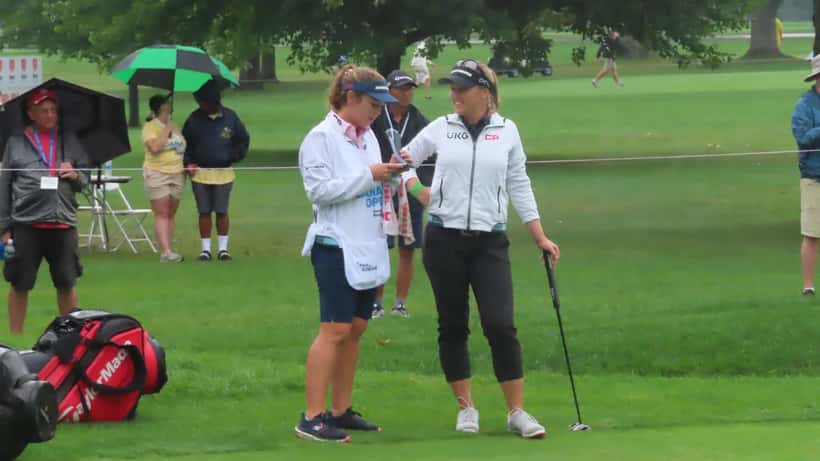
The timing comes at a significant personal and professional moment for Henderson. Her sister and longtime caddie, Brittany Henderson, stepped back from the bag in April 2026 to prepare for the birth of her first child — a transition that required Brooke to bring in veteran caddie John Killeen as a replacement. Meanwhile, Henderson is also planning her summer 2026 wedding to LPGA broadcaster Camilo Villegas.
Navigating all of this while competing on the LPGA Tour — currently at the JM Eagle LA Championship — illustrates exactly the kind of personal and professional complexity that wealth managers say makes proactive financial planning critical for athletes.
What Athletes Like Henderson Do Right (and What Most Miss)
Henderson's Golf Town relationship is a textbook example of building what financial advisors call "career capital diversification" — income streams and brand value that extend well beyond prize money. For elite athletes, prize winnings are volatile: they depend on performance, injury avoidance, and a competitive field that is always evolving.
Partnership income, by contrast, can be structured to provide long-term stability. Key elements of a well-structured sponsorship deal that a wealth manager would look for include:
- Multi-year guaranteed minimums: Locking in income for 2-3 years removes dependence on any single season's performance.
- Extension clauses: Henderson's deal includes a renewal through 2028, giving her income visibility and the partner long-term planning security.
- Brand alignment: Golf Town's mission aligns with Henderson's public identity — growing golf in Canada. Authentic alignment strengthens both parties' reputations and reduces reputational risk.
- Performance incentives (structured carefully): Bonuses tied to results are fine, but a deal too heavily weighted on performance creates income instability. The base must be livable.
According to the Financial Consumer Agency of Canada (FCAC), individuals with irregular or performance-based income are at significantly higher risk of financial shortfall if they don't have a savings buffer and diversified income plan in place.
The Caddie Change: Even Trusted Relationships Need Backup Plans
Henderson's experience with her caddie transition offers another financial planning lesson — one that applies far beyond professional golf.
For eleven years, Brittany Henderson was beside her sister 24/7 on tour, handling logistics, course management, and emotional support. When that partnership needed to pause due to Brittany's pregnancy, Brooke turned to experienced professional John Killeen to maintain performance continuity.
In financial planning, this maps directly to the principle of key-person risk: over-relying on a single advisor, partner, or income source creates fragility. Wealth managers consistently advise clients to:
- Diversify income sources: Prize money, sponsorships, appearance fees, licensing, speaking engagements.
- Build emergency reserves: An income disruption — injury, a difficult season, sponsor pullout — shouldn't trigger a financial crisis.
- Plan for career transitions early: Most professional athletes' peak earning years end before age 40. Building non-sport assets (investments, real estate, business interests) during peak earning years is essential.
What Canadian Athletes and High-Income Earners Can Learn
Henderson's situation is exceptional, but the principles apply broadly to any Canadian with variable, performance-tied income — freelancers, commissioned salespeople, entrepreneurs, and professionals in performance-based roles.
Key actions a wealth manager would recommend:
- Tax-optimize your peak earning years: Athletes and high-income earners often face highest marginal tax rates during career peaks. Registered accounts (RRSP, TFSA), corporate structures, and income-splitting strategies can significantly reduce lifetime tax burden.
- Establish a financial team early: Accountant, wealth manager, and ideally a lawyer for contract review. Henderson's Golf Town deal almost certainly involved all three.
- Don't conflate fame with wealth: Sponsorship income can disappear quickly if performance drops or a scandal hits. Fame is not a substitute for a retirement fund.
- Plan for post-career identity: Henderson is actively building brand equity in golf development — that has long-term value. Athletes who don't plan their post-career identity often find themselves financially and psychologically unprepared for the transition.
The Bigger Picture: Why Now Is the Right Time
With Canadian athletes increasingly visible on the global stage — and with the country's financial landscape growing more complex through tax changes and investment volatility — the case for proactive wealth management has never been stronger.
Henderson's April 2026 partnership renewal is a reminder that the most financially successful athletes aren't necessarily the highest earners — they're the ones who built systems, advisors, and income structures that work for them whether they're at the top of the leaderboard or navigating a difficult year.
Whether you're a professional athlete, a high-income earner, or simply someone with variable income, connecting with a qualified wealth manager can help you build the kind of financial resilience that turns a good year into lasting security.
