 Willow Bergeron
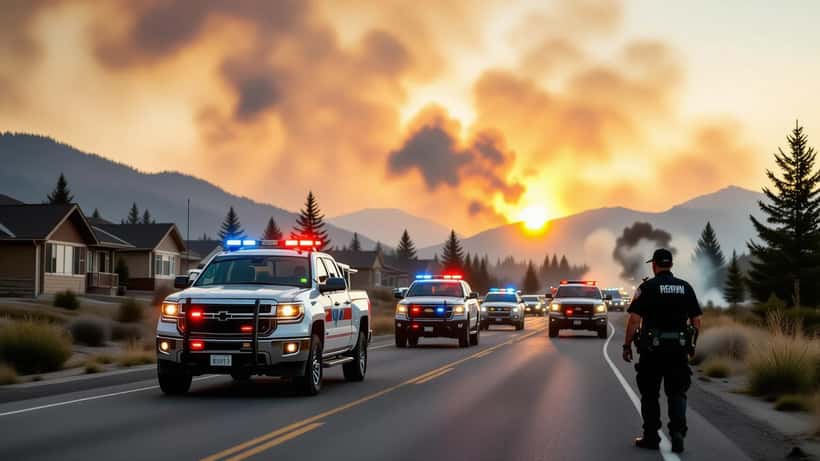
A wildfire that swept toward Thunder Lake on the afternoon of May 28, 2026 forced the County of Barrhead to declare a state of local emergency and order families to leave the Summerlea and Thunder Lake subdivisions, roughly 20 kilometres west of Barrhead, Alberta. Structural fires were already burning when the alert went out at 5 p.m., and a second evacuation order followed about 45 minutes later, according to Global News.
For homeowners and renters now sleeping in motels in Barrhead, the County office on 5306-49 Street has become the registration point, but the legal and financial questions start the moment they pack the car. Insurance lawyers across Alberta say most evacuees do not realize their coverage is already triggered, even if no flame ever touches their property.
What the evacuation order actually triggers in your policy
Standard homeowner and tenant policies in Alberta include Additional Living Expense (ALE) coverage, and the Insurance Bureau of Canada confirms that ALE starts the moment a mandatory evacuation order is issued, not when damage is confirmed. That means a Summerlea or Thunder Lake resident who left their driveway around 5 p.m. on May 28 can already open a claim for hotel rooms, restaurant meals above their usual grocery spend, fuel, pet boarding, and laundry.
The catch is documentation. Lawyers handling wildfire files from the 2023 and 2024 Alberta seasons consistently see denied or reduced ALE claims where families threw away receipts or paid cash. An insurance lawyer reviewing a Barrhead-area file would advise starting a single notebook on day one: every receipt photographed, every kilometre logged, every overnight stay tied to a mandatory evacuation order — not a voluntary alert.
Emergency Evacuation Payments versus insurance: do not confuse them
Alberta offers Emergency Evacuation Payments (EEPs) to residents under a mandatory order that lasts at least seven days. The provincial government describes these as a one-time payment meant to cover temporary accommodation and essential daily costs.
EEPs are not a substitute for an insurance claim. They are a top-up administered by the province, and accepting one does not waive your right to bill ALE costs against your homeowner policy. The most common mistake legal teams see is evacuees who take the provincial payment, then assume their own policy is closed. It is not. Both pots can run in parallel as long as the same dollar is not claimed twice.
If the evacuation in Barrhead lasts under seven days, the EEP will not trigger and insurance ALE becomes the only available source. That is why opening the insurance file on day one matters more than waiting for the province.
Tenants in evacuated subdivisions: the rent question
The Alberta Residential Tenancies Act does not automatically suspend rent when a wildfire forces a tenant out. However, a landlord cannot serve eviction during a provincially declared emergency, and tenants displaced by a state of local emergency have additional protections against retaliatory notices.
Tenants in the Thunder Lake area who are now paying motel rates in Barrhead while their landlord still expects monthly rent should ask their tenant insurance provider about ALE — the same coverage that homeowners get applies on tenant policies, often capped at 20 to 30 percent of contents coverage. A consultation with a lawyer familiar with Alberta tenancy law is worth the call before any rent dispute hardens into a formal notice.
If your home was one of the burning structures
Global News reported that buildings were on fire in both subdivisions when the initial order was issued, though specific addresses and structure types had not been confirmed by the county. For owners whose homes are total losses, the timeline for filing a fire-damage claim is governed by the policy's loss-reporting clause, typically requiring notice "as soon as practicable."
Three steps that wildfire claims lawyers emphasize:
Photograph the home before any cleanup. Even if the building is still inaccessible behind a county roadblock, photographs of debris and structural remains taken at the first authorized return become the basis of replacement-cost calculations.
Get the proof of loss form early. Insurers send a proof-of-loss document that the policyholder must complete and return. Filling it out hastily, before contents are inventoried, locks in a number that is difficult to revise. Lawyers routinely advise clients to request an extension in writing.
Do not sign restoration contracts on the spot. Restoration companies sometimes arrive at evacuation registration points offering to coordinate directly with insurers. These contracts can include assignment-of-benefits clauses that hand control of the claim to the contractor.
When the wildfire crosses jurisdictional lines
Global News noted that the fire location is outside the provincial forest protection area, meaning the County of Barrhead is leading suppression with Alberta Wildfire support. This jurisdictional split matters legally because liability questions — for example, if a fire originated on Crown land, a private parcel, or near industrial activity — affect any future subrogation by insurers and any civil claim by a homeowner.
A lawyer specializing in property and disaster files would typically wait for the post-fire incident report from the county before advising clients on a potential negligence claim. Until that report is published, the priority is preserving evidence: photographs, witness contacts, and any communications with the county or provincial agencies.
What homeowners should do this week
For families currently registered at the County of Barrhead office, the practical legal checklist is short:
- Open the insurance claim today, even with no damage information
- Save every receipt and log every kilometre driven for evacuation
- Note the exact time and channel of the evacuation alert (Alberta Emergency Alert app, radio, door-to-door)
- Do not sign any restoration or remediation contract without legal review
- Check whether your policy includes a "civil authority" clause, which broadens coverage when government action — not direct fire damage — is the trigger
A consultation with an Alberta lawyer who handles wildfire and property files generally costs nothing for the first call and can flag deadlines that an insurer will not volunteer. With the 2026 wildfire season already producing significant losses across the province, evacuated families benefit most from getting that call in early.
Further information on insurance and provincial supports during wildfires is available through the Government of Alberta's wildfires and property insurance page.
This article provides general information only and does not constitute legal advice. Homeowners and tenants affected by the Barrhead wildfire should consult a qualified Alberta lawyer for advice specific to their situation.
