 Eleanor Dubois
On March 22, 2026, Air Canada Express Flight AC8646 collided with a Port Authority fire truck while landing at LaGuardia Airport, killing both pilots and injuring 41 people. In the weeks that followed, survivors and bereaved families across Canada began asking the same urgent question: what compensation are they actually entitled to under Canadian and international law?
What Happened on Flight AC8646
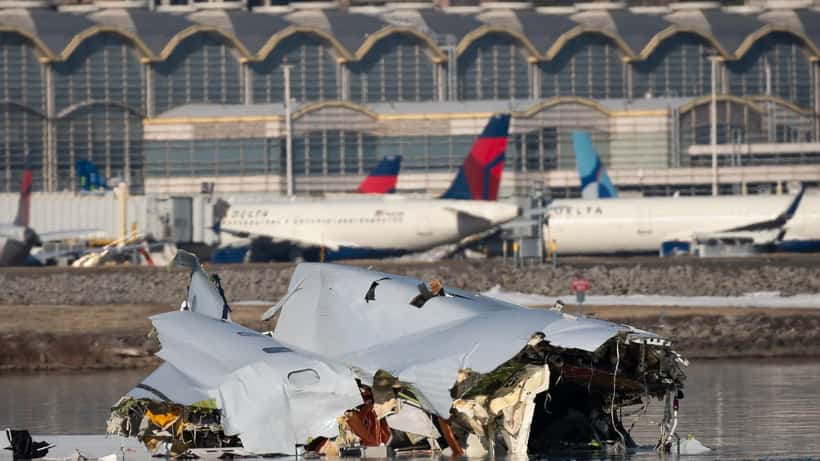
The CRJ-900 regional jet had departed Montréal-Trudeau International Airport carrying 72 passengers and four crew members when it struck a firefighting truck crossing the active runway during landing. The cockpit and forward galley were destroyed on impact. Both pilots were killed instantly. A flight attendant was ejected onto the tarmac and suffered serious injuries. In total, 41 people — including passengers, crew, and both occupants of the truck — were transported to hospital.
The National Transportation Safety Board (NTSB) and the Transportation Safety Board of Canada (TSB) launched a joint investigation. Preliminary reports noted that heavy rain and reduced visibility to approximately three miles had affected LaGuardia operations in the hours before the accident. Investigators are examining whether conflicting runway clearances allowed the fire truck to enter the active runway, and whether air traffic control protocols were properly followed.
The scale of the tragedy, combined with multiple potential defendants, makes Flight AC8646 one of the most legally complex aviation cases in recent Canadian history.
The Montreal Convention: Automatic Protection for International Passengers
Because Flight AC8646 was an international journey between Canada and the United States, the Montreal Convention of 1999 governs compensation claims. This is important: the Convention does not require passengers to prove the airline was negligent in order to collect compensation up to a set threshold.
Under the strict liability clause, Air Canada is automatically liable for bodily injury claims up to approximately 128,821 Special Drawing Rights — roughly $175,000 CAD per passenger. Within that amount, liability is absolute. The airline cannot argue its way out of it.
Beyond that threshold, claims are unlimited, provided the passenger can document their losses. Legal experts quoted by Global News in March 2026 estimated that seriously injured passengers could each recover close to $300,000 CAD or more, depending on medical costs, lost income, and long-term care needs.
Critically, the Convention also entitles survivors to an advance payment of up to the threshold amount within 15 days of making a formal claim. This advance does not constitute a settlement; it does not cap further recovery. Airlines sometimes present early offers framed as "support payments," but accepting one without legal review can jeopardize the larger claim.
Canada gives force to the Convention through the Carriage by Air Act (R.S.C., 1985, c. C-26), and the two-year limitation period for filing under that Act begins from the date of the incident, making early consultation with a lawyer essential.
Wrongful Death Claims: A More Complex Path
Families of the two pilots who died face a fundamentally different legal situation. Under Canadian occupational law, pilots are classified as employees, and their families' primary avenue of recovery from their employer is typically through workers' compensation frameworks — not direct civil suits against the airline.
However, this does not close every legal door. If the investigation establishes that a third party, such as the Port Authority of New York and New Jersey or the airport's emergency services division, is found to have been negligent in issuing runway clearances or in dispatching the fire truck, families may be able to pursue a wrongful death claim against those parties directly.
A wrongful death action can recover: lost future income and pension benefits, loss of companionship and parental guidance, funeral and estate administration costs, and pain and suffering experienced before death through a survival action.
Families of passengers who died may similarly pursue wrongful death claims under both the Montreal Convention framework and applicable provincial law. A lawyer experienced in aviation or fatal accident litigation can clarify which regimes apply and how to coordinate them for the strongest possible outcome. For further context on how Canadian courts approach accident-related wrongful death claims, see Air Canada LaGuardia crash and Canadian family rights.
Multiple Defendants: Why This Case Is Different
Most aviation claims name a single airline. Flight AC8646 is unusual because the preliminary evidence points to shared responsibility across at least three parties: Jazz Aviation (operating the flight on behalf of Air Canada), LaGuardia Airport management (Port Authority), and potentially air traffic control.
NTSB investigators are examining whether a vehicle was improperly cleared onto the runway, whether stop instructions were issued but not heard or followed, and whether weather protocols were adequate. Each finding affects who can be named as a defendant and to what degree.
For injured passengers, this complexity can work in their favour. An aviation lawyer can review the final TSB/NTSB investigation report, identify every responsible party, and ensure that no viable defendant is excluded before the statute of limitations runs out.
Practical Steps If You Were Aboard
If you or a family member was on Flight AC8646, the following steps apply regardless of the severity of injury:
1. Document all losses immediately. Medical records, receipts, time off work, mental health treatment, travel costs to access care — every documented expense strengthens your claim.
2. Do not sign early settlement offers. Airlines may propose rapid payouts framed as compassionate gestures. These often do not reflect the full value of a claim under the Montreal Convention.
3. Request the advance payment. You are entitled to this within 15 days of making a formal request; doing so does not limit your right to pursue more.
4. Track the investigation. The final TSB and NTSB reports will determine the official cause of the accident. Their conclusions on contributory negligence directly influence the strength of any claim against third parties.
5. Consult an aviation lawyer promptly. The intersection of Canadian federal law, U.S. state law, and the Montreal Convention requires specialist knowledge. A consultation at this stage is the most effective thing you can do for your family's position.
The events of March 22, 2026, are a sobering reminder that aviation accidents — rare as they are — can produce years of legal consequences. Canada has strong frameworks in place to protect those affected, but navigating them takes informed action. For related guidance on Canadian transportation rights and liability, see Canada Flight Disruptions 2026: Your Rights.
This article is for informational purposes only and does not constitute legal advice. If you or your family has been affected by Flight AC8646 or any other aviation accident, consult a qualified lawyer for advice specific to your circumstances.
