 Aria Nguyen
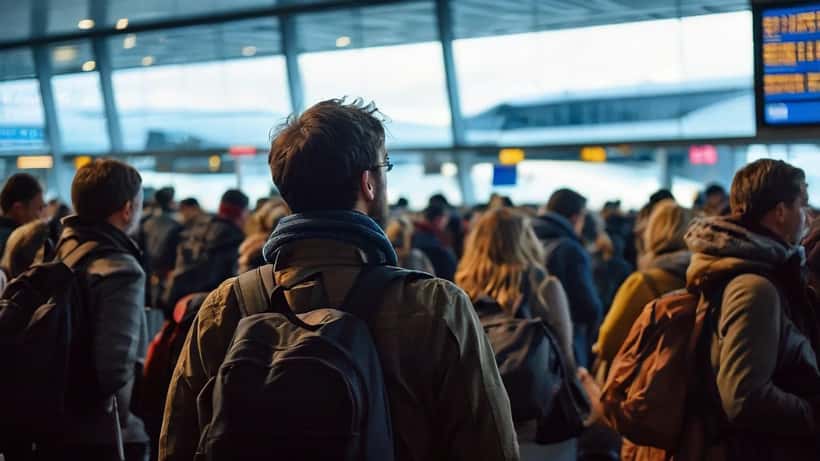
Canada's airports recorded 441 flight disruptions on April 16, 2026 alone — 55 cancellations and 386 delays across ten major hubs — leaving tens of thousands of travellers stranded, rebooked, or out of pocket. If you were among them, you may be entitled to significant compensation under Canadian law. A lawyer can help you understand exactly what you're owed.
The Scale of Canada's April 2026 Flight Crisis
The disruptions have been relentless throughout April. On April 5, 82 flights were cancelled and 423 delayed across Toronto Pearson, Montréal-Trudeau, Vancouver International, Calgary International, and five other airports. By April 16, the numbers reached their worst point: 441 total disruptions in a single day.
The airlines most affected included Air Canada (21 cancellations, 61 delays), WestJet (2 cancellations, 36 delays), and Jazz (4 cancellations, 17 delays). The causes cited by carriers ranged from severe weather — late-season snowstorms, icy runways, freezing rain — to cascading operational failures as crews and aircraft fell out of position.
For passengers, the immediate consequences included missed connections, hotel costs, lost vacation days, and missed business meetings. But a longer-term consequence is often overlooked: the right to monetary compensation, which many travellers never claim.
What the Air Passenger Protection Regulations Say
Canada's Air Passenger Protection Regulations (APPR), administered by the Canadian Transportation Agency (CTA), set out mandatory compensation standards for passengers when flights are delayed, cancelled, or overbooked.
The compensation structure works on a sliding scale based on how late you arrived at your final destination, compared to the original scheduled arrival time:
- 3 to 6 hours late: $400 CAD
- 6 to 9 hours late: $700 CAD
- 9 or more hours late: $1,000 CAD
These amounts apply to large airlines (carrying more than 2 million passengers per year, which includes Air Canada and WestJet). For smaller carriers, the minimums are lower but still legally enforceable. Crucially, compensation is owed even when weather causes the delay — provided the airline could have reasonably avoided the disruption or its downstream effects through better planning and communication.
The "Within the Airline's Control" Distinction
This is where many compensation claims fall apart — and where legal guidance becomes invaluable.
Airlines often cite "extraordinary circumstances" (weather, security threats, air traffic control decisions) to deny compensation. However, the APPR draws a careful distinction: a storm may cause the first delay, but if the airline failed to rebook you promptly, provide adequate food and lodging, or communicate clearly about your options, those failures are within their control — and compensable.
For example, if your Toronto-to-Vancouver flight was cancelled on April 16 due to a snowstorm, but the airline rebooked you onto a flight 14 hours later without offering meal vouchers or hotel accommodation, you may be entitled to both the statutory compensation and reimbursement for reasonable out-of-pocket expenses.
Understanding whether your situation qualifies requires interpreting regulatory language that airlines are professionally trained to use against passengers. A consumer rights lawyer or a transportation law specialist can review your specific circumstances and advise whether to file a CTA complaint.
Your Immediate Rights During a Disruption
Under the APPR, when a flight is cancelled or significantly delayed, airlines are required to:
- Inform you promptly of the disruption and its cause
- Rebook you on the next available flight (including on a competitor airline, if you meet certain conditions and the delay is within the airline's control)
- Provide food and drink during waits of two hours or more
- Provide hotel accommodation when an overnight stay is required and the disruption is within the airline's control
- Refund your ticket if you choose not to travel due to a cancellation or major delay
Many passengers are unaware of the rebooting-on-competitor provision or the hotel accommodation entitlement. Airlines do not volunteer this information — knowing your rights in the moment is the first step to enforcing them later.
How to File a Compensation Claim
Filing a claim involves several steps, and the process can take months if done without support.
Step 1 — Document everything. Keep all boarding passes, booking confirmations, emails from the airline, hotel receipts, meal receipts, and transportation receipts. Take screenshots of the airline app or website showing the delay or cancellation notice. Note the exact times you were told about changes.
Step 2 — Submit a complaint to the airline. Under the APPR, you must first request compensation directly from the airline. You have one year from the date of travel to make this request. The airline has 30 days to respond.
Step 3 — Escalate to the Canadian Transportation Agency. If the airline denies your claim or does not respond within 30 days, you can file a complaint with the CTA. The agency offers a mediation service and, if necessary, an adjudication process that can result in a binding decision.
Step 4 — Consider legal assistance. If your claim involves significant amounts, multiple passengers (a family trip, a group business journey), or a denial based on disputed facts, a lawyer can represent you in CTA proceedings or in small claims court.
According to Transport Canada, the government agency responsible for the regulatory framework, the APPR was specifically designed to level the playing field between airlines — which employ dedicated legal teams — and individual passengers who often do not know their rights.
When Is a Lawyer Worth It?
Legal fees can deter passengers from pursuing relatively modest claims of a few hundred dollars. But several scenarios justify professional advice:
- Your claim was denied and you believe the reason is invalid
- Your trip involved multiple passengers (the claim value rises proportionally)
- You incurred significant consequential losses — a missed business deal, a non-refundable event, a medical appointment
- The airline is citing weather but your research suggests the disruption went beyond what weather alone caused
- You are unsure whether your disruption qualifies under the "within airline's control" definition
A transportation law specialist can assess your case quickly and advise whether the potential payout justifies the cost of representation. Many offer initial consultations at no charge.
What This Month's Disruptions Signal for the Summer
April 2026's disruption pattern is partly seasonal — late winter storms, spring runway maintenance, and operational transitions — but aviation experts note that staffing shortfalls and aging fleet management software are amplifying routine weather impacts into systemic failures.
With summer travel season approaching, Canadian airports are expecting record volumes. For travellers booking flights over the coming months, the April disruptions serve as a reminder: read your itinerary carefully, understand your rights before you fly, and keep documentation habits in place even when flights go smoothly.
If you experienced a disruption this month and haven't yet filed a claim, the one-year filing window means you still have time. A legal expert on ExpertZoom can help you evaluate whether your situation warrants a compensation claim — and guide you through the process efficiently.
Note: This article provides general information about Canadian air passenger protection regulations. It does not constitute legal advice. For guidance specific to your situation, consult a qualified lawyer.
