 Willow Bergeron
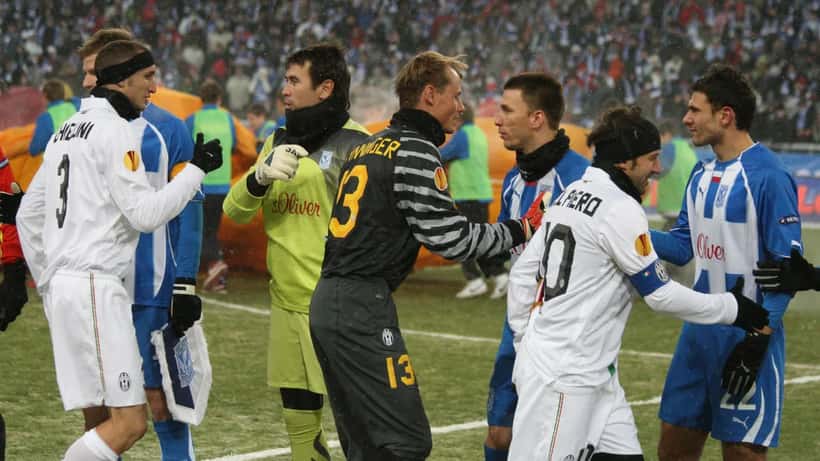
Former Arsenal goalkeeper Alex Manninger died on April 16, 2026, when his car was struck by a local passenger train at a level crossing in Nussdorf am Haunsberg, near Salzburg, Austria. The football world mourned the loss of the 48-year-old goalkeeper — and the tragedy has renewed questions about who bears legal responsibility when a vehicle collides with a train.
A Legend Lost at a Level Crossing
Manninger had been driving at approximately 08:20 local time when his car was hit by a Salzburg local railway passenger train. The vehicle was dragged several meters along the track. All passengers and the train driver were unharmed, but Manninger did not survive.
Arsenal FC issued a statement within hours: "Everyone at Arsenal is shocked and deeply saddened by the tragic passing of former goalkeeper, Alex Manninger." The Austrian Football Association (ÖFB) added that "football loses a special person" — a man who made 64 appearances for Arsenal, helped win the 1997-98 Premier League and FA Cup double, and earned 33 international caps for Austria.
Level Crossing Accidents Are More Common Than Most Canadians Think
While this tragedy occurred in Austria, the underlying risk is universal. According to Eurostat's railway safety statistics, level crossing accidents accounted for 345 incidents across the EU in 2024 alone — roughly 23% of all railway accidents — and killed 191 people, or one-quarter of all railway fatalities that year.
Canada faces a comparable challenge. Transport Canada reports that grade crossing collisions remain a persistent source of road-rail fatalities. Every year, dozens of Canadians are injured or killed at level crossings — and the circumstances often look similar: a distracted driver, a crossing without full barriers, and milliseconds of misjudgement.
Austria operates over 3,000 railway crossings and invests approximately €25 million annually in eliminating unprotected crossings through underpasses and improved signalization. Despite leading Europe in railway safety, the tragedy in Nussdorf am Haunsberg demonstrates that even in countries with stringent standards, these crossings remain dangerous.
Who Is Legally Responsible When a Car Meets a Train?
In Austria, as in many jurisdictions, the legal answer is often uncomfortable for the victim's family: when a vehicle enters a crossing improperly, liability typically falls on the driver.
But the picture in Canada is more nuanced. Under the Canadian Railway Safety Act — and as reinforced by the Safe and Accountable Rail Act — federal railway companies must carry mandatory third-party liability insurance covering injury, death, and property damage. Critically, Canadian law does not always require families to prove negligence on the part of the railway; the liability regime has built-in compensation mechanisms.
This distinction matters enormously for families navigating the aftermath of a fatal accident. A Canadian family facing similar circumstances may have grounds to investigate:
- Was the crossing properly signalized? Government agencies and road authorities share ownership of grade crossings — if warning lights, gates, or markings were inadequate, they may bear partial liability.
- Was the crossing design safe? Sight lines, speed limits, barrier timing, and track maintenance are all regulated. Failures in any of these areas can shift liability.
- Was there a documented history of near-misses? Prior incidents at the same crossing can be powerful evidence in wrongful death claims.
- What did the estate lose financially? Under Canadian wrongful death law, families may recover for lost financial support, funeral expenses, and loss of companionship — not just immediate costs.
What Families Should Do After a Rail Crossing Accident
If a loved one is killed or seriously injured in a train accident, the steps taken in the first days matter legally.
Document everything immediately. The physical condition of the crossing — signage, lighting, road markings — can change quickly after an accident. Photographs and independent witness accounts are invaluable.
Do not accept the initial narrative. Insurance adjusters and railway representatives often contact families quickly. Their job is to limit liability, not to ensure your family is fairly compensated. Before speaking with any insurer, consult a lawyer.
Understand the railway's insurance obligations. Federal railways in Canada must maintain liability coverage that includes death and injury. Knowing the coverage requirements helps your legal counsel establish the floor of potential compensation.
Look at all responsible parties. Depending on the crossing's classification (federally regulated, provincially owned road, private property), responsibility may be shared across multiple entities: the railway company, the road authority, the municipality, or Transport Canada itself.
YMYL Disclaimer
This article is for informational purposes only and does not constitute legal advice. If you or your family has been affected by a railway accident in Canada, consult a qualified personal injury or wrongful death lawyer in your province.
The Expert Angle: Why a Lawyer's Early Involvement Changes Everything
Wrongful death claims involving railways sit at the intersection of federal regulation, provincial tort law, and complex insurance regimes. The timelines for filing — and the evidence needed — differ significantly from ordinary motor vehicle accidents.
A lawyer experienced in transportation law can investigate whether the crossing complied with Transport Canada's Grade Crossing Standards, subpoena maintenance records, retain accident reconstruction experts, and negotiate with multiple insurers simultaneously.
Manninger's family in Austria will navigate their own legal system. But for Canadian families facing comparable tragedies, the path through Canada's railway liability framework is one best travelled with qualified legal counsel by your side.
ExpertZoom connects Canadians with vetted, experienced lawyers across every province. If your family has faced an accident involving a railway or grade crossing, a legal expert can help you understand your rights and your options.
