 Eliza Perron
When Bangladesh completed one of Test cricket's most stunning upsets — defeating Australia by nine wickets in Darwin on August 16, 2026 — millions of Canadian cricket fans were watching. But amid the celebration, a story much closer to home demands equal attention: Cricket Canada, the organization meant to grow the sport nationally, is under ICC investigation for match-fixing allegations, and former coaches are suing for wrongful dismissal after refusing to comply with board-directed player selections. Here is what that means for every coach, sports employee, and professional in Canada's expanding cricket sector.
What Happened in Darwin — and Why Canadian Cricket Fans Are Watching
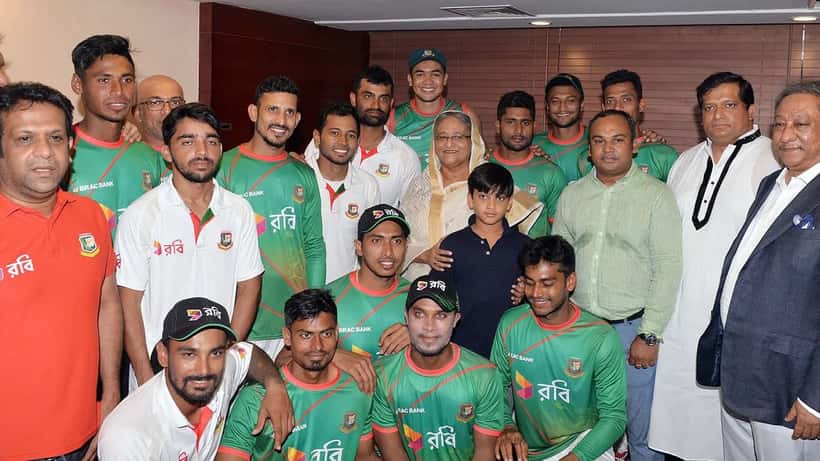
Bangladesh entered the first Test at Darwin's TIO Stadium as heavy underdogs. Just one week earlier, they had collapsed to 54 all out in a warm-up match against the Cricket Australia XI. Yet over four extraordinary days, they dismantled one of cricket's most formidable home sides. Mehidy Hasan Miraz claimed five wickets in Australia's second innings — his fifteenth career five-for — while Hasan Mahmud collected nine match wickets across both innings. Bangladesh restricted Australia to 198 and 284, then chased the 57-run target in just 7.1 overs. It was Bangladesh's first-ever Test victory on Australian soil, achieved in only their third visit to the country in 23 years.
For Canada's vast South Asian cricket community — which underpins organized cricket in Ontario, British Columbia, and Alberta — the result was electrifying. Canada has more than 500 registered cricket clubs, and interest in international fixtures involving Bangladesh, Pakistan, and India regularly outpaces that of domestic leagues. The AUS vs BAN result sent search traffic surging across Canadian platforms within hours of the final wicket falling.
Yet as fans dissected Darwin's historic scorecards, a parallel story was unfolding in Canada's own cricket governance — one with direct financial consequences for thousands of sports professionals.
Cricket Canada Under ICC Scrutiny: The Governance Collapse
The ICC Anti-Corruption Unit (ACU) launched an investigation in 2026 focused on Cricket Canada, triggered by allegations of irregular play during Canada's T20 World Cup group-stage match against New Zealand in Chennai. The ACU examination zeroed in on specific deliveries in the fifth over, where a no-ball and multiple wides appeared to exceed normal competitive variance.
Independently, a detailed investigation published by CricExec documented what it described as a "governance collapse" at Cricket Canada stretching back several years. At the centre is a pattern: senior board officials allegedly pressured at least two head coaches to select players the board had nominated, regardless of technical merit. When coaches refused, they faced non-renewal of contracts or termination.
Former head coach Pubudu Dassanayake — who guided Canada to T20 World Cup qualification — has filed a wrongful dismissal claim after alleging that at least five players were inserted into the national squad over his professional objection, with board figures making clear that non-compliance could cost him his role. His case is being closely watched by sports employment lawyers across the country.
Can a Sports Board Legally Instruct a Coach on Player Selection?
Q: Is there any legitimate basis for a cricket board to override a head coach's selection decisions?
Rarely, if ever. In Canada, employment relationships in incorporated sports associations are governed primarily by provincial employment standards legislation — such as Ontario's Employment Standards Act, 2000 — and, for organizations receiving federal funding, the Canada Labour Code. Head coach contracts almost universally grant the coach exclusive authority over technical decisions, including squad selection. Any board instruction that substitutes the coach's judgment with the board's preferences constitutes interference with the essential terms of that contract.
Q: If the board pressures but does not formally terminate — does the coach have any recourse?
Yes — through constructive dismissal. Canadian courts, following the Supreme Court's landmark ruling in Potter v. New Brunswick Legal Aid Services Commission [2015], recognise that an employer's unilateral imposition of a fundamental change to an employee's job constitutes dismissal even without a formal notice letter. A coach stripped of selection authority — the very core of their role — under threat of non-renewal is facing exactly this situation.
The employee's path in such cases is to either resign and immediately file a constructive dismissal claim, or to refuse the unlawful instruction, accept the anticipated non-renewal, and then claim wrongful dismissal. Both pathways preserve legal rights, but both require prompt action.
Q: What if the board simply lets the contract expire rather than terminating mid-term?
This is the most common pattern in sports governance disputes. Non-renewal is technically different from mid-contract termination, but Canadian courts have consistently scrutinized why a contract was not renewed. Under the Keays v. Honda Canada Inc. [2008] framework, where an employer's decision not to renew was influenced by an employee's refusal to comply with improper instructions, courts may award damages for bad-faith conduct in the manner of dismissal — on top of the ordinary notice entitlement.
The Numbers: What a Wrongfully Dismissed Cricket Coach Can Claim
Consider a composite scenario drawn directly from the patterns in Cricket Canada's governance record. A head coach — call him Jordan — signs a two-year contract with a provincial cricket association at a salary of $82,000 per year. Fourteen months into the role, Jordan is informed by the board that three specific players must be included in the provincial squad for an upcoming national tournament. Jordan assesses these players as not yet at the required standard and declines. When his contract expires six months later, it is not renewed. He receives no additional compensation and no written explanation.
Under Canadian employment law, Jordan's entitlements break down as follows:
- Minimum statutory notice under the Ontario Employment Standards Act: for 1–3 years of service, two weeks' pay, equalling approximately $3,154.
- Common law reasonable notice: applying the Bardal factors — Jordan's age (assuming mid-30s), his specialized sports management role, two years of service, and the limited availability of equivalent positions in Canadian sport — a court would likely award 3 to 5 months of notice pay, totalling $20,500–$34,167.
- Bad-faith damages for the manner of dismissal, if Jordan can demonstrate the non-renewal was directly triggered by his refusal to comply with improper instructions: courts in similar cases have awarded between $5,000 and $25,000 in additional compensation.
- If constructive dismissal is established mid-contract: Jordan could recover the remaining contract value — in this scenario, approximately 6 months × $6,833 = $41,000, less any mitigation earnings.
In total, a well-prepared wrongful dismissal claim in Jordan's situation could yield $25,000–$59,000 in compensation before legal costs. The exact figure depends on the strength of documentation and how clearly the causal link between the refusal and the non-renewal can be established. For coaches at more senior levels — or in federally regulated sports associations where the Canada Labour Code's unjust dismissal provisions apply — the range can be significantly higher.
Growing Cricket, Growing Legal Risks
The Bangladesh–Australia series is unfolding at the same moment cricket is professionalizing rapidly in Canada. The 2026 Global T20 Canada league has brought international players and foreign agents onto Canadian soil, creating layers of employment contracts, agency agreements, and image-rights arrangements — all governed by Canadian law.
Cricket Canada's governance failures do not exist in isolation. They reflect a broader pattern in youth and emerging sports associations, where informal governance structures, reliance on volunteer board members, and under-resourced HR departments create fertile conditions for improper conduct. For the thousands of coaching professionals, team managers, and performance analysts who work in Canadian cricket — many of whom are employees of associations receiving provincial or federal sporting grants — understanding the legal floor beneath their contracts is essential.
Read also: What overseas cricket contracts mean for professional athletes' legal rights
Related: How ICC governance decisions affect athletes' careers in Canada
What You Should Do If You Are Facing This Situation
If you are a cricket coach, sports administrator, or contract employee in a Canadian sports association and believe your employer is interfering with your professional responsibilities, threatening non-renewal, or retaliating against you for refusing to comply with improper directions, take these steps immediately:
- Document every instruction in writing. Note the date, the person who issued the directive, the exact wording, and your response. Wherever possible, follow up verbal instructions with an email summarizing what was discussed — this creates a contemporaneous record.
- Do not simply resign without legal advice. Resigning without properly establishing constructive dismissal on the record can forfeit your claim and be treated as a voluntary departure.
- Review your contract's scope-of-authority clause. Check whether it explicitly grants you authority over player selection and other technical decisions. Most professional coaching agreements do — but knowing exactly what your contract says is critical before taking any action.
- Act within limitation periods. In Ontario, the limitation period for a wrongful dismissal claim is generally two years from the date of dismissal or the date you first knew of the breach. Other provinces have comparable periods, but they vary. Waiting too long to consult a lawyer can permanently eliminate your right to claim.
- Seek a consultation with an employment or sports law specialist. Initial consultations typically range from $200 to $350 per hour, and many employment lawyers offer a free first call. Given that a wrongful dismissal claim in a mid-level coaching role can be worth $25,000–$60,000, professional advice is rarely wasted.
Bangladesh's historic win in Darwin is a reminder of what well-governed, technically meritocratic cricket looks like. Canada deserves the same standard — and the law is on the side of professionals who refuse to be compromised.
This article provides general legal information only and does not constitute legal advice. If you are facing a specific employment or contractual situation, consult a qualified Canadian employment or sports law professional.
