 Willow Bergeron
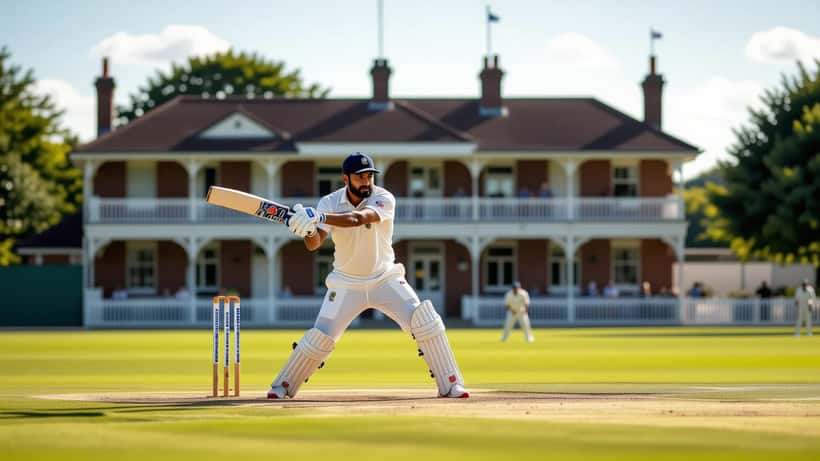
Mohammad Abbas officially joined Derbyshire County Cricket Club in 2026, signing a two-year contract that will see the 36-year-old Pakistani pace bowler compete in England's County Championship Division Two through the 2027 season. The signing has generated considerable excitement among cricket followers — particularly in Canada's large South Asian diaspora — not only for what it says about Abbas's remarkable longevity but also for what it illustrates about how international professional sports contracts work, and what athletes and their advisors need to understand before signing.
A Career Defying the Clock
Abbas's signing is genuinely unusual by professional cricket standards. At 36, he is operating in territory where most pace bowlers have long retired. His secret is not raw pace — he bowls at around 123 kilometres per hour, slow by modern international standards — but rather precision, consistency, and movement off the seam that makes him uniquely difficult to play even without the velocity of younger fast bowlers.
After a three-year absence from international cricket, Abbas returned in December 2024 to play for Pakistan against South Africa and took seven wickets in a single Test match. Former head coaches who watched that performance predicted he would have a significant impact in 2026, and the Derbyshire deal confirms that English county cricket agrees.
For Canadian cricket fans — a growing community shaped by significant South Asian immigration over several decades — Abbas's persistence is an inspiring story. But his overseas contract also opens a window into the legal architecture that governs professional athletes competing internationally.
What an Overseas Sports Contract Actually Contains
When a professional cricketer like Abbas signs as an overseas player for a county club, he is entering into a fixed-term employment contract governed by multiple layers of regulation: the laws of the jurisdiction where he is working (in this case, England and Wales), the rules of the England & Wales Cricket Board, the employment standards of his home country, and the terms negotiated directly between him and the club.
For any athlete — whether a Canadian cricketer hoping to play professionally in England, India, or Australia, or a hockey player considering a European league contract — understanding these layers is essential. A contract that looks straightforward on its face may contain provisions that significantly affect an athlete's options, earnings, and career flexibility.
According to the Government of Canada's labour standards guidance, fixed-term employment contracts in Canada must comply with minimum standards around notice periods, termination rights, and working conditions. International sports contracts may offer protections that differ significantly from these Canadian standards — sometimes more generous, sometimes considerably less so.
The Key Clauses Athletes Should Scrutinize
Employment lawyers who work with professional athletes identify several contract provisions that can significantly alter an athlete's actual position relative to what the headline terms suggest.
Termination clauses. A two-year contract sounds like a two-year guarantee, but most professional sports contracts include unilateral termination rights that allow a club to end the arrangement early under specified conditions — injury, failure to perform at an agreed level, or even changes in team ownership. An athlete who signs a "two-year contract" without scrutinizing the termination clause may find their guaranteed tenure is considerably shorter in practice.
Work permit and immigration requirements. Abbas, as a Pakistani national playing in England, requires a valid work authorization — and the terms of that authorization may restrict what else he can do during his time in the country. For Canadian athletes playing abroad, understanding the scope of their work permit is critical before accepting non-cricket commercial engagements like endorsements or appearances.
Image rights and commercial obligations. Professional sports contracts increasingly distinguish between an athlete's playing services and their commercial identity. A contract that assigns image rights to a club without compensation — or that requires exclusive endorsement arrangements — can substantially reduce an athlete's overall earnings package. These provisions are rarely discussed in public reporting on a signing.
Dispute resolution. When a disagreement arises about contract terms, the governing law and dispute resolution mechanism matter enormously. A contract governed by English law, litigated in English courts, is a very different proposition for a Canadian athlete than one that allows for arbitration under Canadian or international sports regulations.
What This Means for Canadian Athletes
Canada's cricket community is producing increasingly skilled players, and the pathway to professional contracts in the UK, Caribbean, or South Asian domestic leagues is no longer a fantasy for the most talented. Abbas's signing — a veteran overseas player securing a meaningful contract in a top-tier domestic league — is a reminder that professional cricket careers can extend far longer than conventional wisdom suggests, and that international opportunities remain available to athletes who maintain their performance level.
But the legal dimension is where preparation separates athletes who thrive from those who find themselves in unexpected difficulty. A Canadian athlete signing an overseas contract — in any sport — who has not reviewed those terms with a contracts lawyer is taking a risk that no amount of talent can fully mitigate.
Abbas's Derbyshire deal is a career achievement earned through discipline and precision. The contract that formalizes it is, ultimately, a legal document — and treating it as such is the first step toward protecting the career it represents.
