 Olivia Miller
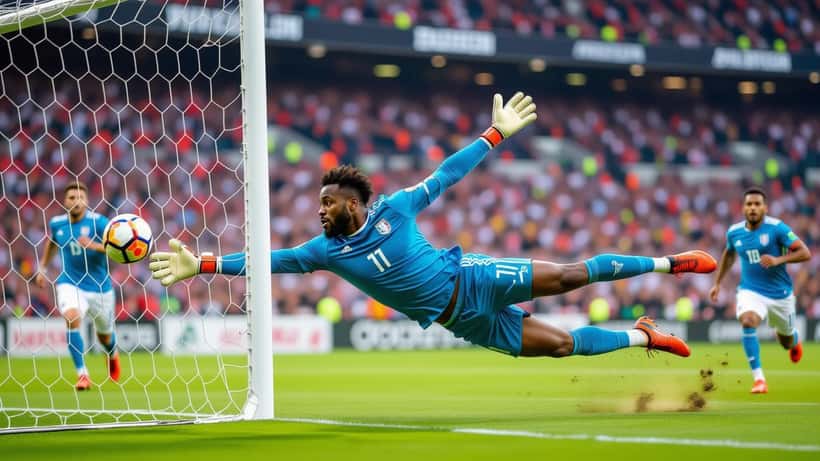
Cape Verde goalkeeper Vozinha walked onto the 2026 FIFA World Cup pitch on June 14 to face Spain — and at 40 years old, kept a clean sheet. Born Josimar José Évora Dias, the goalkeeper who plays for GD Chaves in Portugal's second division made seven saves against one of the tournament's strongest attacking units and helped Cape Verde hold Spain to a 0-0 draw that stunned the football world.
Vozinha — whose nickname translates to "Voice" in Portuguese — is one of the oldest players ever to make a World Cup debut. For sports medicine specialists, his performance was not just remarkable. It was instructive.
Why Goalkeepers Are Different at 40
Goalkeeping is one of professional football's rare longevity positions. While outfield players depend heavily on explosive sprint capacity, sustained aerobic output, and the ability to absorb repeated physical contact, goalkeepers rely on reaction time, positional intelligence, footwork precision, and defensive communication — skills that do not decline at the same rate as pure athleticism, and that experience can actively sharpen.
Vozinha's club environment also plays a role. GD Chaves competes in Liga Portugal 2, Portugal's second division — a high but not elite-level competition compared to the Premier League or La Liga. That lower workload between international windows allows him to manage total physical load over a season, entering World Cup camp without the accumulated fatigue that comes with 50+ matches per year at the highest level. The principle generalises: load management across a full year is as important to longevity as any single training session.
The Three Foundations of Elite Longevity Past 35
Sports physicians who work with athletes beyond 35 consistently identify three pillars that separate those who extend careers successfully from those who break down prematurely:
Recovery as a first-class priority. The most significant physiological change after 35 is not strength loss — it is slower recovery. Muscles, tendons, and the central nervous system require more time to return to baseline after intense effort. Athletes who compete into their forties invest heavily in sleep quality, protein timing, eccentric loading protocols for key tendons, and physiotherapy-based soft tissue work. These are not optional extras for older athletes — they are the programme.
Cognitive advantage over physical decline. Research into goalkeeping consistently shows that experienced keepers compensate for minor declines in raw reaction speed by dramatically improving pre-shot positioning, communication with defenders, and threat anticipation. Reading the game — knowing where the ball is likely to travel before it is struck — is a skill that peaks with experience. Vozinha's seven saves against Spain reflected exactly this: positioning and decision-making did as much work as athleticism.
Coordinated specialist monitoring. Athletes who continue performing at elite level past 35 rarely rely on general fitness guidance. They work with sports physicians, physiotherapists, and nutritionists in coordinated programmes. Training load is tracked and adjusted weekly. Blood markers for inflammation, hormonal balance, and muscle recovery are monitored. Small imbalances are corrected before they become injuries. The difference between a 40-year-old goalkeeper in peak condition and one who is chronically managing discomfort usually comes down to access to that support system.
According to the World Health Organisation's physical activity guidelines, adults should engage in regular physical activity across their entire lives, with clear benefits extending well into their seventies and beyond. For elite athletes in their forties, the principles are the same — applied at much higher intensity, and with specialist oversight making the critical difference.
What Australians Over 35 Can Take From Vozinha's Story
Vozinha's World Cup clean sheet matters beyond football. Australia has millions of active adults over 35 — recreational runners, weekend cyclists, masters swimmers, touch footballers, and gym-goers — who navigate declining physical capacity without ever consulting a specialist. The mistake many make is treating sports medicine as something reserved for elite athletes. It is not.
A sports physician or exercise physiologist can help physically active adults over 35 with:
- Tendon load management — Achilles and patellar tendinopathy are the most common reasons active people in this age group are forced to reduce or stop training. Early intervention dramatically changes outcomes.
- Individualised training load prescription — rather than following generic volume targets, a specialist can design a programme that accounts for your actual recovery capacity and injury history.
- Hormonal health assessment — declining testosterone in men and oestrogen-related muscle changes in women after 35 directly affect recovery speed and muscle maintenance. These are treatable with lifestyle and, where appropriate, clinical intervention.
- Nutrition periodisation — protein requirements increase with age to maintain muscle mass; timing and supplementation advice (including creatine, which has strong evidence for masters athletes) is not one-size-fits-all.
- Joint health monitoring — early-stage osteoarthritis in knees, hips, or ankles is manageable with load modification. Left unmonitored, it can end careers and activities that people love.
For those following how other World Cup athletes are managing fitness across the age spectrum, Australia has already seen relevant stories this tournament. The science behind Cristiano Ronaldo's recovery methods at 41 and Son Heung-Min's structured longevity programme at 33 both point to the same conclusion: disciplined, expert-supported athletic longevity is increasingly achievable — and it starts with the right professional relationship.
Vozinha Waited — You Do Not Have To
Vozinha waited until he was 40 for his World Cup moment. When it came, he was ready — not because of luck or rare genetics, but because he stayed fit, managed his load intelligently, and kept developing as a professional over two decades. The clean sheet against Spain was the result of a very long preparation.
Most active Australians do not have two decades to wait for expert guidance. Whether you are trying to extend a competitive masters-level career, return to sport after injury, or simply stay physically capable through your forties, fifties, and beyond — a qualified health professional can make a measurable difference now.
ExpertZoom connects Australians with sports medicine specialists, exercise physiologists, and health experts who understand active ageing. A conversation with the right professional is the most effective first step toward keeping Vozinha's example relevant to your own life.
