 Emily Turner
Why Ronaldo's Body Is Making Global Headlines — Again
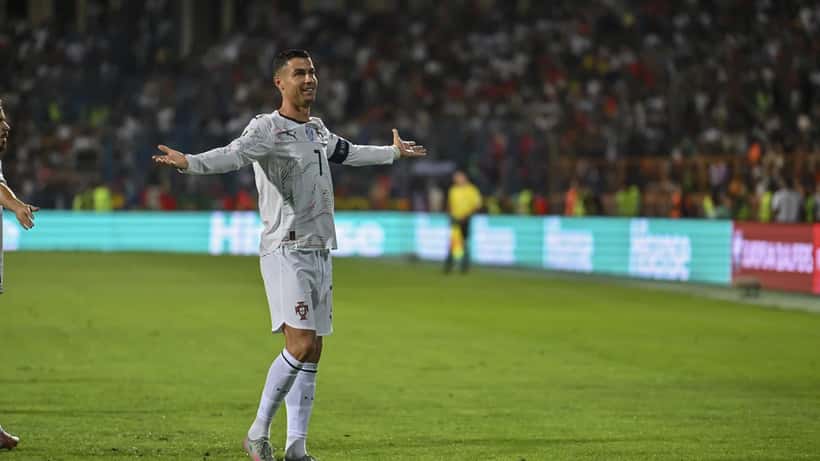
Cristiano Ronaldo will make history at the 2026 FIFA World Cup in North America, becoming the first player ever to compete at six World Cups. At 41, he remains Portugal's captain and first-choice forward, named in the official squad announced on May 19. Portugal's tournament begins on June 17 against DR Congo at Houston Stadium.
But this campaign has already been marked by serious concern. In late February 2026, Ronaldo suffered a muscular injury while playing for Saudi Pro League club Al-Nassr, forcing him to miss Portugal's entire March international window. Portugal head coach Roberto Martinez publicly addressed the fallout: "Cristiano is our captain, a player who's hungry to improve every day. He's not just a 41-year-old player — he's a player who's proving to be an exemplary captain and an inspiration."
Despite scoring 25 goals in his last 30 matches, recent match data shows Ronaldo has not completed a full 90-minute game since February 21, with Al-Nassr consistently substituting him in the 67th, 78th, and 82nd minutes across multiple fixtures. This level of load management — invisible to most spectators — is central to keeping a 41-year-old elite athlete functional heading into a major tournament. The lessons extend far beyond professional football.
The Anatomy of a Muscular Strain
Ronaldo's February injury is classified as a muscular strain — a partial or complete tear in muscle fibres, most commonly occurring in the hamstring or quadriceps in footballers. These injuries are graded by severity:
- Grade 1: Mild strain, fewer than 10% of fibres torn. Typical recovery in one to three weeks.
- Grade 2: Partial tear. Requires three to six weeks of structured rehabilitation to prevent re-injury.
- Grade 3: Complete rupture. May require surgery and several months of recovery.
Ronaldo's return to competitive play within roughly three weeks suggests a Grade 1 or minor Grade 2 strain — significant enough to halt his international programme, but manageable with proper care. According to Sports Medicine Australia, the national professional body for sports medicine practitioners, muscular strains are among the most prevalent injuries in both elite and recreational sport across all age groups.
What sets Ronaldo apart is not his anatomy but his infrastructure: a dedicated medical team, cryotherapy, hyperbaric chambers, advanced nutritional protocols, and real-time GPS load monitoring. For most Australians, the equivalent tools are a physiotherapist, rest, ice, and patience. The underlying biology, however, is the same.
Why Older Athletes Are More Vulnerable
Muscle injury risk increases measurably past the age of 35. Four key biological factors drive this:
Loss of elasticity. Muscle and tendon tissue loses water content and flexibility with age, reducing how far a muscle can stretch before a tear occurs. An explosive sprint or sudden direction change that a 25-year-old body absorbs safely can overload an older muscle fibre.
Slower regeneration. Satellite cells — the muscle stem cells responsible for repairing micro-damage after training — become less effective with age. Damage that recovers in 48 hours at age 25 may take four to seven days at 45.
Accumulated load damage. Decades of high-intensity training create micro-tears that compound year by year. Athletes like Ronaldo carry the cumulative wear of more than 25 years of elite competition — a physical debt the body eventually presents for payment.
Hormonal changes. Declining testosterone levels reduce muscle protein synthesis, slowing the rebuilding of damaged tissue after each session.
For the millions of Australians who play recreational sport into their 40s and 50s — weekend football, running, gym training, cycling, tennis — these factors are equally relevant. An injury that "shouldn't have happened from just jogging" often reflects years of accumulated tissue wear that the body could no longer absorb silently.
Warning Signs Australians Should Not Ignore
The key difference between DOMS (delayed onset muscle soreness, a normal training response) and a genuine muscular strain is its timing, location, and character. Sports medicine practitioners highlight several warning signs that warrant assessment:
- Sudden, sharp pain during activity — not a gradual ache building over 24-48 hours, but a distinct moment of pain at the point of movement.
- Localised swelling or bruising within 24 hours — this signals internal bleeding within the muscle belly.
- Weakness in the affected limb — difficulty fully extending the knee, straightening the hip, or pushing off the foot.
- Pain that worsens with gentle stretching rather than easing with movement.
- No improvement within 72 hours of rest and basic first aid (ice, compression, elevation).
If one or more of these signs appear after sport or exercise, a consultation with a sports medicine doctor or physiotherapist is appropriate. Self-managing a Grade 2 strain without professional assessment dramatically increases re-injury risk — exactly the scenario Portugal's medical staff are working to prevent for Ronaldo over the coming weeks. Sports physiotherapy management of elite footballers with fixture congestion has demonstrated how even top clubs can get this wrong under pressure.
Load Management: The Lesson From Ronaldo's Campaign
The most visible element of Ronaldo's 2026 World Cup preparation has been disciplined load management. Al-Nassr's decision to substitute him consistently before the 75th minute, even during competitive matches, is driven by data: GPS vests worn during training and games track every acceleration, deceleration, and maximal sprint in real time, allowing medical staff to model cumulative weekly load and flag risk thresholds before injury occurs.
For Australian recreational athletes, the equivalent principle is straightforward. Progressive overload — increasing training volume or intensity by no more than 10% per week — is the most evidence-supported strategy for preventing both overuse injury and acute muscular strains. This applies whether you are a runner adding kilometres, a gym-goer progressing weights, or a touch footballer returning after a winter break.
Elite athlete longevity stories like Djokovic at Roland Garros reinforce the same principle: the athletes who stay competitive into their late 30s and 40s do so through precision management, not just natural talent.
When to Consult a Sports Medicine Specialist
A sports medicine consultation is worth seeking if you experience any of the following:
- Recurring muscular injuries in the same location across multiple seasons
- Return to sport pain within two weeks of a previous strain
- Unusual fatigue or strength loss affecting performance
- A desire for a structured, personalised injury-prevention plan before resuming competitive sport
Sports Medicine Australia operates a national directory of qualified practitioners across every Australian state and territory. The same evidence-based expertise that supports Ronaldo's preparation for a sixth World Cup is accessible to everyday Australians managing sporting injuries and planning safe returns to activity.
Portugal's 2026 campaign begins on June 17. Whether Ronaldo's body holds together for a deep tournament run remains to be seen — and it may depend on every substitution, recovery session, and load decision made between now and then. For Australian athletes of any age, that story is a practical reminder: understanding your body's limits, and getting expert help when they're reached, is what makes long careers possible.
This article is for general informational purposes and does not constitute medical advice. If you are concerned about a muscle injury, please consult a qualified healthcare professional.
