 Evelyn Carter
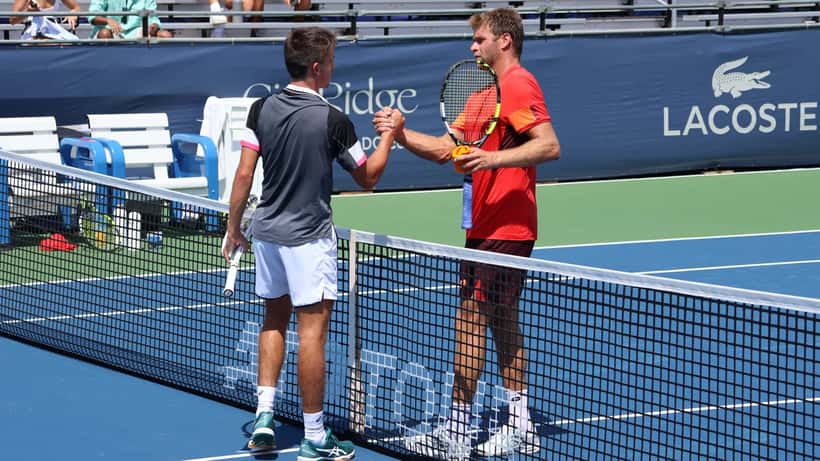
On July 2, 2026, Zachary Svajda survived a grueling five-set Wimbledon second-round match against Poland's Kamil Majchrzak (2-6, 6-2, 6-7, 6-4, 6-3). The 23-year-old San Diego native — ranked No. 62 in the world — spent nearly three hours on the All England Club's grass in his first-ever Wimbledon main-draw appearance. He faces Alex de Minaur in the third round on July 4.
For tennis fans, it was a breakthrough story: four failed qualifying attempts before finally reaching the main draw, then rallying from a first-set loss to win in five. For sports medicine professionals, it was a textbook lesson in what grass courts demand from the human body — and why recreational players need to heed the same physical warnings.
Grass Courts Demand More Than Hard or Clay
Clay slows the ball and lets players slide into position, reducing joint impact. Hard courts are consistent, if punishing on the knees over time. Grass is the most physically treacherous of the three.
The natural surface becomes slippery in the morning dew common at Wimbledon during early July. Players must recalibrate every footstep in ways that hard-court play simply doesn't require. A 2024 study published by the National Institutes of Health found that ankle sprains and Achilles tendon ruptures occur at disproportionately high rates on grass, owing to unpredictable friction beneath each step.
In a five-set match like Svajda's, the demands multiply. Fatigue doesn't just slow a player — it breaks down the kinetic chain. Altered running mechanics in the fourth or fifth set force knees, hips, and tendons to absorb force in patterns they rarely face when the body is fresh.
Three Injury Risks That Spike in Five-Set Matches
Ankle sprains are the most immediate risk. Grass's slippery surface sharply increases the chance of rolling an ankle during lateral movement — a split-step recovery, a sudden directional change. Svajda's five-set match involved hundreds of explosive lateral accelerations, each one a potential stumble when fatigue compromises body positioning.
Patellar tendinopathy (commonly called jumper's knee) is the second major concern. The repeated explosive push-off needed to serve and chase wide balls places enormous load on the patellar tendon below the kneecap. Sports medicine clinicians consistently flag this condition as aggravated on both grass and hard courts. Pain that intensifies during play and eases with rest is the most recognizable warning sign.
Calf and hamstring strains complete the trio. Micro-fatigue accumulates in the posterior chain during extended rallies. When running mechanics break down in the fourth or fifth set, muscle fibers absorb force in unusual patterns. These micro-tears can escalate into grade-2 strains if ignored. Professional players have physiotherapists available between sets. Recreational players typically do not.
What Recreational Players Routinely Overlook
Most tennis injuries treated in sports medicine clinics don't originate on Grand Slam courts. They come from summer club leagues, local tournaments, and casual grass games. They follow a consistent pattern.
Players push through early warning signals: mild ankle discomfort after a match, a twinge below the knee that "loosens up" after warming down, a calf tightness that feels manageable. These are load-accumulation signals — not confirmation that the body is ready to continue at full intensity.
By the time Svajda stepped onto court for his five-set win, his conditioning team had specifically prepared him for this physical output. Most recreational players have had no equivalent preparation — yet they expect identical performance from their joints. That gap is where most clinic-bound injuries begin.
The same dynamics have played out during Wimbledon 2026 itself. Naomi Osaka's foot injury at Wimbledon demonstrated how even elite athletes can underestimate the line between manageable discomfort and genuine structural risk.
When a Sports Medicine Specialist Can Help
A sports medicine consultation is not reserved for professional athletes. A sports medicine physician or physiotherapist can identify compensatory movement patterns before they escalate, assess joint stability under sport-specific load, and create a return-to-play protocol matched to the actual demands of tennis.
Consider seeking professional input when:
- Pain in the ankle, knee, or Achilles persists beyond 48 hours after a match
- Swelling or bruising appears around a joint following a stumble or awkward step
- You notice hesitation or instability in your footwork during play
- The same body part becomes sore after every session, even with rest days between them
A sports medicine consultation focuses on function rather than symptoms alone. The goal is a sport-specific answer: can you serve at full extension, push off laterally without compensating, and sustain two to three sets of competitive tennis without increasing structural risk?
ExpertZoom connects US-based patients with qualified sports medicine specialists for this type of assessment. Svajda will face de Minaur on July 4 having had professional recovery support overnight. If your next grass-court session is coming up this weekend, knowing when to consult a specialist is the closest thing recreational players have to that same advantage.
This article is for informational purposes only and does not constitute medical advice. Consult a qualified health professional for guidance on personal medical concerns.
