 Alice King
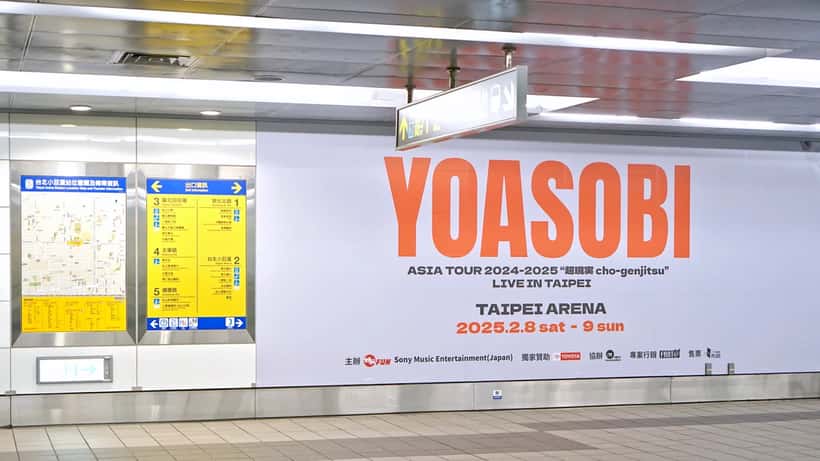
YOASOBI's "Never Ending Stories" Tour sold out Barclays Center in Brooklyn tonight — August 6, 2026. The J-pop duo performed to thousands of fans who know every lyric to songs originally written for anime soundtracks, a concert powered by Crunchyroll, the platform that crossed 21 million paid subscribers as of May 2026. The show is a cultural milestone. It is also a quantifiable signal about where American language education is heading — and which families are best positioned to turn fandom into an academic or career asset.
The Numbers Educators Didn't See Coming
Japanese was once a niche language in American schools, largely confined to heritage communities and international business programs. That era ended quietly during the streaming decade. Three figures tell the story:
- 4.4 billion minutes of anime streamed on Crunchyroll in January 2026 alone (Nielsen data) — more than double the figure from January 2024
- 26 percent of Duolingo's Japanese learners globally cite anime as their primary motivation for studying the language
- 4th place — where Japanese now ranks among all languages studied on Duolingo worldwide, surpassing German for the first time
The U.S. anime market was valued at $3.42 billion in 2026 and is projected to reach $10.34 billion by 2035, according to Precedence Research. The Japanese Language Proficiency Test authority reports rising North American registration rates year-over-year since 2022, reflecting a student population that is motivated, engaged, and increasingly seeking formal certification to match their self-taught skills.
Tutoring demand has followed the same trajectory. Japanese is now among the three most-requested languages for private instruction in New York, Los Angeles, and Seattle, with hourly rates ranging from $15 to $40 depending on tutor credentials and session format.
Why YOASOBI's Tour Is the Flashpoint
YOASOBI — producer Ayase and vocalist ikura — built their catalog around a singular creative concept: every song adapts a short work of fiction. Their soundtrack placements are specific and widely recognized: "Idol" from Oshi no Ko, "Biri-Biri" from Mobile Suit Gundam: The Witch from Mercury, and multiple tracks written for the Pokémon animated franchise. Each placement is, for devoted fans, an intensive passive Japanese lesson — melody, rhythm, and lyrical meaning locked together through repeated, emotionally resonant listening.
The "Never Ending Stories" tour's Crunchyroll partnership makes that connection explicit and visible at arena scale. Crunchyroll provides official Japanese-language transcripts alongside its 12-language subtitle library — a resource that second-language acquisition researchers classify as "authentic input": language produced by native speakers for non-educational purposes. Research consistently identifies authentic input as one of the highest-impact exposure types for listening comprehension and phonological acquisition, especially at early to intermediate stages.
Fans who have memorized YOASOBI lyrics phonetically have already absorbed pitch accent patterns, common phoneme clusters, and the natural rhythm of spoken Japanese. That foundation is real and nontrivial. Without structure, however, it has a ceiling most learners cannot see until they hit it.
What Anime Builds — and Where It Stops
Streaming-driven immersion excels at delivering three things that formal language classrooms historically struggle to provide: sustained intrinsic motivation, high-volume listening exposure, and vocabulary acquisition tied to emotionally engaging content. A serious anime fan who has watched 400 to 600 hours of subtitled content has typically developed genuine listening comprehension and an informal vocabulary of 800 to 1,500 words.
That same learner has predictable structural gaps that apps and subtitles cannot close:
Writing systems: Kanji acquisition requires deliberate, sequenced practice. JLPT N3 certification — the intermediate level — requires command of approximately 650 kanji. No streaming platform teaches stroke order, radical analysis, or the compound-reading patterns that make kanji accessible. Learners who try to acquire kanji purely through visual exposure from subtitles routinely plateau around 150 to 200 characters.
Grammar architecture: Japanese is SOV (subject-object-verb), post-positional, and uses conditional, causative, and passive constructions that interact in ways subtitles skip over. A learner can follow the emotional arc of a sentence without grasping its grammar — until the grammar becomes the barrier to output and formal reading.
Formal register: Keigo, Japan's system of polite and honorific speech, is largely absent from anime and manga. It is required for academic correspondence, job applications, study-abroad programs, and any customer-facing professional role. No one learns keigo from Crunchyroll.
This is the gap where a professional Japanese tutor delivers measurable, trackable value.
A Concrete Scenario: From Barclays Center to JLPT N3
Here is a scenario that Japanese-language tutors in New York and Los Angeles report encountering regularly in 2026. A 17-year-old student — call her Maya — has been watching Crunchyroll since 2023, completed Duolingo's full Japanese course twice, and is at tonight's Barclays Center show for her third YOASOBI concert. She sings along in Japanese. Her listening comprehension is genuine: she tracks dialogue in unfamiliar shows, catches jokes, follows plot twists without subtitles. Her informal vocabulary spans roughly 1,000 to 1,200 words.
Maya wants to spend a semester in Japan during her junior year of college. Her target exchange programs require documentation of at least JLPT N4 proficiency (elementary level); her first-choice program requires N3 (intermediate). The JLPT is offered twice a year in the United States — in July and December — with registration fees of $50 to $80 per attempt.
The math, based on outcomes data compiled by Japanese language education platforms:
- Without structured tutoring: First-time JLPT N3 pass rates for self-studied candidates average 35 to 40 percent.
- With 60 hours of structured tutoring at one hour per week over approximately 14 months, at $25 per hour (mid-range NYC rate): pass rates for learners with Maya's proficiency profile rise to 65 to 70 percent.
- Total tutoring investment: approximately $1,500 — compared to the alternative of two to three failed JLPT attempts ($100 to $240 in wasted fees) plus one to three additional years of self-study that does not close the structural gaps.
If Maya's listening foundation is strong but her kanji and grammar are untested, 60 structured hours with a qualified Japanese tutor is the highest-return investment between her current ability and a certifiable JLPT N3 credential. Without deliberate instruction, motivation-driven learners routinely plateau: listening improves through continued anime exposure, but formal production, reading comprehension, and grammar do not. The certification gap stays open regardless of how many YOASOBI albums she memorizes.
For a closer look at how educators are already incorporating anime into structured academic instruction, see how Attack on Titan Is Being Used to Teach Critical Thinking and Writing — a model that illustrates exactly how pop culture fluency can bridge into formal academic skills.
What to Look for in a Japanese Tutor
A qualified Japanese language tutor differs meaningfully from a conversation exchange partner or app subscription. Credentials worth requesting: Japanese Language Teaching Competency Test (JLTCT) certification, native-speaker status with formal pedagogical training, or documented JLPT preparation experience with verifiable student outcomes by level.
For anime-background learners specifically, tutors who have worked with this student profile are more efficient from the first session. They skip content the student has already internalized — a common frustration when app-trained learners work with tutors who begin at absolute zero — and focus immediately on the structural gaps that formal instruction can close: kanji sequencing, grammar patterns, and output practice.
Key questions to ask any prospective tutor:
- Have you prepared students specifically for JLPT N4 or N3? What is your pass rate?
- Do you have experience with learners who come from an anime/Duolingo background?
- Does your curriculum integrate all four skills — listening, speaking, reading, and writing?
A tutor who treats a student's Crunchyroll background as irrelevant is not the right match. One who treats it as a starting diagnostic — identifying which listening and vocabulary skills transfer and exactly which gaps remain — compresses the learning timeline significantly.
Online tutoring has equalized geographic access. Qualified Japanese tutors work with students across all 50 states at comparable rates, and specialized platforms verify credentials and match students based on JLPT target level and background.
Before You Book
Help your student calibrate before committing to a program. Free JLPT practice tests at the N5 level (elementary) are available through several language platforms. A student who passes N5 comfortably should start tutoring from N4 materials; a student who struggles at N5 benefits from four to eight focused weeks of foundational grammar before moving forward.
The interest is genuine. Tonight, it filled an arena. The question is whether that motivation gets channeled into a structured path — or stays at the phonetic singalong stage indefinitely.
YMYL note: Language proficiency requirements vary by institution and employer. Verify JLPT requirements with your specific program or employer before committing to certification preparation.
