 Michael Campbell
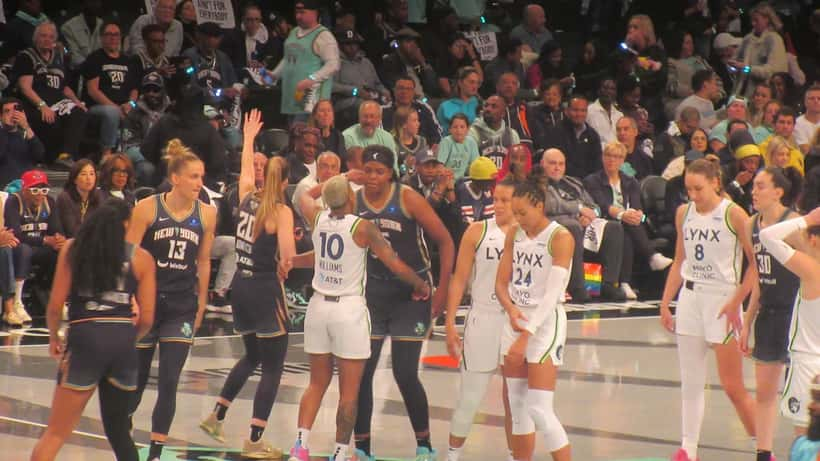
The 2026 WNBA postseason is drawing audiences that would have seemed impossible three years ago. The first round averaged 1.3 million viewers across ESPN, Prime Video, and USA Network — the most-watched opening round in league history — while a single deciding Game 3 peaked at 2.7 million viewers, according to Front Office Sports. With the Finals scheduled to tip off October 17, featuring the New York Liberty and the Atlanta Dream, the league is generating a level of cultural and commercial gravity that is now reaching investors' portfolios.
The 2026 WNBA Postseason: A Market Signal, Not Just a Sports Story
The Finals broadcast schedule — airing on NBC, USA Network, and Peacock — matters to more than basketball fans. It has become a proxy for a broader shift in sports economics. According to Deloitte's 2026 Game Changers report, the global women's elite sports market is on track to surpass $3 billion in 2026, up from $2.4 billion in 2025. That 25 percent year-over-year growth rate is not noise; it reflects compounding media deals, rising sponsorship values, and a cultural moment that has been building since the Caitlin Clark era catalyzed mainstream attention.
WNBA franchise values have moved in lockstep. The Connecticut Sun sold in 2026 for a record $300 million — a franchise that traded for a fraction of that sum just five years earlier. The New York Liberty now carries a valuation of approximately $450 million. The average WNBA franchise value rose from roughly $250 million to $414 million in a single calendar year, according to projections tracked by Ariel Investments. The NWSL tells a parallel story: expansion fees climbed from $53 million for teams awarded in 2023 to $205 million for the Columbus team — a nearly fourfold increase in under three years.
These are not sports-page statistics. For any investor trying to assess whether the women's sports surge is durable or a media-cycle bubble, these are the data points that matter.
Why Wealth Managers Are Watching the WNBA Finals
Major sports events concentrate attention in a way that consistently triggers retail investment activity. Super Bowl Sunday, the NBA Finals, and the Olympics each produce measurable spikes in searches for related equities — media conglomerates, apparel brands, streaming platforms. The WNBA Finals in October 2026 are generating the same pattern, with "WNBA schedule" trending nationally as the semifinal matchups between the Liberty, Dream, Las Vegas Aces, and Golden State Valkyries drew record semifinal ratings.
But the women's sports investment surge is different from typical sports-event spikes in one critical respect: the highest-value assets are not publicly traded. Direct franchise equity is illiquid and restricted to institutional and ultra-high-net-worth investors. The pathways available to retail investors include media companies with WNBA broadcast rights (Disney/ESPN, NBCUniversal/Peacock), sports apparel brands with growing women's portfolio revenue, arena and facility REITs, and a small but expanding number of private equity funds targeting women's leagues directly.
Navigating this landscape without professional guidance exposes investors to four specific risks: concentration in the most obvious and already-priced equity, liquidity mismatch between public holdings and the illiquid franchise value driving the narrative, valuation opacity when private-market comps drive media coverage, and timing errors at peak visibility. These are precisely the risks a wealth manager is trained to identify before a client acts.
What the Salary Cap Reveals About League Health
Before assessing any sports investment, institutional advisors evaluate league infrastructure — not just viewership. The WNBA's 2026 salary cap structure is a meaningful signal. A league that can sustain real player salaries, support a $7 million cap, and negotiate a CBA with a planning horizon through 2030 has demonstrated the revenue infrastructure that institutional capital requires before committing. This structural maturity separates the 2026 WNBA from the failed women's leagues of the late 1990s and early 2000s — and it is the first thing a wealth manager would point to when evaluating whether the valuation surge reflects fundamentals or hype.
The 2026 WNBA season has also demonstrated multiplatform revenue diversification: games on broadcast TV (NBC), cable (USA Network, ESPN), and streaming (Peacock, Prime Video) reduce the single-channel dependency that made earlier women's leagues vulnerable to rights-deal non-renewals. For an investor, that distribution diversification is as important as the viewership number itself.
What Happens When You Invest Without a Game Plan: A Concrete Scenario
Take Jordan, a 35-year-old teacher in Austin, Texas. Jordan is a dedicated WNBA fan with $20,000 to invest and a strong conviction that women's sports are "the next big thing." In October 2026, with the Finals generating daily headlines, Jordan decides to act — and buys $20,000 of Disney stock, reasoning that ESPN and ABC's broadcast rights make it a direct proxy for WNBA growth.
Scenario A — No financial advice: Jordan's thesis is not wrong. Disney does hold significant WNBA broadcast assets, and the women's sports market is genuinely growing. But the timing creates a problem. Disney's stock price in October 2026 already reflects the streaming and sports-rights premium that analysts built in when the WNBA's broadcast deal was signed. Jordan is buying at the peak of public attention, not at an advantaged entry point. Six months later, Disney's stock is down 4 percent due to broader streaming platform earnings pressure unrelated to women's sports. Jordan's $20,000 is now worth $19,200 — a $800 loss on a thesis that was fundamentally correct.
If Jordan had consulted a wealth manager for a $200–$400 advisory session — a one-hour engagement with a fee-only CFP — three specific adjustments would have changed the outcome. First, the advisor would have recommended a diversified media ETF over a single-stock Disney position, reducing exposure to company-specific earnings risk while preserving the broadcast-rights theme. Second, the advisor would have identified arena and facility REITs as an underowned entry into the women's sports infrastructure story — an allocation Jordan's solo research had not surfaced. Third, the advisor would have set an explicit 18-to-24-month holding horizon before reviewing performance, preventing the reactive sell that many solo investors make after one or two quarters of underperformance.
Projected outcome with a diversified sports-adjacent allocation (media ETF 50%, facility REIT 30%, sports apparel 20%) over 18 months: an estimated 7–11 percent return, putting Jordan's $20,000 at $21,400–$22,200. That is a $2,200–$3,000 improvement over the single-stock outcome — and the advisor's fee of $200–$400 pays for itself within the first quarter.
The if-then logic is direct: if you enter a high-visibility investment theme at the moment of maximum media coverage without mapping the available asset classes, you will overweight the most obvious and already-priced entry point. A wealth manager's specific value in a WNBA Finals moment is finding the less obvious one.
How to Translate the Finals Schedule Into a Portfolio Decision
The October 17 tip-off is a natural prompt to revisit sports-adjacent portfolio exposure — not an instruction to buy immediately. A wealth manager would walk through four practical steps:
1. Identify existing exposure first. Many diversified equity funds already hold Disney, Comcast (NBCUniversal), and Nike — all of which benefit from women's sports growth. You may carry meaningful indirect exposure before adding a single share.
2. Understand the private vs. public divide. The highest-return investments in women's sports — direct franchise equity — are unavailable to most retail investors. A fee-only advisor can assess whether private equity vehicles with women's sports mandates are appropriate for your liquidity tolerance and accredited investor status, per SEC investor guidance on alternative investments.
3. Set a time horizon that matches league maturity. WNBA team valuations reaching $1 billion — a projection that Ariel Investments considers credible within five years — will do so across multiple seasons, not a single Finals run. Jordan's story illustrates what happens when a long-term thesis meets a short-term reaction window. A wealth manager sets guardrails against that mismatch.
4. Separate the narrative premium from fundamental value. A compelling cultural story moves stock prices. Deloitte's $3 billion forecast and the WNBA's viewership records are real — but they are also widely reported and therefore largely priced into the most obvious equities. A wealth manager's core value in this moment is separating what the market already knows from what it has not yet discounted.
The 2026 WNBA Finals are a historic sports moment. For fans who are also investors, they are an opportunity to ask a more productive question than "what should I buy?" — which is: "what does the right allocation actually look like, and who can help me get there?"
This article is for informational purposes only and does not constitute financial advice. Consult a qualified, licensed wealth management professional before making any investment decisions.
