 Isabella Torres
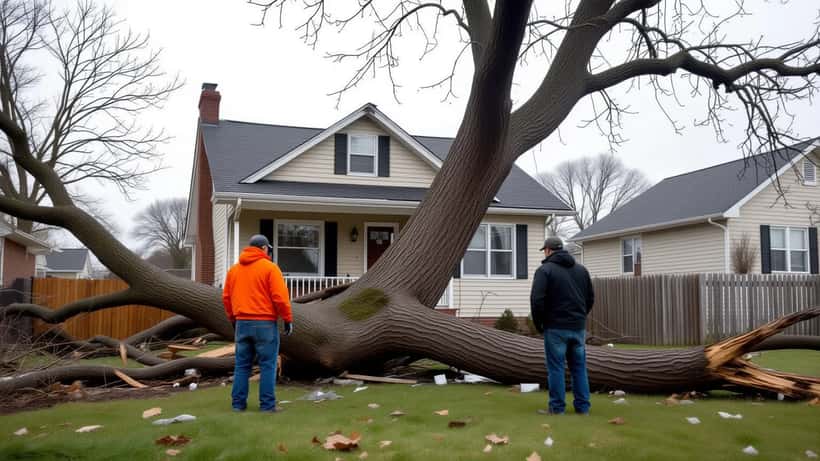
Wind advisories are in effect across multiple US regions this week, with sustained winds of 20-30 mph and gusts reaching 45 mph in California's Imperial Valley as of May 4, 2026. Newsweek reported high wind warnings blanketing nearly half the country simultaneously, with the National Weather Service flagging serious risks of downed power lines, roof damage, and falling trees. As cleanup crews mobilize, one question is flooding legal hotlines across the country: if my neighbor's tree lands on my house, who actually pays?
What a Wind Advisory Means for Your Property
The National Weather Service issues a Wind Advisory when sustained surface winds of 31-39 mph or gusts of 46-57 mph are expected. A High Wind Warning signals more severe conditions — gusts capable of snapping large trees and severing power lines, typically 58 mph or higher.
At advisory thresholds, smaller trees and branches fail. At warning thresholds, established trees with compromised root systems or structural defects are at serious risk of falling. With tornado and storm season already producing major damage this year, the addition of sustained wind events means many homeowners will be filing damage claims in the coming weeks — and some will face disputes over who is legally responsible.
The National Weather Service's wind advisory guidance recommends securing outdoor furniture and inspecting trees near structures before high-wind events. Most people skip that step. When they do, the legal consequences can be complicated.
The Basic Rule: Whose Tree, Whose Problem?
The foundational principle in American property law is deceptively simple: if a healthy tree falls onto your property due to wind — an act of God — the tree owner is generally not liable for your damages. Each party is expected to file with their own homeowners insurance policy.
This means if your neighbor's healthy oak lands on your car during a wind advisory, your neighbor is not automatically on the hook. Your own comprehensive auto insurance (or homeowners policy, depending on the damage) typically handles the loss, subject to your deductible.
"This surprises a lot of homeowners," says a property law attorney based in Philadelphia. "People assume that because the tree belongs to the neighbor, the neighbor owes them. But if the tree was healthy, the wind is the cause — and that's treated as a natural event, not negligence."
The Exception That Changes Everything: Prior Notice
The liability calculus shifts dramatically when the tree was not healthy — and when the owner knew it.
Under negligence law in most US states, a property owner can be held liable for tree damage if:
- The tree was dead, diseased, visibly unstable, or structurally compromised before it fell
- The owner had actual or constructive notice of the hazard — meaning they knew or should have known about the condition
- The owner failed to take reasonable steps to address the risk
This is where documentation matters. If you noticed a large dead limb hanging over your fence and sent a written text or email to your neighbor saying "I'm concerned about that branch," you have created a record of notice. If the branch falls in the next wind advisory, your neighbor's legal exposure increases substantially.
Courts have found liability in cases where:
- An arborist had previously flagged the tree as diseased but the owner declined to remove it
- The neighbor had complained in writing about the hazard before the damage occurred
- The tree had visible trunk rot, fungal growth, or lean that a reasonable homeowner should have recognized
"The notice element is critical," the attorney notes. "I've seen cases where a casual text message became the cornerstone of a negligence claim worth tens of thousands of dollars."
What to Do Right Now If You Have a Hazardous Tree Nearby
If you have a tree on or near your property that concerns you, property lawyers recommend three immediate steps:
Document in writing: Send your neighbor a written message — text, email, or certified letter — describing your specific concern. Describe the tree's condition and your worry about the risk to your property. Keep a copy.
Get an arborist assessment: A certified arborist can produce a written report on the tree's structural condition. If the report flags a hazard, share a copy with your neighbor and keep the original.
Contact your homeowners insurer: Notify your insurer of a potential risk before damage occurs. Some policies include tree removal coverage for hazardous trees that threaten a structure — but most require pre-approval and documentation.
What Your Homeowners Insurance Actually Covers
Regardless of fault, standard US homeowners policies typically cover wind-caused damage to your structure, including damage caused by a falling tree — whether it was your tree or your neighbor's. Coverage usually includes the cost of removing the tree from your structure, though coverage for removing the tree from your yard (if it didn't hit anything) is often limited.
However, if your insurer determines that the tree fell due to neglect on your part — for example, you knew about a diseased tree on your own property and didn't address it — they may deny coverage or pursue subrogation.
For more on homeowners rights during severe weather events, see what every homeowner should do after a severe storm hits their area.
When to Consult a Property Lawyer
Most tree-fall disputes can be resolved through insurance claims without litigation. But if you are facing a large loss — structural damage, a totaled vehicle, or a disputed liability claim — a property law or real estate attorney can clarify your options under your state's specific negligence and tree-liability statutes.
Wind advisories this week are a reminder that natural events create real legal consequences. Know your rights before the storm passes.
This article is for informational purposes only and does not constitute legal advice. Consult a licensed attorney for guidance specific to your state and situation.
