 David Carter
The Weather Channel released its official winter 2026-27 outlook this week, and NOAA is backing it with the most alarming El Niño numbers in over 75 years. For the millions of American homeowners in the southern tier, Gulf Coast, and the Pacific West, the broadcast signal is not just meteorological — it is a narrow countdown to prepare their properties before the first major storms of the season arrive.
What the 2026-27 Winter Forecast Actually Says
NOAA's Climate Prediction Center placed a 69% probability on a historic El Niño event for October through December 2026, defined by a Relative Oceanic Niño Index value exceeding +2.5°C. According to NOAA's September 2026 ENSO Advisory, that threshold would make this the strongest El Niño in the observational record dating back to 1950 — surpassing even the record-setting events of 1997-98 and 2015-16. The event is forecast to peak between November 2026 and January 2027.
The regional pattern is consistent with past El Niño winters: the southern third of the United States — from Southern California across Texas and the Gulf Coast to Florida — faces a more active storm track, heavier rainfall totals, and an elevated risk of freezing rain and sleet when cold air drops south. The Pacific Northwest typically trends warmer and drier. The Midwest and Great Plains sit in a transition zone where single-storm events can swing unpredictably between ice, heavy snow, and flooding rain.
The Weather Channel's October 2026 forecast reinforces this regional split. October is running warmer than average across the northern U.S. but wetter than normal along the Gulf Coast from Texas to Florida — a pattern that, in El Niño years, historically signals what the December-February window will amplify.
Why the Expert Angle Matters More Than the Forecast Map
Television weather coverage excels at predicting what will happen. What broadcast forecasters rarely have time to address is what a specific El Niño pattern means for a specific property — the gap that home improvement professionals spend every winter filling, usually after the damage is already done.
The 2015-16 El Niño, one of the two events that the 2026-27 season may now exceed, generated an estimated $14 billion in insured property losses across the southern and western United States, according to a post-event analysis by the Insurance Information Institute. The consistent finding from property damage assessors in the aftermath was that the majority of losses — roof failures, foundation flooding, ice dam collapses, burst pipes — involved homes where deferred maintenance had created vulnerabilities that active storm conditions then exploited.
Home inspectors, roofers, HVAC technicians, and foundation specialists don't issue weather forecasts. But they understand exactly what a strong El Niño will test on your property — and October is the last low-urgency window to address those vulnerabilities before storm season peaks.
The parallel is worth understanding: The Weather Channel is telling you a major stress test is coming for your home. The question is whether you use the next four weeks to prepare, or wait for the test results to arrive as repair bills.
The Houston Homeowner Who Waited Until November
Consider this scenario, grounded in the documented damage patterns of the 2015-16 El Niño: a homeowner in suburban Houston purchased their home in 2019, a year of unremarkable winters. Their gutters haven't been professionally cleaned since 2021. The roof is 15 years old with no obvious damage but shows granule loss in several patches visible from the yard. The attic insulation is original to the 1998 construction.
Under a strong El Niño, Houston has historically received 6 to 10 inches of rainfall in a single storm event, with a follow-on storm arriving within days before the ground fully drains. With clogged gutters, that volume of precipitation pools at the foundation. Foundation repair in the Houston metro currently averages $4,500 to $11,000 depending on severity and access, according to HomeAdvisor's 2026 national cost survey.
The if/then calculation is direct: if that homeowner acts in October — spending roughly $150 to $300 on gutter cleaning and a basic roof inspection — they eliminate the primary water-entry vector before the active storm period begins. If they wait until the first major El Niño event in late November or December and storm damage has already started, they face emergency contractor rates running 40 to 60% above standard, potential insurance claim complications tied to pre-existing deferred maintenance, and a total repair cost that is 15 to 50 times what the preventive work would have cost.
This is not a hypothetical. Home improvement contractors who worked the 2015-16 El Niño across Texas, California, and the Gulf Coast have documented the same pattern: the demand surge hits in December and January, when damage becomes visible — not in October, when it was still correctable.
Five Home Prep Tasks Before November 1
Home improvement specialists who have weathered multiple El Niño seasons consistently recommend the same core checklist when an active El Niño of this strength is forecast:
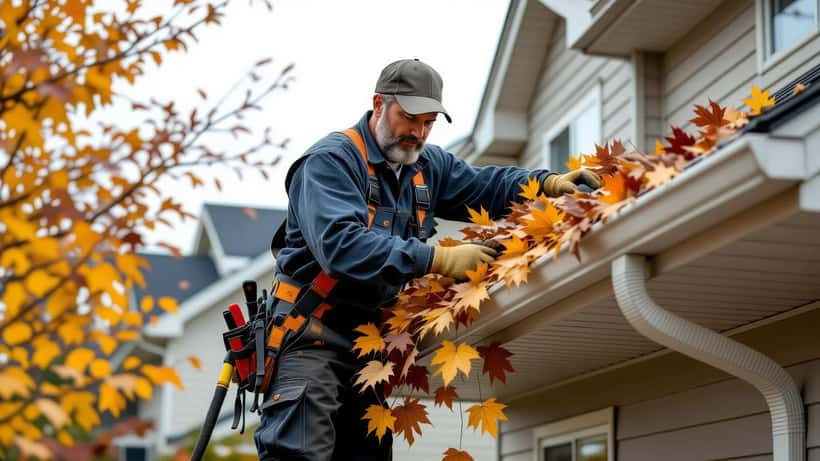
Gutters and downspout extensions. Clean all gutters and verify that downspouts discharge at least three feet from the foundation. El Niño rain events arrive in sequences — back-to-back storms with minimal drainage time between them. A clogged gutter section can redirect hundreds of gallons toward the foundation in a single event.
Roof inspection by a licensed roofer. Have a roofer assess for missing or deteriorated shingles, flashing gaps around chimneys and skylights, and any soft spots suggesting underlying deck damage. Targeted repairs average $350 to $1,400. Full roof replacement runs $9,000 to $22,000 on a typical 2,000-square-foot home. The difference between those outcomes frequently depends on catching the problem before water infiltration takes hold.
HVAC pre-season service. A heating system sitting idle since last spring can fail on the first sustained cold stretch. Schedule a service call now — before the October-November rush when HVAC technicians in most markets are booked two to three weeks out.
Weatherstripping and exterior seals. A single deteriorated seal at an exterior door or ground-floor window can increase heating costs by 7 to 12% over a winter, per U.S. Department of Energy estimates. In a wet El Niño winter, those same gaps become active water infiltration points during wind-driven rain events.
Foundation drainage assessment. Walk your property perimeter 30 minutes after the next rainfall. If water is still pooling within three feet of the foundation, you have a grading or drainage issue that should be corrected before the heavy El Niño precipitation begins. Re-grading a single foundation side typically runs $500 to $1,500 — a fraction of what a wet foundation subsequently costs in structural repairs.
You can read more about how El Niño weather patterns affect home risk profiles this year and understand what weather forecast probabilities actually mean for your planning.
What to Do Before the First Storm Arrives
The Weather Channel's forecast is not a reason to panic. It is a reason to act on a calendar. El Niño events deliver their most severe property impacts in the December-through-February window — which means October 2026 is, by historical timing, the last comfortable preparation window before the active period begins.
If you are unsure which of these five tasks applies most urgently to your home, or if your property has specific characteristics — older construction, previous water intrusion history, a flat or low-slope roof, or known foundation movement — a consultation with a licensed home improvement professional is the fastest way to prioritize. A single conversation can tell you whether you need all five tasks, two, or something different based on your specific risk profile.
The Weather Channel has done its part. NOAA has issued its advisory. The forecast is locked in. What remains is whether homeowners act on the information while it still functions as prevention, or encounter it again as documentation on an insurance claim.
Home repair costs cited reflect U.S. national averages as of 2026 and vary significantly by region, property age, and specific conditions. Consult a licensed home improvement professional for property-specific assessments.
