 Jessica Johnson
An elderly San Francisco woman lost thousands of dollars last week after a thief stole a check she mailed through the U.S. Postal Service and used chemical solvents to alter the payee name and dollar amount — a crime called check washing, and USPS warned on September 3, 2026, that it is rapidly spreading nationwide. For victims, the experience triggers an immediate, disorienting question: who is legally responsible, and what rights do you actually have?
The answers are more complicated than most people expect. Mail theft sits at the intersection of federal criminal law, banking regulation, and consumer protection — a space where quick action determines whether you recover your money or absorb the loss entirely.
USPS Mail Theft Has Reached Crisis Levels in 2026
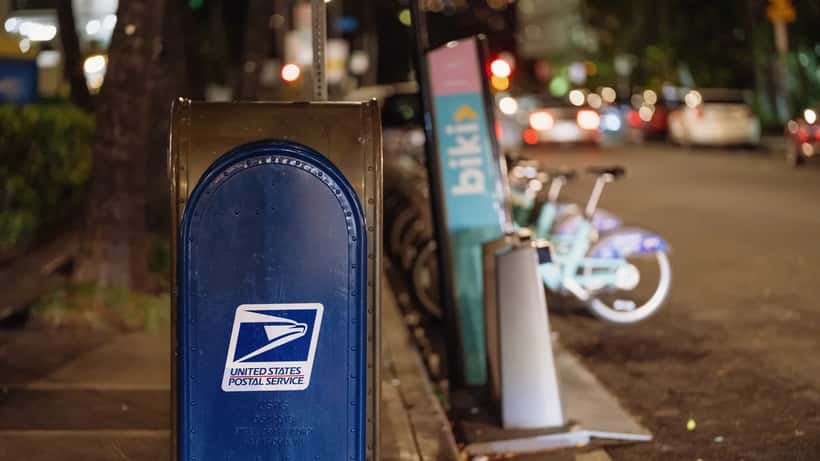
The numbers are striking. A May 2026 report by the U.S. Postal Service Office of Inspector General found that the U.S. Postal Inspection Service (USPIS) received more than 800,000 mail theft complaints across fiscal years 2023 through 2025. Between FY 2019 and FY 2023, theft from mail receptacles — including the iconic blue USPS collection boxes — surged 139%, according to federal audit data. Annually, mail fraud now costs Americans an estimated $21 billion.
Organized theft rings have professionalized the crime. Thieves obtain stolen postal master keys — known as arrow keys — to open collection boxes and cluster mailboxes in bulk. Once they have the mail, check washing is a low-technology, high-yield fraud: household chemicals strip the ink from a legitimate check in minutes, leaving the paper and signature intact. The thief then rewrites the payee and amount before depositing it. Victims often discover the fraud only when a rent payment bounces or a bank statement arrives weeks later.
USPS launched Project Safe Delivery in 2023 in direct response to the surge. Since its expansion, the agency reports that letter carrier robberies have fallen 27% and that more than 2,400 arrests have been made in connection with mail theft and related crimes. But the underlying complaint volume remains historically high, and check washing cases specifically are accelerating in 2026, according to the USPS warning issued this month.
What Lawyers Say About Your Rights as a Victim
From a legal standpoint, being a mail theft victim triggers several distinct sets of rights depending on what was stolen — and how fast you act.
Federal criminal protection is automatic. Under 18 U.S.C. § 1708, stealing, taking, or possessing mail that does not belong to you is a federal felony carrying fines and up to five years in federal prison. The U.S. Postal Inspection Service — the law enforcement arm of USPS — investigates these cases and coordinates with the Department of Justice for prosecution. Filing a complaint with USPIS at uspis.gov/report is not optional; it is the foundational step that opens a federal investigation and creates the paper trail you need for all subsequent civil claims.
Banking liability rules are where most victims run into trouble. A check altered by check washing is considered a "forged instrument" under Article 4 of the Uniform Commercial Code (UCC), which governs bank transactions in all 50 states. Under UCC rules, the bank that accepted the altered check from the thief — called the "depositary bank" — bears the initial liability for the altered amount, not the victim's own bank. However, this protection is time-sensitive: if you fail to notify your bank of an unauthorized or altered check within 30 days of receiving your statement, the liability can shift partially or entirely to you under UCC § 4-406.
For electronic transfers, the Electronic Fund Transfer Act (Regulation E) applies: you have 60 days from the statement date to dispute unauthorized transactions before liability escalates. Beyond 60 days, the law limits the bank's obligation to investigate.
Identity theft protections add another layer. If the stolen mail included documents bearing your Social Security number, account numbers, or other personal identifiers, you have the right to place a free fraud alert with the three major credit bureaus (Equifax, Experian, TransUnion) under the Fair Credit Reporting Act, and to request a credit freeze at no charge. A fraud alert lasts one year and requires creditors to verify your identity before opening new accounts.
When It Happens to You: A $1,400 Check Scenario
Consider this realistic situation — one that plays out thousands of times each month in 2026.
On September 1, 2026, you drop a personal check for $1,400 into a blue USPS collection box on your street corner to pay a contractor for home repairs. You sign the check and date it. Two days later, a theft ring using a stolen arrow key opens the box, takes the contents, and one member washes your check overnight. By September 4, the altered check — now made out to a fake name for $4,200 — has been deposited at a different bank and has cleared.
If you call your bank before September 30 (within 30 days of your September statement closing date): your bank is legally required to investigate. Under UCC Article 4, the depositary bank that accepted the forged check bears responsibility for the difference. Your bank will typically issue a provisional credit while investigating, and the loss is recovered from the bank that cashed the fraudulent check. You also file a report with USPIS and, if identity theft occurred, freeze your credit.
If you don't notice until mid-October (more than 30 days after your statement): liability becomes disputed. Your bank may argue that your delayed reporting contributed to the loss. While courts have generally found that victims who acted in good faith retain some protection, the bank's obligation to fully credit you diminishes significantly after 30 days under UCC § 4-406(d). A banking attorney can challenge this — particularly if your bank failed to flag a check made out to a different payee — but the legal process takes time and money.
The practical difference between acting on day 10 versus day 40 can be the full $4,200. This is why attorneys consistently advise: monitor your bank statements weekly, not monthly, and report any discrepancy immediately.
Federal Protections — and Their Limits
Several statutory protections work in your favor as a mail theft victim in 2026, but each has a deadline or a condition.
The Postal Accountability and Enhancement Act requires USPS to investigate service failures and process claims for lost or damaged items. However, USPS liability for standard First-Class mail is limited to the cost of replacement postage — not the value of the check or its contents. If you sent a check via Priority Mail Express or Certified Mail, USPS offers limited indemnity (up to $100 for Priority Mail, more with purchased insurance), but this does not cover fraud losses from a stolen and altered check.
The Fair Credit Billing Act protects you against fraudulent charges on credit cards, but it does not apply to checks or direct bank transfers — another reason attorneys recommend against mailing checks when electronic alternatives exist.
The Right to Financial Privacy Act gives you control over how your bank shares your records during a fraud investigation, and it prevents banks from disclosing your account details to third parties without a subpoena.
None of these protections replaces prompt reporting. A 2026 USPS OIG audit found that delayed victim reporting is one of the top three factors that allows check washing fraud to go unresolved.
A Legal Checklist for 2026: If Your Mail Was Stolen
If you believe mail has been stolen from your box, collection point, or carrier route, attorneys advise acting in this sequence — each step within the time windows noted:
- File a USPIS complaint immediately at uspis.gov/report. This triggers a federal investigation and timestamps your knowledge of the theft.
- Notify your bank the same day if you suspect a check was stolen. Request a stop payment on any outstanding checks and ask the bank to flag your account for altered-instrument alerts.
- Contact the sender or intended recipient of any check, sensitive document, or financial instrument you believe was intercepted. Alert them that the item is missing before a fraudulent version surfaces.
- Place a 90-day fraud alert with one credit bureau (it automatically notifies the others) within 24 hours of discovering identity information was compromised.
- Document everything: photograph your mailbox damage if any, save text notifications or email confirmations from USPS tracking, and note the exact date you discovered the theft.
- Consult an attorney if your bank disputes your claim — particularly if the bank denies credit beyond the 30-day window. An experienced consumer law attorney can invoke UCC Article 4 defenses and, in cases of bank negligence, pursue recovery under state consumer protection statutes.
The Postmaster General's new 2026 directives on mail security — including accelerated replacement of compromised arrow keys and expanded blue-box welding programs — may reduce future incidents. But for the 800,000+ Americans who filed theft complaints in the last two fiscal years, the legal landscape right now rewards fast, documented action over patience.
This article is for informational purposes only and does not constitute legal advice. If your mail has been stolen and you have suffered financial loss, consult a licensed attorney in your state to understand your specific rights and options.
