 Richard Thomas
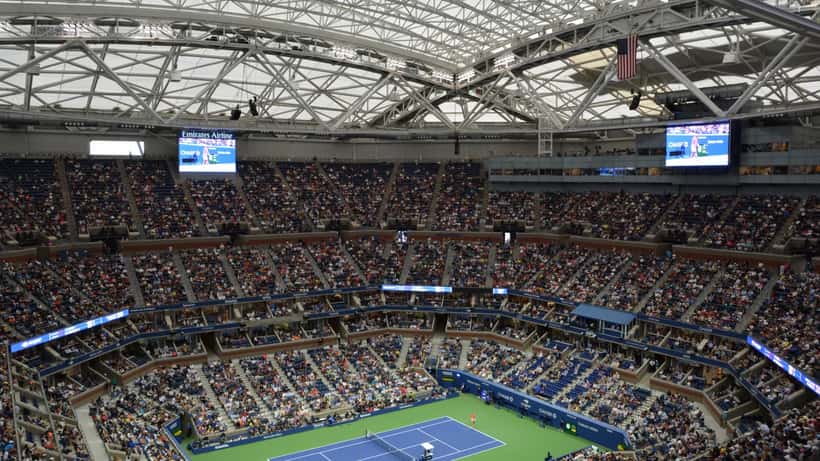
The 2026 US Open is not just the year's final Grand Slam — it is a live showcase for where enterprise AI is going in professional sports. As Arthur Ashe Stadium fills with fans tracking Jannik Sinner's serve mechanics in real time, IBM and the USTA are running one of the most sophisticated sports-technology deployments anywhere in the world. The tournament, which runs from August 23 through September 13, 2026, at the USTA Billie Jean King National Tennis Center in Flushing Meadows, New York, is attracting as much attention for its data infrastructure as for its draws. For the tens of thousands of clubs, leagues, and sports organizations across the United States, the implications stretch far beyond any single match.
The Numbers Behind Every Serve
The headline technology debut at the 2026 US Open is IBM's new Serve Quality metric, rolled out across all 254 singles matches. High-speed cameras mounted at Flushing Meadows track 21 distinct data points across a player's body and racquet — including wrist angle, elbow extension, hip rotation, shoulder coil, and racquet head speed — sampled at 50 frames per second. The system synthesizes those inputs into a composite score that breaks down every serve into components fans can actually interpret: spin rate, placement accuracy, power, and consistency under pressure.
It is the kind of granular biometric analysis that, five years ago, existed only in elite training facilities and national coaching programs. In 2026, it runs automatically across every singles court at the US Open, available to any fan on the USOpen.org app.
Two companion features complete IBM's 2026 AI stack. The first is an all-new Live Updates homepage, a personalized feed that lets fans prioritize their favorite players and receive real-time match insights, scores, and commentary tuned to their preferences — powered by IBM watsonx AI. The second is Match Chat, a conversational AI companion that answers fan questions in natural language and returns responses with text, photos, and embedded video. Match Chat runs on watsonx Orchestrate and AI agents trained specifically on USTA editorial data.
These three features build on five years of AI integration at the US Open. In 2021, the tournament became the first Grand Slam to eliminate human line judges from all courts, replacing every line call with Hawk-Eye Live's real-time electronic line calling system — high-speed cameras, triangulation algorithms, and sub-millisecond decision cycles. That system still operates across all 17 courts in 2026, processing millions of ball-position determinations across the tournament's 22 days.
| Feature | Data intensity | Technology layer |
|---|---|---|
| Serve Quality | 21 body points × 50 fps × 254 matches | Computer vision + limb tracking |
| Live Updates | Real-time scores, stats, player storylines | IBM watsonx AI / personalization engine |
| Match Chat | Natural language Q&A with multimedia output | watsonx Orchestrate + AI agents |
| Electronic Line Calling | Every ball on every court, every point | Hawk-Eye Live camera arrays |
Why Sports Organizations of Every Size Are Paying Attention
What the USTA and IBM have assembled at the US Open is not a prototype — it is a mature, proven system backed by decades of investment and one of the world's most durable technology partnerships. But the underlying components — computer vision, edge AI, large language models, and sports data APIs — have become dramatically more accessible in 2025 and 2026. The same category of tools that IBM deploys at Flushing Meadows is now available to organizations with budgets that are orders of magnitude smaller.
According to the National Institute of Standards and Technology's AI Risk Management Framework, any organization adopting AI-powered tools should assess four core dimensions: data governance (what data you collect and who controls it), reliability (how the system fails and what the fallback is), explainability (whether the system's decisions can be understood by staff and users), and security (how data is stored, transmitted, and protected). For a tennis club considering AI line-calling cameras or a league administrator evaluating a scheduling app with machine learning, these are not abstract principles — they are the practical checklist that prevents expensive failures and liability exposure.
The gap between the USTA's capabilities and those of a 200-member regional club is real. But it is not unbridgeable. It is, however, a gap that requires the right guidance to navigate — and that is where IT consulting expertise becomes critical.
A Concrete Case: What Technology Adoption Actually Costs a Tennis Club in 2026
Take the situation of a 200-member tennis club in suburban Chicago planning to modernize its weekend tournament operations ahead of the 2026 season. The board has watched the US Open's AI integration and wants something functionally similar for their own 64-draw member championship: electronic scoring, live bracket updates visible to spectators on a courtside display, and a simple app where players can check their match times and results.
If the club builds it without specialist guidance:
- Consumer-grade multi-angle camera setup for 4 courts: $2,800–$5,500
- Ball-tracking or court-monitoring software license (entry-level, SaaS): $1,200–$4,000 per year
- Cloud hosting, data storage, and streaming bandwidth: $150–$400 per month ($1,800–$4,800/year)
- Custom mobile app development (freelance contractor): $8,000–$25,000 (one-time)
- Total first-year cost: $14,000–$40,000 — with no guarantee of reliability, vendor support continuity, or compatibility with future systems
If the club brings in a certified IT consultant first (typical rate: $125–$225 per hour for sports technology specialists):
- 8–15 hours of scoping, vendor evaluation, architecture review, and contract analysis: $1,000–$3,375
- Consultant identifies an existing SaaS sports-management platform (bracket software + court scheduling + player notifications) that handles all requirements for $400–$900 per year — no custom development needed
- Phased hardware plan defers camera investment until year two, after staff training is complete and the platform is stable, saving $10,000–$20,000 in upfront outlay
- Total first-year cost: $2,500–$7,000, scalable, maintainable, and built on vendor-supported infrastructure
The if/then logic is concrete: if a sports organization commits its technology budget without an IT specialist reviewing vendor contracts, platform interoperability, and data security requirements, then the club risks overpaying by 300–500% and inheriting a system that cannot be updated, integrated with future tools, or recovered if the vendor shuts down. The US Open's model works because IBM and the USTA have decades of joint planning and a dedicated technology team behind it. For every other sports organization in America, that planning role falls to an independent IT consultant — or it falls to no one, which is the more common and more costly outcome.
How AI Is Remaking the Schedule Itself
The 2026 US Open schedule — 254 singles matches, plus doubles, qualifying, and exhibition events across 22 days — is an operational challenge that no spreadsheet can manage. IBM's AI systems help USTA tournament directors optimize court assignments and match scheduling in real time, integrating weather data, player rest requirements, broadcast window commitments, and crowd-flow modeling to produce daily schedules that minimize delays and maximize court utilization.
For regional leagues and clubs, a version of that challenge exists every weekend. Scheduling conflicts, court availability gaps, late withdrawals, and weather changes routinely cost organizers 4–6 hours of manual replanning per tournament. Scheduling software integrated with court booking systems, weather APIs, and player availability databases already exists in 2026 and is affordable for most clubs. An IT consultant can assess whether a club's current process — typically a mix of spreadsheets, group chats, and phone calls — is a candidate for platform migration, and identify which of the dozens of available options best matches the club's scale, budget, and technical capacity.
A useful benchmark: according to a 2025 survey cited by the USTA, clubs that adopted integrated scheduling and player-communication platforms reduced tournament administration time by an average of 43%, while improving player satisfaction scores related to schedule clarity. That is the kind of operational improvement that justifies a technology investment — and the kind of claim an IT consultant can verify independently before a club commits to a contract.
For context on how ExpertZoom has covered the financial side of professional tennis in 2026, see the US Open 2026 prize fund analysis, which examined what record prize money means for emerging players navigating wealth planning for the first time.
What to Do Next
Whether you manage a recreational tennis league, a private club, a multi-sport facility, or a sports-adjacent business that collects and displays performance data, the 2026 US Open provides a useful reference point for where AI-augmented sports operations are heading. You do not need IBM's infrastructure budget to benefit from the trend — but you do need qualified guidance to avoid the traps that catch most organizations: vendor lock-in, inadequate data security, systems that cannot talk to each other, and technology that front-line staff never actually use.
An IT consultant available through ExpertZoom can audit your current technology stack, identify the highest-value improvements for your specific budget and use case, and evaluate vendor contracts before you sign. The organizations that gain lasting competitive advantage from the current wave of sports AI will be the ones that plan before they purchase — not the ones that buy the Hawk-Eye equivalent and figure out the software later.
Disclaimer: This article covers technology adoption considerations. For decisions involving legal contracts with technology vendors, data privacy compliance, or financial planning related to sports organization management, consult a qualified specialist in that specific domain.
