 Charles Jackson
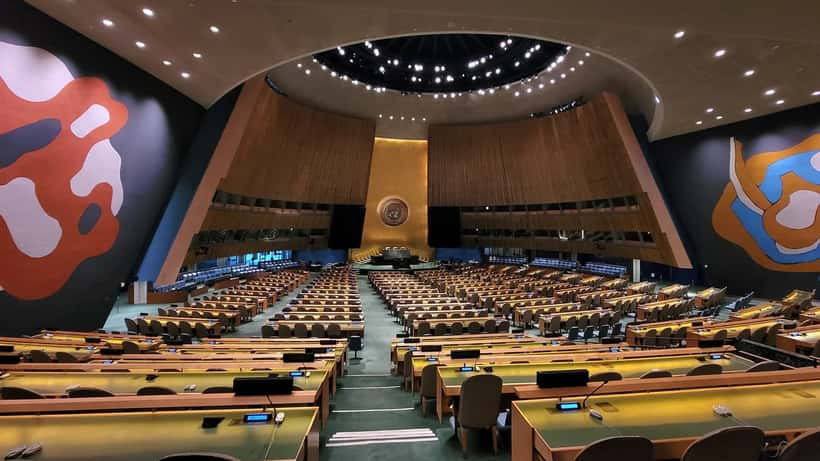
The 81st United Nations General Assembly High-Level Week opened in New York City on September 22, 2026, drawing nearly 130 heads of state and setting a packed agenda that directly touches American businesses: AI governance frameworks, new climate compliance obligations, pandemic treaty finalization, and shifting sanctions landscapes. For US companies operating internationally, what world leaders agree to this week could translate into real legal and regulatory obligations within months.
What's Happening at UNGA 2026
The 81st UNGA session, which began September 8 and reaches its High-Level Week through September 26, is the most consequential since the "Pact for the Future" adopted in 2024. President Trump is addressing the General Assembly on September 22, with key agenda items including the wars in Ukraine and the Middle East, a new AI governance resolution, a High-Level Meeting on climate action and just transition scheduled for September 23, a sea-level rise declaration on September 24, and the finalization of the Pandemic Prevention, Preparedness and Response framework on September 25.
Member states are expected to adopt several binding and non-binding instruments before the week closes. Two items stand out for their direct commercial impact on US companies: the AI governance resolution and the climate "just transition" commitments that will shape national legislation across trading partner countries.
The US State Department has confirmed at least three new sanctions packages under discussion at the 81st session, tied to ongoing conflicts in Ukraine and the Middle East, that could affect supply chains and financial transactions for American importers and exporters.
Why US Businesses Should Care Right Now
International agreements adopted at the UN don't automatically become US law — but they trigger domestic rulemaking, expand OFAC sanctions lists, tighten export controls, and require ESG disclosures that affect publicly traded companies. The timeline from UN resolution to enforceable US regulation has compressed dramatically: under recent administrative frameworks, new rules stemming from multilateral commitments can take effect in as little as 90 days.
Three specific channels matter most for American businesses this week:
AI compliance obligations. A UN resolution on AI governance, expected by September 25, would establish baseline transparency and accountability standards for AI systems deployed by companies operating in signatory markets. While not self-executing in the US, it will accelerate existing FTC rulemaking and could make non-compliance a liability trigger in EU-based contracts under the AI Act.
Climate and supply chain liability. The September 23 High-Level Meeting on climate action and just transition is expected to advance mandatory human rights and environmental due diligence requirements modeled on the EU's Corporate Sustainability Due Diligence Directive (CSDDD). US companies exporting to Europe or operating with European partners face new contractual exposure if they cannot document compliance up and down their supply chains. This is a pattern already familiar to companies navigating geopolitical risk — as discussed in our analysis of force majeure and supply chain disruptions from the Iran-Israel conflict.
Sanctions updates. Any resolution tightening measures against Russia or expanding Middle East sanctions triggers corresponding OFAC updates. According to the US Treasury Department's OFAC civil penalties and enforcement information, the average penalty for inadvertent OFAC violations has risen 34% since 2023 — and ignorance of a new designation is not an accepted defense.
When UNGA Turns Into a Compliance Bill: A Concrete Scenario
Consider a mid-size US electronics manufacturer — call them MidTech Corp — that sources components from Southeast Asia, sells software to European clients, and uses an AI-driven logistics platform to manage inventory. As of September 22, 2026, MidTech faces a potential three-front compliance challenge from this week's UNGA proceedings.
If the AI governance resolution passes in its current form and the EU invokes it as grounds to expand AI Act enforcement to US-based software providers, then MidTech's logistics platform could require a third-party conformity assessment before renewing its EU distribution contracts — a process costing $15,000–$80,000 and taking 3–6 months, based on current EU AI Act auditor pricing benchmarks.
If the climate just-transition declaration advances mandatory supply chain due diligence requirements and is enacted into EU law within 12 months (the projected CSDDD timeline), then MidTech would need to audit 47 suppliers across 6 countries, produce a remediation plan, and document corrective actions — with contractual penalties of up to 5% of EU-market revenue for non-compliance.
If new OFAC updates following sanctions resolutions expand restricted entities lists to include logistics firms currently used by MidTech's Southeast Asian component suppliers, then MidTech faces a choice: find alternative suppliers within 45 days (the standard wind-down period for new designations), or apply for a specific OFAC license — a process averaging 4–6 months and requiring detailed legal documentation.
None of these scenarios requires MidTech to have done anything wrong. This is the nature of UN-driven regulatory cascades: compliant companies suddenly find themselves out of compliance due to rule changes they had no hand in creating.
What Changes for US Businesses This Week
The 48-hour window following the High-Level General Debate opening (September 22–23) is when legal risk teams should be paying closest attention. Here's what to watch:
Monitor OFAC's SDN list. Any new sanctions designations announced in connection with UNGA 2026 resolutions will appear on the Specially Designated Nationals list at the Treasury Department website. Businesses with international payment flows should run updated screening within 72 hours of any announced resolution.
Review EU contractual clauses. If your company has distribution, licensing, or service agreements with EU partners, check whether the force majeure or compliance clauses reference "applicable international standards." A new UN resolution can immediately activate such clauses, triggering renegotiation rights for your European counterpart. For US businesses with exposure to geopolitical disputes, understanding how international law intersects with US legal rights is increasingly critical — as illustrated by recent guidance on US businesses operating amid international crises.
Document your AI systems now. Even before any resolution passes, having documented evidence of AI system oversight, testing protocols, and human-in-the-loop mechanisms is becoming a standard due diligence requirement in international commercial contracts. The cost of documentation now is a fraction of the cost of remediation later.
Reassess supply chain risk by jurisdiction. The sea-level rise and climate commitments under discussion at UNGA 2026 will increase long-term regulatory pressure on companies with operations in coastal or high-emission jurisdictions. Risk reassessment now positions businesses to negotiate better contract terms on agreements set to renew in 2027.
What to Do
The practical reality for American businesses is that UNGA week is not a spectator sport. International agreements made this week create legal and commercial risks that materialize within months — sometimes weeks — in the form of sanctions updates, export control revisions, and new contractual compliance requirements.
For companies operating internationally, this is the right moment to consult a business attorney who understands international trade law, export controls, and cross-border compliance. Reviewing existing contracts for international-standard compliance triggers, auditing supply chains against current and anticipated sanctions lists, and stress-testing AI systems against emerging governance frameworks are baseline risk management steps — not optional activities — for businesses with EU exposure.
Expert Zoom connects US businesses with experienced international trade lawyers, compliance specialists, and corporate attorneys who can translate this week's UN proceedings into concrete action items for your company. A one-hour consultation now can prevent a six-figure compliance failure six months from now.
Legal Disclaimer: This article provides general informational context about international regulatory developments and does not constitute legal advice. International trade law and sanctions compliance are highly fact-specific areas. Consult a licensed attorney for guidance applicable to your specific business situation.
