 Odette Caplan
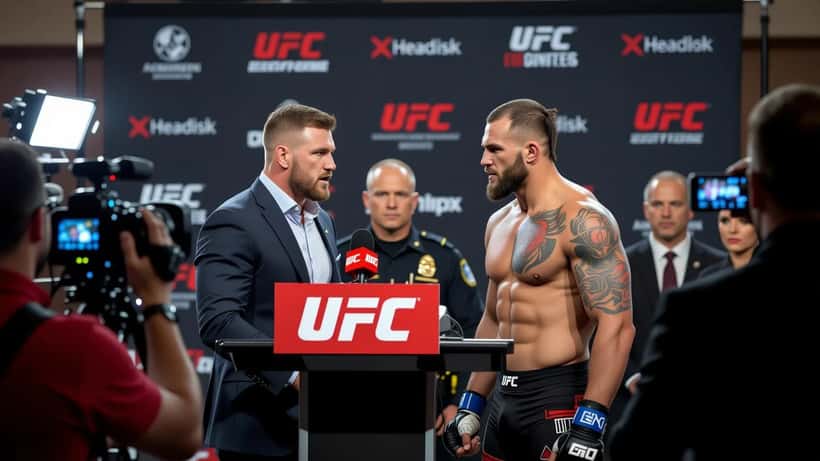
Two incidents in 48 hours put the UFC's press conference culture under a legal microscope this week. On May 7, 2026, Khamzat Chimaev kicked Sean Strickland during a face-off at the UFC 328 pre-fight press conference in Newark, New Jersey — catching Dana White's arm in the process. The following day, heavyweight contender Josh Hokit was physically removed by security from the UFC White House kickoff press conference after insulting Alex Pereira and provoking Ilia Topuria into throwing water at him on stage. Both events went viral within hours.
For athletes, agents, and sports legal professionals, the more interesting question isn't what happened — it's what UFC fighter contracts actually say about this behavior, and what the organization can legally do in response.
UFC Fighter Contracts: The Conduct Clause Reality
UFC fighters are classified as independent contractors, not employees. This classification — which has been contested legally and by advocacy groups — means they do not receive OSHA workplace protections, collective bargaining rights, or unemployment benefits. But it also gives the UFC broad latitude to structure contracts around image, conduct, and promotional obligations.
Standard UFC contracts include what is known as a "Promotional Obligations" clause. Under typical terms, fighters are required to:
- Participate in pre-fight and post-fight press conferences
- Complete interviews arranged by the UFC during the fight week schedule
- Maintain conduct consistent with UFC and sponsor brand standards
- Not engage in conduct likely to discredit, embarrass, or harm the UFC brand
That last clause is where incidents like Chimaev's kick and Hokit's ejection become legally interesting. The conduct standard is typically written broadly — which cuts both ways. The UFC has used it to fine fighters, and fighters have challenged the interpretations in arbitration.
Can the UFC Fine Fighters for Press Conference Incidents?
Yes — and they do. The UFC has fined fighters for failing to appear at press conferences, failing to complete media obligations, and for conduct deemed inconsistent with the organization's standards. Fines are typically deducted from fight purses under contract terms.
However, the line between "colorful promotion" and "actionable misconduct" is not always clear. The UFC has a commercial interest in fighters generating controversy — it drives pay-per-view buys and media attention. A fighter who refuses to engage at all is treated differently from a fighter who generates viral moments (even aggressive ones).
In Chimaev's case, the UFC leadership was present when the kick occurred and did not immediately suspend or sanction him publicly — a signal that the organization may view the incident as within the promotion's theatrical norms. Hokit, who was ejected by event security rather than sanctioned by the UFC itself, faces a more uncertain path depending on the terms of his promotional agreement.
The Independent Contractor Problem
The fundamental legal tension in all UFC fighter disputes is the contractor classification. According to the National Labor Relations Board, independent contractors are generally not covered by the NLRA and cannot organize for collective bargaining — meaning UFC fighters cannot formally unionize to negotiate standard conduct clause terms.
Several legal scholars and fighter advocacy groups have argued that the UFC's operational control over fighters — scheduling, venue selection, sponsorship, media obligations, and exclusive promotional rights — more closely resembles an employment relationship. If a court or regulatory body were to reclassify UFC fighters as employees, their rights in conduct disputes would expand significantly.
For now, fighters disputing UFC conduct fines or contract violations must proceed through private arbitration — the dispute resolution mechanism built into UFC contracts — rather than public courts. This arbitration is confidential and binding, which means the outcomes are rarely disclosed.
What This Means for Athletes and Their Legal Representatives
Sports attorneys advising professional fighters or emerging athletes in combat sports should focus on several areas:
1. Review conduct clause definitions — Broad language like "discredit or embarrass" should be defined or limited through negotiation before signing. What one party calls promotional antics, another calls actionable misconduct.
2. Understand arbitration requirements — If your contract includes mandatory arbitration, you are waiving your right to a jury trial in any dispute with the promoter. Know this before signing.
3. Press conference obligations are enforceable — Fighters who simply refuse to appear at required press events can be fined and potentially have future bookings affected. Media obligations are part of the deal.
4. Document everything — If you believe the UFC or any promoter acted outside the contract terms, contemporaneous documentation (emails, texts, recorded statements) is critical in arbitration.
5. Watch the contractor classification landscape — Federal and state interpretations of independent contractor vs. employee status continue to evolve. Fighters in California, for example, operate under AB 5 implications that may affect promotional contract enforceability.
On ExpertZoom, you can connect with sports and entertainment attorneys who specialize in athlete contract review, conduct clause interpretation, and promotional agreement disputes.
This article is for informational purposes only and does not constitute legal advice. Consult a licensed sports attorney for guidance specific to your situation.
