 Bernard Stone
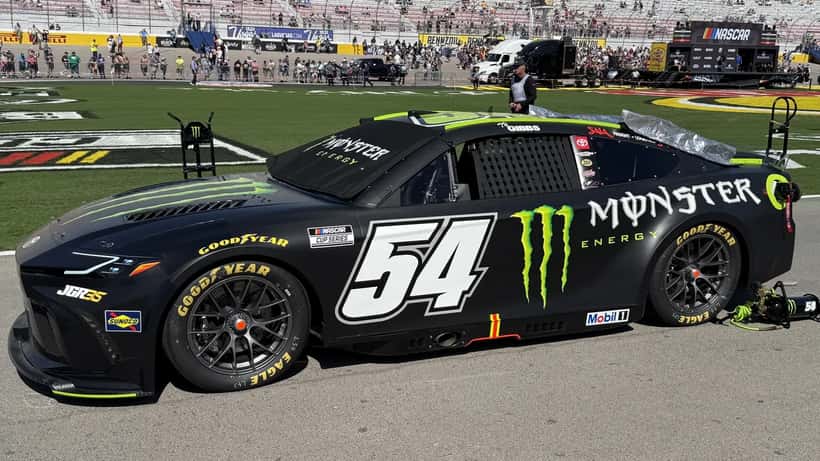
With nine top-five finishes, a first career win at Bristol Motor Speedway in April 2026, and a locked-in spot in the NASCAR Cup Series Chase, Ty Gibbs is no longer just Joe Gibbs Racing's promising young heir — he is a genuine championship contender. The 23-year-old sits fourth in the Cup Series points standings as the 10-race playoff fires off September 6, 2026 at Darlington Raceway. What most fans aren't tracking alongside his lap times: the financial complexity arriving with every mile he gains on the leaderboard.
The Numbers Behind a NASCAR Championship Year
NASCAR's year-end points fund totaled $33.7 million in 2025, with the championship team collecting approximately $2.8 million from that pool alone. Under the driver-team compensation structure standard in Cup racing, drivers typically negotiate 40 to 50 percent of their team's race earnings back into their contract. At a 45 percent cut, a championship-winning Gibbs would receive roughly $1.26 million from that bonus alone.
Layer in a competitive base salary — frontline drivers at fully funded charter teams typically earn between $2 million and $3 million annually — and total racing income for a Cup champion pushes toward $4 million to $5 million before endorsements touch it.
Then the endorsement multiplier kicks in. Championship-winning NASCAR drivers routinely see personal sponsorship deals double or triple in the 12 months after a title. A driver with $400,000 to $600,000 in pre-championship personal endorsement income can realistically reach $1 million to $1.5 million by the following season. For Gibbs — whose family name carries its own brand weight in motorsport — the upside is real.
| Income Source | Estimate (2026 championship year) |
|---|---|
| Base salary | $2.0M – $3.0M |
| Championship bonus (driver's 45% cut) | ~$1.26M |
| Race performance bonuses | $300K – $500K |
| Personal endorsements | $600K – $1.0M |
| Total | $4.2M – $5.8M |
Why Family Business Adds a Layer Most Athletes Don't Face
Gibbs drives for his grandfather's team. Joe Gibbs — the Hall of Fame NFL coach who founded Joe Gibbs Racing in 1991 — built one of NASCAR's most successful organizations, and Ty has developed within that structure since his teenage years. The family context creates financial questions that outside drivers simply don't face.
Is Gibbs's contract structured at arm's length, or does the family relationship affect what he earns compared to a driver of equivalent caliber signing in free agency? If Joe Gibbs Racing were ever sold or restructured — a scenario that has precedent across motorsport as consolidation accelerates — what protections does Ty's agreement include? And when significant family-business assets eventually change hands between generations, how do racing contracts interact with estate and succession structures?
These are not hypothetical concerns for a 23-year-old at a family-owned enterprise. They are precisely the questions that, if answered early with independent financial counsel, preserve options and value. Answered late — or not at all — they generate inefficiencies, disputes, or lost earnings worth hundreds of thousands of dollars.
The Jock Tax Problem Young Drivers Don't See Coming
Here is the dimension that surprises athletes new to high-income racing: drivers owe income tax in every state where they compete and earn money. Racing in Michigan triggers Michigan obligations. Racing in California — with its 13.3 percent top rate — creates California tax exposure on the income apportioned to that event. A full Cup Series schedule crosses more than 20 states in a single season.
Tennessee, where Joe Gibbs Racing is headquartered, has no state income tax, which provides a base advantage. But "no Tennessee income tax" does not mean "no state income tax anywhere." It means the filing obligation shifts — sometimes significantly — to the dozen-plus states where race income originates.
According to the IRS guidance on estimated taxes, self-employed athletes and those with substantial non-withheld income must make quarterly estimated payments to avoid underpayment penalties. For a driver earning $5 million across a championship season, failing to track those obligations can generate penalties from multiple taxing authorities simultaneously by the time April rolls around.
The federal picture alone is significant: the top marginal federal rate is 37 percent on taxable income above approximately $609,350 for a single filer in 2026. On $4.5 million in net taxable income — after legitimate deductions — federal liability alone approaches $1.6 million.
Concrete Case: Mapping the Championship Windfall
Take this specific scenario. Gibbs wins the 2026 NASCAR Cup Series championship. The year-end points fund awards Joe Gibbs Racing the $2.8 million top prize. At 45 percent, Gibbs's share of that bonus is $1.26 million. His base salary for the 2026 season is $2.5 million. Race performance bonuses through the Chase add $420,000. Post-championship media attention lifts personal endorsement income to $780,000 for the year.
Gross 2026 income: $4.96 million.
After professional expenses and legitimate business deductions (travel, agent fees, equipment), taxable income settles around $4.2 million. Federal tax at 2026 marginal rates: approximately $1.49 million. Effective federal rate: roughly 35.5 percent.
Now add the jock-tax exposure. Gibbs races in California, Pennsylvania, Michigan, and North Carolina among other high-rate states. Apportioning $4.96 million across 36 events, with roughly 8 races in states carrying rates above 5 percent, the state-level tax obligation for those jurisdictions runs an estimated $160,000 to $220,000.
If Gibbs had not structured quarterly estimated payments from January 2026 onward, waiting instead to settle the full bill in April 2027: the IRS underpayment penalty rate in 2026 is set at the federal funds rate plus 3 percentage points — currently running around 6 to 7 percent annualized. On a $300,000 underpayment across federal and multi-state obligations, that penalty exposure alone reaches $18,000 to $21,000 for a single year. Entirely avoidable with proper planning.
The difference between a driver entering the Chase with calibrated quarterly payments already in place versus one reacting after the fact can easily represent $200,000 to $400,000 in avoidable costs across a championship season and its immediate aftermath.
Three Financial Moves Before the Chase Ends
Set up entity structure for endorsement income now. Many high-earning athletes operate endorsement and appearance income through an S-corporation or single-member LLC, separating it from guaranteed W-2 racing income. At income levels above $3 million, this structure can reduce self-employment tax exposure meaningfully by capping the payroll-tax base for S-Corp owner-employees.
Build a jock-tax filing calendar for Q3 and Q4 now. The Chase begins September 6. The bulk of Gibbs's playoff racing income — and the state-level filing obligations it generates — concentrates in the final quarter of 2026. A financial advisor with motorsport or professional sports experience should map each Chase venue, estimate the apportioned income by state, and calibrate the October 15 Q4 estimated payment accordingly. This is not a general-purpose CPA task; it requires the specific allocation methodology that athletics taxation applies.
Get independent counsel on the family-business layer. If Gibbs's contract with Joe Gibbs Racing includes performance bonuses, revenue-sharing provisions, or any equity-adjacent interest in team assets — and if those provisions have not been reviewed by an advisor whose mandate runs solely to Ty's interests, not the team's — that review is overdue. The complexity does not diminish when the team owner is a grandfather. In some ways, it deepens.
What a Wealth Advisor Brings to This Moment
NASCAR Cup Series careers peak roughly between the mid-20s and mid-30s. The earning window is finite. A 23-year-old who manages a championship-year windfall effectively — investing consistently, funding retirement vehicles at maximum contribution levels, minimizing unnecessary tax drag across multiple jurisdictions — builds a financial foundation that outlasts the sport itself.
The advisory need is specific: multi-state tax compliance, entity structuring for endorsement and appearance income, independent contract review in a family-business context, and investment discipline during an unusually high-income window. A wealth management advisor with professional-athlete experience understands how NASCAR's race purse structure, playoff bonus cycles, and endorsement economics interact in a way a generalist advisor typically does not.
Gibbs has put himself in position for a career-defining autumn. The financial decisions that run parallel to those ten Chase races will matter long after the trophy is placed on the shelf.
For a related look at how NASCAR-adjacent wealth and estate planning decisions carry high stakes, see Expert Zoom's coverage of athlete estate planning following the Kyle Busch tribute.
This article is for informational purposes only and does not constitute financial, tax, or legal advice. Readers should consult a licensed wealth management advisor for guidance specific to their circumstances.
