 Michael Campbell
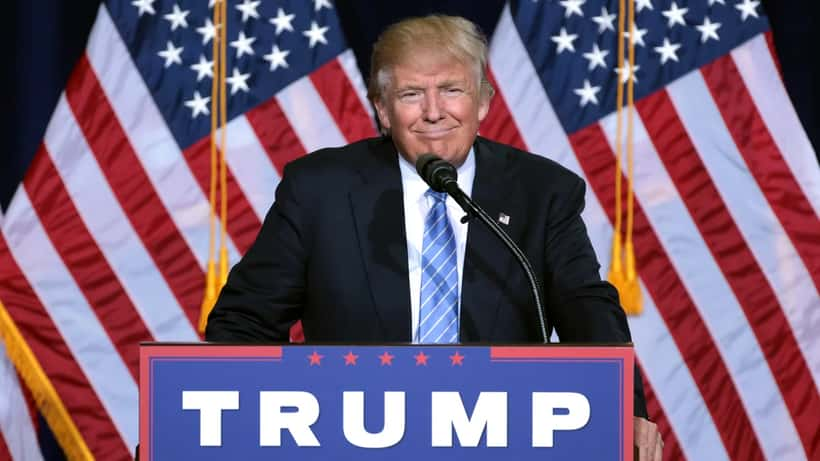
President Donald Trump sat down with TIME magazine for a 75-minute Oval Office interview on September 28, 2026 — his 56th TIME cover, surpassing Richard Nixon's all-time record. The resulting cover story, titled "Trump's Way," carried explicit statements on Iran escalation, hints at preemptive pardons for administration officials, and a president who told reporters, "I could have stopped then, but I wanted to go further." Within hours of publication, the Pentagon confirmed that thousands of U.S. troops were already aboard ships heading to the Middle East. For investors, what sounds like geopolitical theater is actually a direct signal to review your portfolio — ideally with a professional.
What the TIME Interview Said — And What Markets Heard
Trump's interview with TIME senior correspondent Eric Cortellessa covered five major subjects: Iran, White House renovation, the Kennedy Center dispute, frustration with Supreme Court picks, and the possibility of preemptive pardons for administration officials. The range was broad; the market-relevant content was unusually dense.
On Iran, Trump was openly defiant. When asked why the conflict had stretched well beyond his original stated timeline, he replied that he had deliberately chosen to escalate. "I could have stopped then, but I wanted to go further," he told TIME. This was not a vague geopolitical statement — it was a public signal, from a sitting commander-in-chief, that the conflict had entered a new phase on his volition.
The same day the interview published, October 1, 2026, the Pentagon confirmed the deployment of thousands of U.S. troops aboard ships in Middle East waters. Defense futures moved. Energy futures moved. Bond yields edged upward.
On pardons, Trump discussed the possibility of preemptive pardons for officials in his administration — a legal maneuver that carries direct implications for regulatory certainty in business planning. When senior regulatory figures operate under the implied protection of preemptive pardons, compliance risk calculations change for businesses in federally regulated industries.
For anyone reading the interview as news, the takeaways are political. For anyone reading it as an investor or small-business owner, the takeaways are financial.
Why Presidential Interviews Function as Policy Calendars
Wealth managers have long treated high-profile presidential media appearances as what the industry calls "policy calendars" — predictable, scheduled windows in which a sitting executive reveals, often inadvertently, the trajectory of government spending, foreign engagement, and regulatory posture. Not every interview moves markets. Trump's October 2026 TIME interview was an exception.
Three factors made this interview unusually signal-rich. First, the Iran statements were paired with confirmed military movement — giving them operational, not just rhetorical, weight. Second, the pardon discussion introduced a new variable into compliance forecasting for businesses in banking, pharmaceuticals, and environmental services. Third, Trump's open frustration with reporters during the interview — which TIME described as unusual even by this administration's standards — elevated what analysts call "policy opacity risk": the difficulty of forecasting government direction when official communication is adversarial.
None of these factors are individually catastrophic for a well-constructed portfolio. Together, in a Q4 context already loaded with earnings season, election-cycle volatility, and year-end rebalancing, they represent exactly the kind of compounding uncertainty that calls for a professional review rather than a reactive trade.
A certified financial planner or wealth advisor can translate these geopolitical signals into a personalized portfolio scenario — mapping the specific vulnerabilities and opportunities your current allocations carry into a plausible range of October-November 2026 outcomes.
What a 60/40 Portfolio Looks Like in This Environment
Consider a 54-year-old small-business owner in Ohio who holds a standard 60/40 portfolio — 60 percent equities, 40 percent bonds — with a total market value of $380,000. Her equity allocation includes 8 percent in a broad energy sector ETF ($30,400) and 5 percent in a defense-and-aerospace index fund ($19,000). She last rebalanced in January 2026 and has not reviewed her bond duration since September 2025.
If Trump authorizes fresh strikes on Iran in November 2026, and WTI crude oil prices rise 18 percent — a conservative figure given that Brent crude climbed approximately that much in the early days of the original Iran engagement — her energy ETF position gains roughly $5,472 on paper. According to the U.S. Energy Information Administration, approximately 17–21 percent of global crude oil transit passes through the Strait of Hormuz, meaning any military disruption to that corridor carries immediate price transmission to U.S. markets.
Her defense holdings would also benefit: defense contractors typically see 6–12 percent share price increases in the first 30 days of a confirmed military escalation event.
However, her 40 percent bond allocation — approximately $152,000 — faces headwinds. A geopolitical risk premium entering the bond market typically pushes Treasury yields upward. At a 60-basis-point yield rise on her intermediate-duration holdings, her bond portfolio could lose approximately $7,200 in market value. The net result: a marginal portfolio gain, but only if she acts quickly. Energy price spikes from Middle East crises historically revert within 60–90 days; bond losses from yield shifts are slower to recover.
If Trump's statements de-escalate — if a diplomatic channel emerges or military action is postponed past year-end — the opposite logic applies: energy gives back gains, long-duration bonds recover, and investors who held steady outperform those who over-rotated into energy.
The fork between these two outcomes is a matter of weeks, not months. Without a professional scenario analysis, most individual investors have no systematic way to position for either path.
Three Specific Data Points Investors Are Watching
Crude oil exposure. The Strait of Hormuz handles an estimated 17–21 percent of global crude transit. WTI crude was trading at approximately $83 per barrel before the interview published. A sustained disruption scenario — not even a full conflict, just elevated threat posture — historically adds $12–18 per barrel to spot prices within the first two weeks. For portfolios without energy exposure, this is pure inflation risk. For those with energy overweights, it is a time-limited opportunity.
Defense sector momentum. U.S. defense contractor indices have already outperformed the S&P 500 by approximately 14 percent year-to-date through Q3 2026, according to sector performance data tracked by major financial analysts. Trump's Time interview signals that defense spending authorization is unlikely to slow in Q4. Investors underweight in this sector may be missing a durable, policy-driven tailwind.
Bond duration and yield risk. The 10-year Treasury yield entered October 2026 at approximately 4.45 percent. A geopolitical escalation scenario — sustained oil price rise, increased defense borrowing, inflationary pressure from supply chain disruption — would likely push this yield toward 4.80–5.00 percent by year-end. For investors holding long-duration bond funds (10+ year maturity), that yield movement translates into meaningful price declines. A wealth advisor can model the specific impact on your bond holdings and recommend duration adjustments before the move happens rather than after.
Questions to Ask Your Wealth Advisor This Week
The Trump TIME interview is not an emergency — it is a prompt. Specifically, it is a prompt to ask five questions that most investors do not ask until a crisis forces them:
- What percentage of my portfolio is exposed to energy price volatility, directly or indirectly through transportation and manufacturing holdings?
- What is the average duration of my bond holdings, and how do they respond to a 50-basis-point yield increase?
- Does my current allocation account for a Q4 scenario in which oil rises above $100 per barrel?
- How does a preemptive-pardon regulatory environment affect any holdings I have in federally regulated industries?
- Do I have a rebalancing trigger set, or am I relying on my own judgment to time moves in a fast-moving geopolitical context?
A qualified wealth advisor can answer all five in a single consultation — and map the answers directly to your specific holdings, time horizon, and risk tolerance.
Act Before Q4 Volatility Compounds
Q4 2026 already carries more than the usual load of market-moving events: midterm-adjacent election dynamics, a full earnings season, year-end institutional rebalancing, and now a president signaling ongoing military engagement in one of the world's most oil-sensitive regions.
The TIME interview was published on October 1. Markets have at most four to six weeks before these variables begin to interact and amplify. The investors who emerge from Q4 2026 in the strongest position will not be those who reacted fastest — they will be those who had a scenario-based plan in place before the volatility compounded.
An ExpertZoom wealth management advisor can run that scenario analysis for your specific situation — not for a generic 60/40 investor, but for you: your numbers, your timeline, your tolerance for uncertainty. The consultation is the plan. The plan is the edge.
This article is for informational purposes only and does not constitute personalized financial or investment advice. Consult a licensed and qualified wealth advisor before making investment decisions.
