 Jessica Johnson
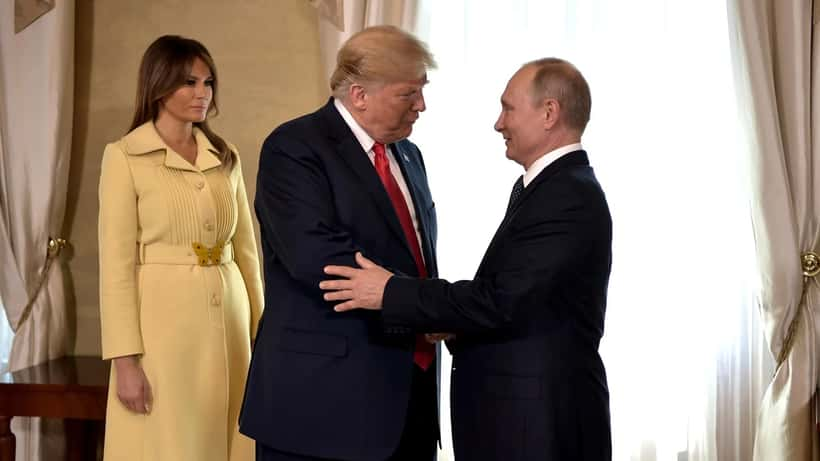
On October 9, 2026, President Trump announced that Vladimir Putin agreed to release millions of tons of Russian diesel to global markets — and the US Treasury's Office of Foreign Assets Control (OFAC) issued a general license to make it legal for American businesses to participate. The deal, announced via Truth Social, commits Russia to delivering over 300,000 tons immediately, 500,000 tons in November, 1 million tons in December, and up to 3 million additional tons pending Russian refinery conditions. For energy traders, fuel distributors, and investors, the headline is welcome. But buried in the OFAC license are restrictions that could expose unwary businesses to federal sanctions violations — and a hard expiration date of midnight, April 7, 2027.
Why the Trump-Putin Diesel Deal Happened Now
Diesel prices have surged through 2026 under a perfect storm of supply pressures. Ukrainian strikes on Russian refineries earlier this year disrupted one of Europe's major diesel suppliers. The escalating Iran conflict strained global crude flows. And US domestic refinery capacity — already running near its limits — couldn't absorb the gap. Trump has faced growing political pressure to act on fuel costs ahead of the November midterm elections. The Russian diesel waiver is his answer.
The Treasury's OFAC general license authorizes the purchase, import, and transport of Russian-origin diesel fuel through midnight on April 7, 2027. That's approximately six months of legal access — enough to cover the immediate supply crunch, but explicitly designed as a time-limited political lever, not a permanent sanctions rollback.
The volumes are significant: over 4.8 million tons of diesel across the commitment period if Russia's refineries cooperate. At current diesel import equivalents, that's enough to supply roughly 6% of US annual diesel consumption. The price impact was immediate — diesel futures fell approximately 4% on October 9 within hours of the announcement, according to Al Jazeera's reporting on the deal.
What the OFAC License Actually Covers — and What It Doesn't
This is where many businesses will trip up. The license is a "correspondent general licence," meaning it permits a broad class of transactions without requiring individual case-by-case OFAC approval. But it contains a specific and critical carve-out: no debits from US accounts tied to Russia's central bank, national wealth fund, or Ministry of Finance.
In plain terms: you can buy Russian diesel through approved channels, but you cannot route payment through any US financial institution if that payment ultimately touches Russia's sovereign financial infrastructure. For multinational energy traders with complex payment chains — correspondent bank relationships in Europe, commodity swap arrangements, trade finance instruments — this distinction is not trivial.
Additional constraints that compliance practitioners are already flagging:
- The license does not modify or lift existing export controls on technology, equipment, or dual-use goods to Russia.
- Secondary sanctions on third-country entities remain in effect — a European trading house that also handles sanctioned Iranian crude cannot simply add Russian diesel transactions without separate legal analysis.
- OFAC's standard "reason to know" standard applies: businesses that knew or should have known that funds were flowing through restricted accounts face liability even if the general license technically permitted the underlying diesel purchase.
According to CNBC's October 9 reporting, the Treasury made clear the license does not represent a broad reset of Russia sanctions policy. It is narrow, product-specific, and time-bound. The Office of Foreign Assets Control maintains the full license text and updated guidance on its official website.
The April 7, 2027 expiration also creates a sunset compliance problem. Contracts entered in October or November 2026 for diesel delivery in March or April 2027 must be structured so that final payment and title transfer occur before the license expires — or they must include contingency clauses that account for the possibility the license is not renewed.
The Legal Trap Most Businesses Don't See Coming
Energy traders, fuel distributors, port operators, and commodity financiers face a deceptively simple situation: a presidential announcement signals "this is now legal," while the underlying regulatory document contains exclusions that require careful reading.
OFAC civil penalty cases routinely involve businesses that relied on a general license without reviewing the fine print. In a notable 2024 case, a mid-size commodity trading firm paid $8.1 million in civil penalties after executing transactions under a Ukraine-conflict-era general license — the license authorized the underlying trade, but the payment routing ran through a correspondent account linked to a restricted Russian state bank entity. The firm's defense that it relied on the general license was not accepted because OFAC found it had not conducted adequate supply chain due diligence.
The current Trump-Putin diesel waiver creates the same structural risk. The gap between what Trump described publicly — "we're getting Russian diesel" — and what OFAC's technical document actually authorizes is significant enough that businesses acting on the headline alone face real exposure.
Concrete Case: What a US Fuel Distributor Actually Faces
Take the case of a Gulf Coast terminal operator — a mid-size US fuel distributor — currently paying $5.20 per gallon for ultra-low sulfur diesel from their existing European supplier. With Russian diesel now waiver-eligible, a Rotterdam-based broker approaches them with Russian-origin ULSD at $4.65 per gallon: a $0.55/gallon discount.
On 10 million gallons per month, that's $5.5 million in potential annual savings if the deal holds through April 2027.
Here is the if/then structure that determines whether they can legally capture that savings:
If the Rotterdam broker settles transactions through a European commercial bank with no Russian sovereign institution connections, the transaction is almost certainly license-compliant. Risk: low. Legal compliance review cost: $2,000–$4,000 for an attorney opinion letter.
If the broker's bank has a correspondent relationship with VTB Bank (a sanctioned entity) or routes payments through structures linked to Russia's National Wealth Fund, the distributor faces OFAC civil exposure regardless of the general license. Civil penalty range: $1 million to $25 million or more depending on willfulness and total transaction volume. Attorney cost for a full supply-chain due diligence engagement: $15,000–$40,000.
If the fuel distributor accepts the broker's verbal assurances without independent legal review, they are not protected by the general license if the payment chain later proves non-compliant. OFAC's "reason to know" standard does not require intent — it requires that a reasonable business exercised reasonable diligence.
The $5.5 million in annual savings is real. So is the sanctions exposure. The ratio of review cost to liability risk makes a compliance opinion from an OFAC-experienced attorney one of the clearest cost-benefit decisions in energy procurement in 2026.
What Investors and Portfolio Managers Should Watch
Beyond direct compliance risk, the Trump-Putin diesel deal reshapes near-term portfolio dynamics in several sectors. The approximately 4% decline in diesel futures on October 9 signals how markets are pricing the supply relief — but the duration question remains open.
Trucking and logistics stocks benefit directly from lower fuel input costs. Diesel typically represents 25–35% of operating costs for long-haul carriers; a sustained $0.50–$0.70/gallon reduction flows significantly to margin improvement.
US refinery stocks face near-term margin compression. Domestic refiners lose pricing power when competing against cheaper imported product, particularly for distillate production.
Agricultural commodity costs may ease moderately. Diesel is the direct energy input for planting and harvesting operations, and lower diesel prices compress input costs — an effect that will show up in commodity margins over the next two crop cycles.
The key variable for all of these positions is license renewal. If OFAC extends the waiver beyond April 7, 2027, the price relief becomes structural. If not — if the political conditions that generated this waiver reverse after the midterms, or if Ukraine's ongoing objections gain traction — the snap-back to pre-deal pricing could be abrupt. That's a trading opportunity, but only for investors who are tracking the regulatory timeline rather than reacting to it after the fact.
A wealth manager or financial advisor familiar with sanctions-sensitive commodity markets can help investors position around the license window rather than being caught flat-footed when it expires or renews.
What US Businesses and Investors Should Do Before April 7, 2027
The OFAC general license is live as of October 9, 2026. The window is six months. Acting decisively — but not carelessly — is the right posture.
For businesses considering Russian diesel transactions:
- Read the full OFAC general license text at ofac.treasury.gov, not just the press summary or Trump's Truth Social post.
- Map your payment chain to identify any correspondent bank relationships with Russian sovereign institutions before signing any supply agreement.
- Obtain a written compliance opinion from an attorney with OFAC experience before entering any contract — this creates a documented good-faith record.
- Insert a sunset clause in any contracts with delivery or payment dates near April 7, 2027.
For investors:
- Identify existing holdings in trucking, agriculture, and industrial sectors with direct diesel cost exposure.
- Consult a wealth manager about the duration risk in the current pricing environment — is this a six-month position or a structural change?
- Do not assume the license will renew — it is explicitly time-limited and tied to political conditions that could shift after the November midterms.
An Expert Zoom attorney specializing in OFAC sanctions compliance can review your supply chain and provide a formal compliance assessment in days. The cost of that review is a fraction of what an OFAC penalty proceeding costs — and in the current environment, the two are not as far apart as they might seem.
This article is for informational purposes only and does not constitute legal or financial advice. Readers should consult a licensed attorney or financial advisor before taking any action based on this information.
