 Charles Jackson
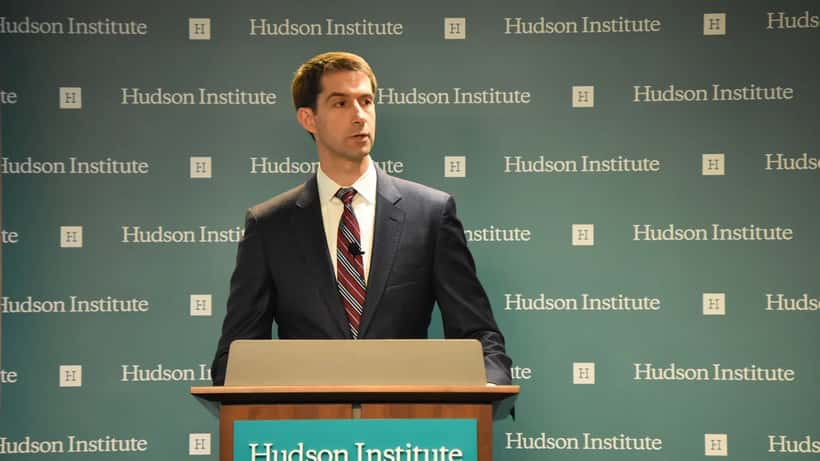
Senator Tom Cotton (R-Ark.) officially launched his 2026 Senate reelection campaign on October 5, 2026, with $8 million in cash on hand, endorsements from every member of Arkansas's congressional delegation, and a central promise: deport foreign nationals who support Hamas. Within hours, Donald Trump offered his "complete and total endorsement." The announcement reignited one of the most legally contested questions in modern American immigration law — can the United States government actually deport someone for what they say?
As two major federal court rulings from 2026 demonstrate, the answer is far more restricted than campaign rhetoric suggests. And for the roughly 1.1 million international students and millions more visa-holders currently living in the US, the gap between political promises and legal reality has never mattered more.
What Is Senator Cotton Actually Proposing?
Cotton's deportation pledge isn't new. Since the October 2023 Hamas attacks on Israel, he has repeatedly cited Section 237(a)(4)(C) of the Immigration and Nationality Act (INA) — a Cold War-era provision that allows the removal of any noncitizen who "endorses or espouses terrorist activity" or who is deemed to represent "a potentially serious adverse foreign policy consequence to the United States."
His 2026 reelection platform frames this as a national security imperative: campus activists, visa-holders who marched in pro-Palestinian demonstrations, and social media users who expressed solidarity with Gaza are all, in his framing, potential targets. The campaign positions this as vigorous enforcement of existing law.
Immigration attorneys across the country read it differently. The provision Cotton cites has been challenged, tested, and constrained by federal courts multiple times in 2026 alone.
What Did Federal Courts Rule in 2026?
Two watershed rulings this year fundamentally shaped what the government can and cannot do under the INA's political deportation provisions.
In January 2026, a federal court in Massachusetts issued an emergency order halting the Trump administration's arrest, detention, and deportation of noncitizen members of the American Association of University Professors (AAUP) and the Middle East Studies Association (MESA). The court held that using INA Section 237(a)(4)(C) against individuals engaged in protected political advocacy violated both the First Amendment's free speech protections and the Fifth Amendment's due process guarantees.
By August 2026, U.S. District Judge Noël Wise in San Francisco went further. In a case brought by the Stanford Daily against Secretary of State Marco Rubio, the court ruled that revoking student visas and initiating deportation proceedings against foreign students for expressing political views — including pro-Palestinian commentary — was unconstitutional. The judge found the enforcement created a chilling effect that "discourages foreign students from expressing political views, which is contrary to the freedoms of speech and press protected by the First Amendment."
These are district court rulings, not Supreme Court precedent, and both are likely subject to appeal. But as of October 2026, they represent the controlling law in their jurisdictions. Senator Cotton's promise, if implemented through new legislation rather than enforcement of existing law, would need to pass a different constitutional threshold entirely.
What the Law Actually Says About Political Deportations
The legal distinction that courts have consistently drawn turns on one critical axis: the difference between expressing a political view and materially supporting a terrorist organization's violent acts.
Under current court interpretation as of 2026:
Actions that ARE potentially deportable: Providing direct financial support to Hamas itself (as a designated Foreign Terrorist Organization); recruiting members for the organization; facilitating attacks; providing material resources such as weapons or logistics.
Actions that courts have ruled are NOT deportable: Expressing sympathy for the Palestinian cause; attending peaceful demonstrations; posting political commentary online; donating to humanitarian organizations that are not themselves designated terrorist entities; using phrases like "free Palestine" or calling for a ceasefire.
The word "supporter" in Cotton's framing covers everything from the second category. Courts have been clear: political support for a cause — even a cause associated with groups the US designates as terrorists — is constitutionally protected speech for noncitizens residing lawfully in the United States, under current precedent.
When Does Political Speech Become Deportable Activity?
This is the question immigration lawyers report their clients are asking most urgently in late 2026.
The honest answer is: it depends heavily on the specific facts, the jurisdiction, and whether the political climate shifts further as Cotton and allies push for stronger legislation.
The clearest safe ground: Passive expression — social media posts, attending lawful demonstrations, wearing symbols, donating to registered US nonprofits that provide humanitarian aid — has been protected by 2026 court rulings.
The legally murky middle: Knowingly organizing fundraisers for organizations that have been flagged (even if not formally designated) as Hamas-affiliated; directly communicating with or receiving instructions from individuals in Gaza who have known Hamas ties; traveling to conflict zones and meeting with organization members.
The clear danger zone: Any direct financial transfer to Hamas; any act of facilitation or recruitment; any action that could be construed as operational support rather than political commentary.
The challenge for non-specialist visa-holders is that this line is not always obvious from the outside — and that immigration authorities, operating in a charged political environment where Senator Cotton's reelection messaging sets the tone, may attempt to apply the law more broadly than courts have permitted.
Concrete Case: What Happens to a Foreign Student With a Political Social Media Trail
Consider a scenario that mirrors the situation facing thousands of international students across the US.
Amira is a 23-year-old F-1 visa student from Egypt enrolled at the University of Texas at Austin. Between October 2023 and June 2026, she attended three campus demonstrations calling for a Gaza ceasefire, shared 14 Instagram posts using the phrase "free Palestine," and donated $150 to UNRWA — the UN agency that provides humanitarian aid in Gaza — before it became subject to funding controversy.
She has no criminal record, no contact with Hamas, and no material support of any kind. But she has a documented political record.
Under Senator Cotton's proposed framework — and under current aggressive enforcement patterns in 2026 — she could plausibly receive a Request for Evidence or a Notice to Appear from USCIS or ICE.
Scenario A (no advance legal preparation): Amira receives a Notice to Appear 6 weeks after a tip is filed against her. Without an attorney, she misses the 30-day response window for asserting First Amendment defenses. She scrambles for counsel. Average cost at this stage: $9,000–$20,000, with no guarantee of outcome, since procedural failures can undermine otherwise solid constitutional defenses.
Scenario B (proactive legal consultation now, in October 2026): Amira meets with an immigration attorney who reviews her social media record, documents the protected-speech nature of all her activities, obtains a legal analysis confirming her UNRWA donation predated any designation issue, and prepares a protective memo for her university sponsor. Cost: $600–$1,500. If enforcement proceeds, she enters with a complete, organized First Amendment defense already on record.
If/then logic: If you hold any non-citizen immigration status in the US and have any documented political activism related to the Israel-Gaza conflict, then consulting an immigration attorney now — before any proceedings begin — reduces your exposure from reactive crisis management ($10k–$20k+) to proactive documentation ($600–$1,500). The courts are currently on your side. But constitutional protection is not automatic: it must be asserted, documented, and defended.
What an Immigration Lawyer Can Help You Do Right Now
The intersection of national security statutes and immigration status is one of the fastest-evolving legal areas in the United States in 2026. Senator Cotton's reelection may or may not succeed — but the enforcement environment his campaign is reinforcing is already active, and the two court victories from earlier this year, while significant, are not the final word.
An immigration attorney can review your social media and organizational affiliations for potential exposure under current INA provisions, advise you on the real-time status of Section 237(a)(4)(C) enforcement after the 2026 rulings, help document your activities as constitutionally protected expression, and represent you if USCIS or ICE initiates any proceedings.
For context on how recent high-profile Senate retirements and leadership changes have reshaped US immigration policy debates, see Mitch McConnell's Senate exit and its policy implications — the same leadership vacuum that gave Cotton's harder-line positions room to grow.
The full text of the Immigration and Nationality Act, including Section 237(a)(4)(C), is available at uscis.gov/laws-and-policy/legislation/immigration-and-nationality-act.
This article is for general informational purposes only and does not constitute legal advice. Immigration law is highly fact-specific. Consult a licensed immigration attorney for guidance on your individual circumstances.
