 Carl Graham
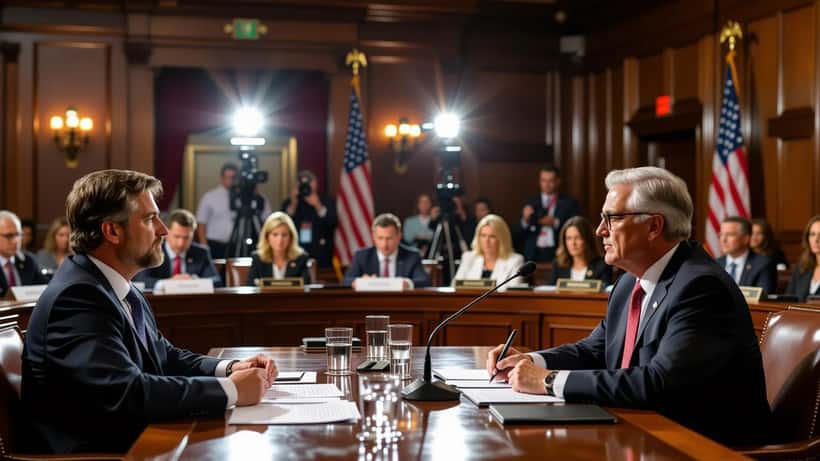
Acting Attorney General Todd Blanche sat before the Senate Judiciary Committee on Wednesday, July 15, 2026, in a high-stakes confirmation hearing to lead the U.S. Department of Justice permanently. President Trump nominated Blanche last month, and the former defense attorney now faces pointed questions from senators about how he would run the agency that oversees federal prosecutions nationwide. For most Americans watching, one question rarely gets answered: what does the Attorney General actually do, and how does the confirmation ritual affect the justice system that touches ordinary lives?
What happened on Capitol Hill
Blanche has served as acting Attorney General since April 2026, when President Trump removed Pam Bondi from the post. Before that, he was deputy attorney general, and earlier still he worked as the president's personal criminal defense attorney. According to CNN and NPR, Democrats on the committee arrived unified in opposition, while a handful of Republicans have signaled unease.
The margin is unusually thin. As The Washington Post reported, the recent death of Senator Lindsey Graham left committee Republicans with just one vote to spare. That razor-thin math means a single GOP defection could stall the nomination before it reaches the Senate floor.
Senators pressed Blanche on the Justice Department's $1.8 billion "anti-weaponization" fund, its handling of the Jeffrey Epstein files, and prosecutions of figures such as former FBI Director James Comey and New York Attorney General Letitia James, per reporting from The Hill.
Why an Attorney General nomination matters to you
The Attorney General is the nation's top law enforcement officer. The office directs roughly 115,000 Justice Department employees, supervises the 93 U.S. Attorneys who bring federal charges, and oversees the FBI, the DEA, and the Bureau of Prisons. The official duties are laid out by the U.S. Department of Justice on its Office of the Attorney General page.
In practice, the person who holds that job sets enforcement priorities that reach far beyond Washington headlines. Whether the department aggressively pursues consumer fraud, civil rights violations, antitrust cases, or immigration matters depends heavily on the tone set at the top. A change in leadership can quietly reshape which crimes get prosecuted and which complaints get shelved.
That is why the confirmation process exists. Under the Constitution's "advice and consent" clause, the Senate must approve the president's nominee. The Judiciary Committee holds the public hearing, votes to send the nomination forward, and the full Senate then confirms or rejects it. The process is designed to test whether a nominee will apply the law evenly, rather than as a political weapon.
An expert's view: the difference between federal and everyday legal problems
For a practicing attorney, the Blanche hearing is a useful reminder of a distinction many people miss. The Justice Department handles federal matters: crimes that cross state lines, offenses against federal agencies, and violations of federal statutes. Most legal problems ordinary citizens face, however, fall under state or local jurisdiction: a landlord dispute, a divorce, a small-business contract, a traffic charge, or an employment grievance.
Confusing the two can be costly. A worker who believes their civil rights were violated at their job, for example, may have both a federal claim and a state claim, each with different filing deadlines and different agencies. A consumer harmed by a deceptive product might pursue a state consumer-protection complaint even when no federal case ever materializes. Knowing which door to knock on is exactly the kind of judgment a qualified lawyer provides.
The nomination fight also underscores how much discretion prosecutors hold. When commentators argue about "weaponization" of the justice system, they are really debating prosecutorial discretion, the power to decide whether to charge, what to charge, and when to decline. That same discretion exists, on a smaller scale, in every district attorney's office in the country. If you ever find yourself facing charges, understanding that discretion, and having someone who can negotiate within it, matters enormously.
What to do if a legal issue affects you
You cannot vote on an Attorney General, but you can act decisively on your own legal situation. A few practical steps:
- Identify the jurisdiction early. Ask whether your issue is federal, state, or local. The answer determines deadlines, which court hears it, and which lawyer you need.
- Do not wait out a deadline. Many legal claims, from employment discrimination to personal injury, expire under a statute of limitations. Missing it can end an otherwise strong case.
- Match the specialist to the problem. A criminal defense attorney, an immigration lawyer, and an employment lawyer train for very different battles. Consulting the right expert first saves time and money.
- Get advice before you speak on the record. Whether you are questioned by an agency or asked to sign a settlement, a short consultation can prevent an irreversible mistake.
Confirmation hearings are political theater, but the office at their center shapes real outcomes: which fraudsters are pursued, which rights are defended, which cases move forward. Watching senators debate Todd Blanche's fit for the job is a reminder that the law is administered by people who make choices, and that when the law touches your life, you deserve an expert making choices on your side.
If you are weighing a legal question, connecting with a qualified lawyer through Expert Zoom can help you understand your rights before you take the next step.
This article is for general information only and does not constitute legal advice. Laws and procedures vary by jurisdiction. Consult a licensed attorney about your specific situation.
