 Harper Brooks
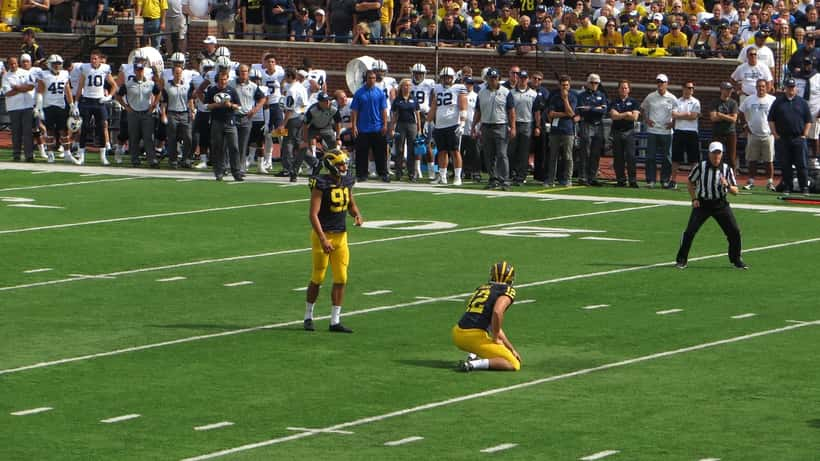
Oklahoma's Tate Sandell is the best college kicker in America right now. After winning the 2025 Lou Groza Award — the first Oklahoma kicker ever to claim the nation's top honor — and entering 2026 with First-Team All-American recognition from ESPN, Walter Camp, the Associated Press, and the SEC Coaches poll, the Sooners specialist is on every NFL scout's radar. The question his advisors should be asking isn't whether he'll get a contract. It's whether he'll be financially prepared for what that contract actually looks like.
What Sandell's 2026 Season Reveals About the Kicker's NFL Path
When a player converts 23 of 24 field goals — including a perfect 7-for-7 from beyond 50 yards — and then earns preseason All-American honors from every major outlet heading into his final college season, the NFL future is essentially decided. Multiple NFL scouts already project Tate Sandell as a top kicker prospect for the 2027 draft, and FanSided has called him a "lock" for NFL consideration.
But the path from preseason All-American to sustained financial security isn't automatic. The NFL market for kickers operates on fundamentally different economics than the sport's higher-profile positions — and failing to understand those differences before signing day creates real, lasting consequences.
Oklahoma football has produced its share of financial success stories. Yet very few of those stories involve specialists, precisely because the specialist's financial planning challenge is so different from the quarterback's or the wide receiver's. Sandell's moment is an opportunity to change that narrative.
The NFL Kicker Market: Two Tiers, One Reality
The NFL kicker compensation market is sharply bifurcated. At the top, Dallas Cowboys kicker Brandon Aubrey signed a four-year, $28 million deal in 2024, making him the highest-paid kicker in league history at $7 million annually, with $20 million guaranteed. The franchise tag for kickers and punters sits around $6.5 million in 2026 — a ceiling reached only by players with years of elite production behind them.
For a rookie kicker entering the league, the numbers tell a different story. Recent contracts for young specialists like Tyler Loop and Andres Borregales have come in around $4.4 million total over four years — approximately $1.1 million in year one. An undrafted free agent signing receives a typical bonus of $50,000 to $150,000, with a base salary near the rookie minimum.
The critical context is career duration. NFL specialists average roughly 4 to 6 seasons before roster turnover ends their time in the league. That puts a realistic total career earnings range for the median NFL kicker at $3 million to $5 million — a meaningful sum, but a dramatically narrower window than what skill-position players earn over longer careers.
For comparison, a first-round quarterback signs a four-year rookie deal worth $40 million or more. A veteran franchise QB earns that in a single season. The financial planning framework appropriate for those players requires major revision before it applies to a specialist.
From NIL Check to NFL Paycheck: The Tax Trap No One Explains
Before Sandell reaches a professional contract, he's navigating real income through Oklahoma's NIL ecosystem. Preseason All-Americans at major programs attract NIL revenue from collective distributions, brand partnerships, and school revenue-sharing arrangements. That income is already significant — and significantly undertaxed by most college athletes.
According to Bloomberg Tax, when federal income tax, self-employment tax, and state income taxes are layered together, a college athlete earning $1 million in NIL income may take home as little as $500,000 to $600,000 after obligations are met. The mechanism works like this: NIL payments — whether from a collective or a brand deal — are classified as self-employment income by the IRS. That classification triggers the 15.3% self-employment tax on the first $176,100 of net earnings in 2026, with the 2.9% Medicare surcharge applying above that threshold. Oklahoma's state income tax adds another 4.75% on income above $7,200.
Most college athletes discover this reality at tax time — not during the season. Working with a financial advisor and CPA before accepting NIL deals creates opportunities to structure that income through an LLC or S-corporation, reducing self-employment tax exposure and potentially establishing retirement account contributions during college years. Every dollar of NIL income managed efficiently today compounds significantly over a career that may last less than a decade in professional sports.
Congress has proposed the HUSTLE Act, which would create tax-advantaged NIL investment accounts with annual contribution limits of $19,000 — structured similarly to a 401(k). As of October 2026, the bill has not yet been enacted, meaning athletes must rely on existing mechanisms like SEP-IRAs and Roth conversions to achieve tax efficiency.
When a Kicker Signs: The Scenario That Explains Everything
Picture this: Marcus, a 22-year-old Oklahoma kicker with credentials similar to Sandell — multiple All-American honors, 90%+ career accuracy, proven range beyond 55 yards. In April 2027, he signs as an undrafted free agent with a $120,000 signing bonus and a three-year contract totaling $3.3 million. By every measure, he made it.
Without a financial plan in place before signing: Marcus earns $1.1 million in year one. After federal income tax at the 37% marginal bracket, Oklahoma state tax at 4.75%, and self-employment charges on his $80,000 in endorsement income, he takes home roughly $610,000. He upgrades his lifestyle — a better apartment, a new truck, frequent travel home — and saves nothing formally. After three seasons, a roster cut ends his NFL career. Total liquid savings: approximately $280,000.
With a financial plan implemented before his first check: Marcus engages a financial advisor who specializes in professional athletes before he signs. In year one, he contributes $23,500 to a Roth IRA, uses 25% of his net endorsement income to fund a SEP-IRA (adding approximately $18,000), and routes $160,000 into a taxable brokerage account invested in diversified index funds. He keeps his lifestyle costs under $52,000 annually. After three seasons, his portfolio has grown to $1.3 to $1.5 million — even accounting for the roster cut.
The difference: $1 million to $1.2 million in net worth from identical earnings. The only variable is whether a financial advisor was involved before the first contract was signed.
If Marcus had also structured his college NIL income — say, $175,000 during his final season — through an S-corporation, a financial advisor could have helped him reduce his effective self-employment tax rate on that amount by 7 to 9 percentage points, generating an additional $12,000 to $16,000 in savings with no change in spending behavior.
For a specialist, where the career earnings ceiling is fixed well below skill positions, the marginal value of early financial planning is higher than for almost any other category of professional athlete.
The Specialist's Checklist: What to Do Before Draft Week
The financial planning questions Sandell and every elite college specialist should address before their senior season ends are distinct from what applies to skill-position players.
Entity structure for NIL income. An LLC or S-corporation can shift income into structures that reduce self-employment tax and establish a retirement savings foundation during college years — before any professional contract exists.
Career-length scenario modeling. A financial advisor experienced with professional athletes should map three scenarios: a two-season career, a five-season career, and a ten-season career. Savings rates that achieve financial independence by 35 regardless of which scenario materializes require planning, not guesswork.
Disability and career-ending insurance. Professional athletes at lower compensation tiers need income-replacement insurance more urgently than their higher-paid counterparts, because the margin for financial error is smaller.
Post-career runway planning. An NFL kicker who retires at 28 has roughly 40 to 45 years of financial runway to fund. Without a plan built during the earning years, that runway requires either a high-income second career or a painful recalibration of lifestyle expectations.
The approach being taken by athletes like those covered in articles such as CJ Carr's NIL valuation and wealth management plan — engaging advisors during college, not after the draft — is becoming standard practice at the highest level. The lesson applies even more acutely to specialists whose total career earnings may be lower than a single-season contract for a franchise quarterback.
Tate Sandell has demonstrated on the field exactly what precision and long-term discipline can produce. A kicker who goes 7-for-7 from 50 yards understands that the most consequential moments require preparation, not improvisation. The same principle applies to the financial decisions that will shape his life long after the last field goal clears the uprights.
Disclaimer: This article is for informational purposes only and does not constitute financial, tax, or legal advice. Individuals should consult a licensed financial advisor, CPA, or attorney for guidance specific to their circumstances.
