 Davis Caesar
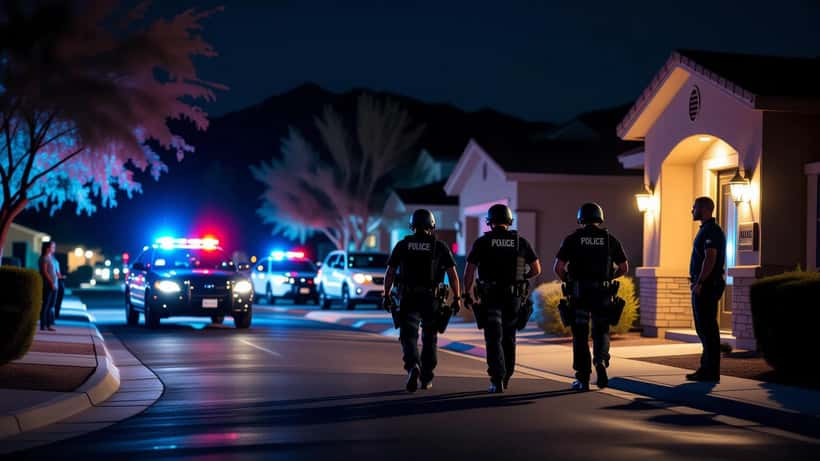
Armed officers surrounded the neighborhood in seconds. A caller had reported a hostage crisis, a bomb threat, or an active shooter — none of it real. This is swatting: the deliberate, false reporting of a violent emergency to send a military-grade police response to an innocent person's address. In 2026, it is happening more often, more brazenly, and with increasingly serious legal consequences for the people who place those calls.
Scottsdale, Arizona police logged more than 20 swatting calls by August 2026, according to KTVK — four arriving in a single three-week stretch. In Wallace, Idaho, Shoshone County deputies responded to a false shooting report at an address that did not even exist. In Gadsden, Alabama, a massive multi-agency response was triggered by a California-based caller targeting a stranger's address hundreds of miles away. Each call diverted full tactical resources from real emergencies. Each one terrified the people inside the target address.
The 2026 Swatting Surge: Who Is Getting Targeted Now
Swatting originated in competitive gaming culture but has expanded far beyond it. Today's targets include politicians, judges, school administrators, content creators, and private citizens who have never touched a video game. The FBI documented a steep trajectory through 2024, and local law enforcement agencies across the country report continued acceleration into 2025 and 2026.
Online anonymization tools — VoIP services, spoofed numbers, and multi-hop relay chains — have made swatting easier to execute and harder to trace. A single caller can send a tactical unit to an address in a different state within minutes, from the safety of a bedroom in another city. That geographic complexity is exactly why federal law, not just local statutes, has become the primary enforcement mechanism.
Scottsdale police officials, speaking to reporters in August 2026, said they believed online gaming disputes were behind a significant portion of recent calls. But attorneys who handle these cases note that the profile is shifting: increasingly, swatters are targeting individuals involved in business conflicts, political activity, and social media disputes that have nothing to do with gaming at all.
What the Law Actually Does to a Swatter
The federal statute governing swatting is 18 U.S.C. § 1038, which prohibits the knowing conveyance of false emergency information — including fabricated reports about fires, explosions, or violent crimes — to law enforcement or emergency services. The base maximum sentence is five years in federal prison. But the scale changes sharply when harm occurs: serious bodily injury raises the maximum to 20 years, and a death caused by the false call can result in life imprisonment.
These are not hypothetical ceilings. Tyler Barriss received a 20-year federal sentence after a 2017 false report led Kansas officers to fatally shoot an innocent man at the targeted address. That case established that predictably dangerous conduct — sending armed officers to a fabricated violent emergency — is something federal courts will punish at the maximum end of the scale.
More recently, in May and June 2026, a man who had swatted Ned Luke — the voice actor behind GTA V's Michael De Santa — at least eight times was sentenced to four years in federal prison followed by three years of supervised release, according to VGTimes and GameReactor. A U.S. District Court in Washington, D.C. handled the sentencing. The convicted swatter cooperated with federal investigators, providing names of others allegedly involved — meaning additional prosecutions are ongoing.
In 2025, California teenager Alan Filion was sentenced to four years for more than 375 swatting and threat calls placed across the country. Prosecutors brought four counts of interstate transmission of threats. Filion was 18 at sentencing; the majority of calls were placed when he was 16.
At the state level, California, New Jersey, and Virginia have all enacted enhanced penalties in recent years. California and New Jersey classify racially motivated swatting as a hate crime. Virginia specifically toughened its swatting statutes to close the gap between misdemeanor false-report charges and the real, physical danger these calls produce.
Beyond Criminal Charges: What Victims Can Actually Recover
Criminal prosecution punishes the swatter. It does not automatically compensate the victim. That is where civil law enters the picture — and where the legal landscape is still developing.
When a swatter is identified and convicted, victims can petition the sentencing court for restitution under the federal Mandatory Victims Restitution Act. A restitution order requires the swatter — not the victim — to repay documented economic losses: lost wages, medical bills, emergency therapy costs, property damage from the tactical response, and attorney fees incurred as a direct result of the incident.
Beyond restitution, victims in most states can file independent civil tort actions. The most applicable theory is intentional infliction of emotional distress, or IIED — a claim that the defendant's conduct was so extreme and outrageous it caused severe psychological harm. Courts in virtually every U.S. state have recognized that a fully armed SWAT unit appearing at your front door meets that standard.
If the swatter is a minor and the victim is in a state with parental liability laws — California, Florida, and Virginia among them — the parents may share civil exposure. These statutes have been applied in internet-harassment contexts and are increasingly relevant given the age profile of many perpetrators. One additional avenue, still developing in 2026: if the swatter used a specific online platform and that platform demonstrably failed to act on reported threats, secondary liability claims are being tested in some jurisdictions.
If You Are Swatted: A Real-World Scenario With Numbers
Consider Marcus, a 32-year-old software engineer in Phoenix — directly adjacent to Scottsdale, where police have logged 20-plus swatting calls in 2026 alone. Marcus streams gaming content online under a pseudonym and recently banned an aggressive viewer from his channel. That viewer sent several threatening messages before going quiet.
On a Thursday evening in August, a SWAT team encircles his home after an anonymous caller reports a hostage situation at his address. Officers detain Marcus on his front lawn for 45 minutes while neighbors watch. His front door is damaged during entry.
In the weeks that follow, Marcus documents every verifiable loss:
- $800 in lost consulting income — two client calls he missed during the response and the 90-minute aftermath
- $900 for two emergency therapy sessions addressing acute stress and hypervigilance symptoms
- $400 for door repair following the forced entry
- $1,500 in attorney consultation fees to understand his legal options
- Total documented: $3,600
If federal investigators identify the caller — increasingly likely given expanding FBI-telecom cooperation on VoIP tracing in 2026 — Marcus can petition for restitution in the criminal case. A restitution order requires the convicted swatter to repay that $3,600 in full.
If Marcus's acute stress develops into a diagnosed anxiety disorder requiring six months of weekly treatment at $175 per session, that adds $4,550 in future documented losses — also recoverable through restitution or a civil IIED claim in Arizona. The critical variable in both paths is identification. Domestic VoIP cases are increasingly trackable; international relay chains present harder jurisdictional challenges, but federal coordination is closing that gap.
The core legal logic: if the swatter is identified and convicted, you have a documented right to financial recovery. If the swatter is unidentified, civil options narrow considerably — which makes early documentation not just useful, but essential.
Steps to Take Before the Evidence Disappears
The hours immediately after a swatting incident are when most victims inadvertently lose the evidence they need for a legal claim. These steps are sequential:
In the first hour: Write down the exact response time, the duration of any detention, and the names or badge numbers of any officers who spoke with you. Photograph all visible property damage before any repair work begins.
Within 24 hours: Obtain the incident report number from the responding department. File a separate report — with the same department and with the FBI's Internet Crime Complaint Center at ic3.gov — documenting that you were the victim of a false call. This creates an official record that you were a victim, not a suspect.
Within 72 hours: Preserve all digital communications — gaming platform messages, DMs, emails, Discord logs — that might link a specific individual to prior threats or to the incident itself. Do not delete, screenshot out of context, or alter anything. Law enforcement and courts rely on forensic continuity.
Ongoing: Keep every receipt for medical treatment, therapy, and property repair. Maintain a documented log of lost income with supporting calendar and client correspondence. This paper trail is the foundation of both a restitution petition and any civil lawsuit.
An attorney experienced in internet-threat cases and federal criminal procedure is the most important resource a swatting victim can engage. Cases involving law enforcement responses to false calls have shown that when victims document properly and engage counsel early, their odds of meaningful recovery — criminal restitution or civil damages — improve substantially.
Swatting is not a prank with disproportionate consequences. Under federal law and the laws of most states, it is a serious felony. The callers who placed 20-plus calls in Scottsdale in 2026, the swatter who targeted Ned Luke eight times, and teenagers like Alan Filion have all discovered that federal prosecutors and district court judges see it that way. Victims who act quickly, document thoroughly, and consult an attorney early are in a far stronger position than those who wait.
Disclaimer: This article provides general legal information only and does not constitute legal advice. Swatting cases involve complex criminal and civil law questions across multiple jurisdictions. Consult a licensed attorney for guidance specific to your situation.
