 Odette Caplan
Two young professionals — Malaika Chitre, 24, an operations specialist at Acadia Pharmaceuticals from Dayton, Ohio, and Navam Kaul, 24, a financial data analyst at Bloomberg from Sayreville, New Jersey — were struck and killed by a southbound 4 train at Spring Street station in Manhattan in the early morning hours of September 13, 2026. Both were recent Rutgers University graduates whose careers had barely begun. The Metropolitan Transportation Authority confirmed the incident and the NYPD opened an investigation. Within days, the tragedy sparked intense public debate: when someone dies on a New York City subway platform, what legal options do their families actually have?
What Happened at Spring Street Station
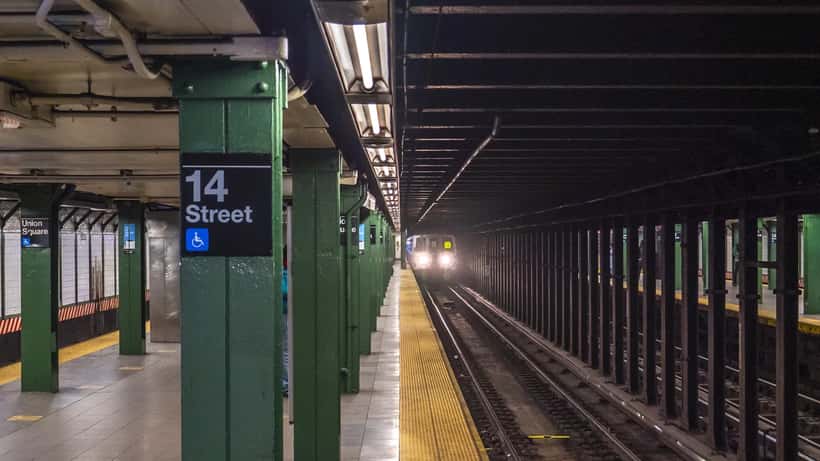
According to an MTA incident report, police responded to the Spring Street station at approximately 3:14 a.m. on September 13, 2026. An MTA account alleged that one of the pair appeared to have fallen onto the tracks, with the other jumping down to assist, according to reporting by NEPYORK. A southbound 4 train struck both individuals before the operator could bring the train to a stop.
The NYPD launched a full investigation, reviewing station surveillance footage, interviewing witnesses on the platform, and taking a statement from the train operator. As of September 17, 2026, the investigation remains ongoing and no conclusions have been released publicly about the exact sequence of events.
Subway fatalities are not rare in New York City. Approximately 50 to 60 people are killed on the subway each year — roughly one per week — according to MTA safety data. Platform-edge incidents, whether accidental, medically related, or involving a third party, account for a significant share of those deaths. What changes from incident to incident is the question of who bears legal responsibility — and how much of it.
MTA Liability in Transit Deaths: What Lawyers Actually Say
The MTA is a public authority, not a private company, which shapes the legal framework significantly. But "public authority" does not mean immune from civil liability. Under New York law, the MTA has a legal duty of care to maintain reasonably safe conditions in every station it operates. That duty encompasses platform edge markings, emergency communication systems, lighting adequacy, and the training and conduct of train operators.
What complicates cases like the Spring Street incident is New York's "pure comparative fault" doctrine. Under CPLR §1411, courts do not bar recovery simply because the deceased contributed to the accident. Instead, fault is apportioned: if the MTA is found 25% responsible — for example, because the station lacked adequate platform barriers, emergency call boxes were non-functional, or the train operator failed to observe the required speed protocol — and the victims are found 75% at fault for being on the tracks, the family may still recover 25% of the total damages award.
This matters enormously in practice. Families who assume no claim exists — because their loved one was on the tracks — routinely walk away from recoveries that could run into the millions of dollars. MTA liability arguments in platform incidents often focus on: inadequate platform screen doors or barriers (the MTA has resisted installing full-height platform screen doors despite years of advocacy), delayed emergency response protocols, poor lighting at the station end where the incident occurred, or known hazards not corrected in a timely manner.
As an experienced personal injury attorney consulting an expert would explain: the presence of the victim on the tracks changes the calculus of fault — it does not end the conversation.
A Concrete Scenario: What the Chitre Family's Claim Could Look Like
Under New York's wrongful death statute (EPTL §5-4.1), the estate of a deceased person may recover economic and non-economic damages from a party whose negligence caused the death. Here is what the legal picture looks like — with specific numbers — for Malaika Chitre's family.
Chitre was 24 years old at the time of death, employed full-time as an operations specialist in the pharmaceutical sector. A forensic economist hired as an expert witness would typically calculate lost future earnings across a projected 40-year working life. Using a starting salary in the $65,000–$80,000 range common for operations roles at mid-sized pharma companies, with career progression assumptions of 3–4% annual salary growth, the lost earning calculation alone could reach $2.8 million to $4.5 million in present-value dollars.
On top of that, the estate can claim:
- Pre-death conscious pain and suffering: If evidence establishes that either victim was aware of the danger before being struck, this claim can add substantial damages.
- Funeral and burial expenses: These typically run $15,000 to $35,000 in the New York metro area.
- Loss of parental guidance and support: Relevant if there are surviving dependents or if the deceased was providing financial support to family members.
Here is the critical if/then threshold every family needs to understand: If the Chitre family files a valid Notice of Claim with the MTA within 90 days of September 13, 2026 — meaning on or before approximately December 12, 2026 — they preserve their right to pursue a wrongful death lawsuit. If they miss that deadline, the claim is almost certainly barred entirely under New York General Municipal Law §50-e, regardless of how strong the underlying liability evidence is. No exception is available for families who simply did not know about the requirement. The same applies in full to Navam Kaul's estate — both families face the same 90-day clock, both starting from the same date.
In a comparable MTA platform incident in 2022, where platform maintenance and lighting deficiencies were identified as contributing factors, the family reached a $3.8 million settlement with the MTA before the case went to trial.
The 90-Day Notice of Claim: The Most Consequential Deadline in Transit Law
New York General Municipal Law §50-e requires that any person intending to sue a public authority — including the MTA — file a formal Notice of Claim within 90 days of the incident giving rise to the claim. This document is not the lawsuit itself. It is a written notice to the MTA identifying the date, location, and nature of the claim, providing the authority with an opportunity to investigate before litigation begins.
Missing this deadline is typically fatal to the case. Courts have very limited discretion to allow late filings. The narrow exceptions that do exist — such as the MTA having actual prior knowledge of the claim through its own investigation — require a separate application to the court and are not guaranteed. Families who assume they have the full statute of limitations period to act are often wrong: the 90-day Notice of Claim requirement is an additional, earlier threshold that must be met first.
After the Notice of Claim is filed, the MTA typically schedules a 50-h hearing — a sworn deposition of the claimant — before any lawsuit is formally filed. Following that, the full wrongful death action must be commenced within 1 year and 6 months from the date of death.
For the Chitre and Kaul families, the 90-day deadline falls around December 12, 2026. Families who consult a lawyer in October or November 2026 still have enough time to prepare and file a proper Notice of Claim. Families who wait until 2027 do not.
What Families in This Situation Should Do Right Now
If your loved one was killed or seriously injured in a New York City subway station, every day that passes without action is a day closer to losing your legal options. The steps are straightforward, but they are time-sensitive:
Preserve all evidence immediately. Obtain station surveillance footage, identify and contact witnesses, and keep all medical and financial records. The MTA retains surveillance footage for limited periods.
Request the MTA incident report. Under the Freedom of Information Law (FOIL), these reports are obtainable. They frequently contain details that support a liability argument.
Do not speak to MTA claims adjusters without a lawyer. MTA adjusters represent the authority, not you. Statements made to them before you have legal representation can be used to undermine your case.
File the Notice of Claim before day 90. An attorney experienced in MTA transit cases can prepare, review, and file this document correctly — errors in how a Notice of Claim is drafted can create procedural problems later.
Consult a lawyer within the first 30 days. The earlier you retain counsel, the more complete the independent investigation of the incident can be — witnesses' memories fade, surveillance footage gets overwritten, and evidence becomes harder to obtain.
The deaths of Malaika Chitre and Navam Kaul have reignited a conversation New York City has had many times before: about platform barriers, about MTA accountability, and about what happens to families when tragedy strikes underground. Whatever the NYPD investigation ultimately concludes about the sequence of events that night, the legal options available to these families exist on a strict timeline. That timeline is now running.
Disclaimer: This article contains general legal information for educational purposes only and does not constitute legal advice. If you are dealing with a transit-related injury or wrongful death, consult a licensed attorney licensed in your jurisdiction.
