 Charles Jackson
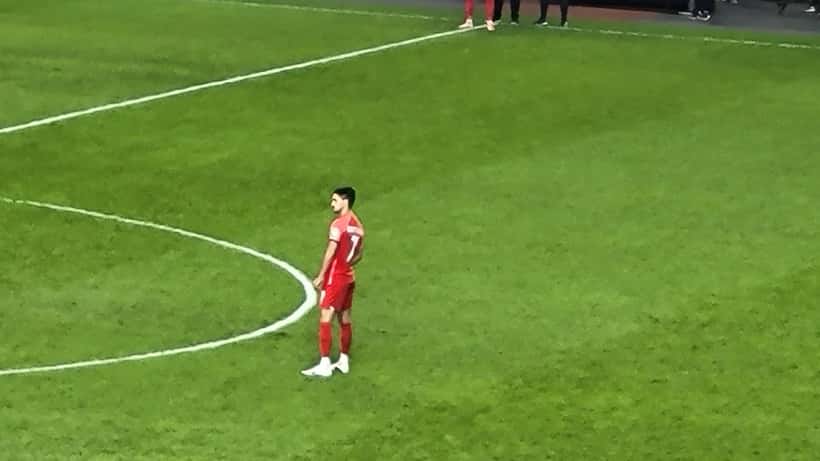
Stephen Eustáquio's right-footed volley in the 92nd minute on June 28, 2026 did more than end Canada's long wait for a World Cup knockout win — it made contract law visible to millions of fans. With his goal against South Africa, the 29-year-old vice-captain became the architect of Canada's first-ever World Cup Round of 16 victory. But off the pitch, a contract clock was already ticking: his loan agreement with Los Angeles FC expires June 30, 2026 — just two days after that historic strike.
The Contract Clock Is Ticking
Eustáquio joined LAFC on a temporary transfer from Portuguese club Porto in early 2026, with a deal running through June 30 and including a $7.25 million (€6.1 million) option to purchase. According to MLS Soccer, LAFC also acquired his Discovery Priority from San Jose Earthquakes for $50,000 in General Allocation Money — a signal of how highly the Canadian midfielder is valued in North American soccer.
The loan expiry creates a genuine legal puzzle. Canada's next match is scheduled for July 4, 2026 in Houston, against the winner of Morocco vs. the Netherlands. That is four days after Eustáquio's contractual tie to LAFC formally ends. So what exactly happens to his registration, his playing rights, and the $7.25 million option while he is busy dismantling opponents for Canada?
The answer lies in FIFA's Regulations on the Status and Transfer of Players (RSTP), the global framework that governs international football transfers and national team availability.
FIFA Rules: National Teams Take Priority
Under the FIFA RSTP, the expiry of a club loan agreement does not affect a player's eligibility for their national team during a FIFA-sanctioned tournament window. Once a player is registered on an official tournament squad — as Eustáquio was on Canada's final 26-man roster — he remains eligible to play for his country regardless of what happens to his club status in the interim.
This is a critical distinction for anyone working in or around sports contracts. As explained in FIFA's transfer system, player availability for national team competition during official FIFA windows overrides club contractual arrangements. In practice, once LAFC's loan expires on June 30, Porto technically reacquires Eustáquio's club registration. But he continues representing Canada under the World Cup player registration, fully uninterrupted — Porto has no power to recall him mid-tournament. The FIFA framework that governs these eligibility situations, and how it intersects with USMNT squad legality at the same World Cup, shows how the international transfer system was specifically designed to prevent clubs from disrupting national team momentum.
The $7.25 Million Question: What an Option to Purchase Actually Means
Perhaps the more commercially significant clause in Eustáquio's deal is the option to purchase. A sports lawyer would explain that this is a unilateral contractual right — LAFC can choose to exercise it, but Porto cannot force LAFC to buy. Options like this typically have a fixed exercise window, often 30 days after the loan expires, and a specific notification requirement.
Here is where things get interesting. Before June 28, Eustáquio was a solid MLS-level midfielder on a €6.1 million option. After June 28, he is the player who scored Canada's biggest goal in its football history. Market value does not wait for paperwork. If LAFC allows the option window to lapse, Porto is free to sell him to any club willing to pay more — potentially significantly more — than $7.25 million.
This dynamic is not unique to Eustáquio. It plays out across professional soccer every summer: a player's on-pitch performance during a major tournament reshapes what their contract was worth when it was signed. Sports lawyers call this "option cliff risk" — the point at which a pre-agreed price becomes dramatically undervalued based on new information. For clubs, exercising early is almost always cheaper than re-negotiating after the World Cup final whistle.
What Amateur and Semi-Pro Athletes Should Know
Most athletes reading about Eustáquio will not be moving for $7.25 million. But the legal principles are identical whether you play semi-pro soccer in Ohio or in the Portuguese Primeira Liga:
Loan agreements need clear end dates and a defined exit path. Without explicit language on what happens at the loan's expiry — who holds the registration, who pays compensation for outstanding obligations, who negotiates the next contract — disputes arise and players can find themselves in limbo.
Option-to-purchase clauses should define the exercise window, the price formula, and the notification method. A verbal understanding that a club "might buy you" at the end of a loan does not constitute an enforceable option. Courts and arbitration panels have repeatedly dismissed informal arrangements of this kind.
National team duty protections exist at every level. Even amateur players participating in recognized international competitions have rights that club contracts cannot override. A sports lawyer can confirm whether those protections apply in your specific league or governing body's regulations.
Salary and image rights are separate streams. In professional contracts, image rights are often licensed independently from the employment contract. A player can exit a club and still have outstanding image-rights obligations — or vice versa.
According to FIFA's regulations, all international transfers and loans must be executed through the FIFA Transfer Matching System, adding a layer of official oversight that means individual contract terms always sit within a regulated framework.
When Should You Consult a Sports Lawyer?
A sports lawyer is not a luxury reserved for players in transfer windows measured in millions. Athletes at every level — from youth academy agreements to semi-pro contracts, from sponsorship deals to endorsement clauses — benefit from professional legal review before signing anything.
The moments when specialist advice adds the most value include: before signing any loan or transfer agreement, to ensure option windows and exit clauses are clearly defined; when a club proposes a short-term extension, which can inadvertently modify existing rights; during transfer windows, to understand what happens to unpaid wages or bonuses if a move is triggered; and if an injury occurs mid-contract, to clarify what obligations both club and player retain toward one another.
Eustáquio's June 30 loan expiry arriving mid-World Cup is, for most athletes, an extreme edge case. But the principle it illustrates is universal: in sports law, the timing of a clause matters as much as the clause itself, and the fine print determines your options when the unexpected — a 92nd-minute World Cup goal, or anything else — happens.
Canada plays again on July 4. Whatever Eustáquio's status on paper after June 30, he will take that field — because FIFA rules say he must be available, and because an entire nation expects nothing less. If you have questions about sports contracts, loan agreements, or athlete rights at any level, a qualified sports lawyer on ExpertZoom can review your situation and explain your options in a first consultation, often within 24 hours.
