 Laura Clark
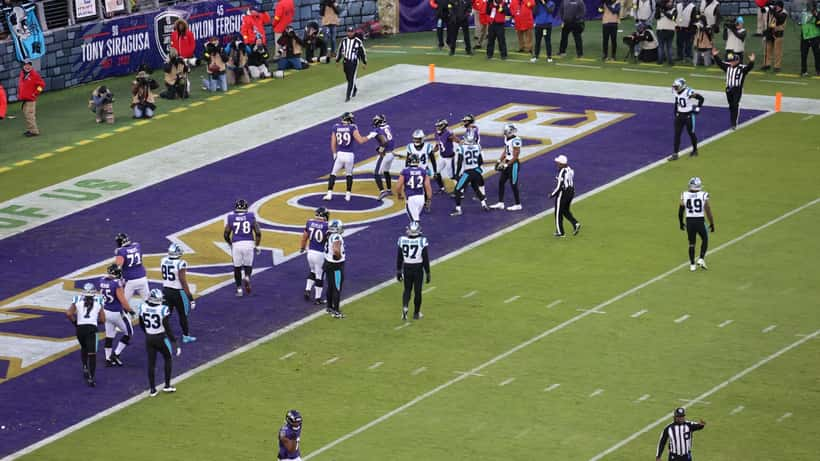
Lamar Jackson was ruled out for the Baltimore Ravens' Week 5 game at Atlanta on October 11, 2026, and the question now facing fantasy managers is whether his ankle injury will also cost him Week 6 against Cleveland. The Ravens have not said, and the reporting around the injury is murky.
That uncertainty is the real story behind this week's start/sit decisions. Before you lock a lineup, it helps to understand what an ankle injury actually means, because the label attached to it changes everything about the timeline.
What we know about the Jackson injury
According to Rotoballer, Jackson was ruled out for Week 5 and the Ravens do not know if he will be ready for Week 6. Ian Rapoport described the injury as neither a traditional high nor low ankle sprain, which is why nobody can give a clean return date. Tyler Huntley is set to make his first start of 2026 in Atlanta.
The fantasy cost is real. Jackson was the QB10 in fantasy scoring through four weeks, and roughly 25% of his production came from rushing, according to the same reporting. Baltimore is expected to lean on Derrick Henry while Huntley starts.
Jackson is not alone. Footballguys' Week 5 injury tracker and FantasyAlarm's injury report list a long run of quarterback problems: Washington's Marcus Mariota has an MCL sprain, Chicago's Caleb Williams remained inactive with Tyson Bagent starting, and Tampa Bay's Baker Mayfield is out with a thumb injury. Bleacher Report's Week 5 live blog described a historic number of quarterbacks going down.
Why "ankle sprain" tells you so little
Orthopedic specialists separate ankle sprains by which ligaments are damaged and how badly. A low ankle sprain involves the ligaments on the outer side of the joint. A high ankle sprain involves the ligaments above the joint that hold the two lower leg bones together. The American Academy of Orthopaedic Surgeons explains on its OrthoInfo patient site that sprains are graded by severity, and that more severe tears generally need longer protection and rehabilitation. You can read its overview at the AAOS OrthoInfo sprained ankle guide.
When a reporter says an injury is "neither" type, it usually means the full picture is not yet confirmed. Imaging and a physical exam decide which ligaments are involved. Until that is known, any return date is a guess.
The part fantasy advice leaves out: rushing value comes back last
The reporting on Jackson makes a point worth noticing. Quarterbacks coming back from ankle injuries often see their scramble rate decline in their first game back. For a player whose value is partly built on running, that matters more than whether he is listed as active.
This is also what makes ankle injuries tricky for ordinary people. Pain fades before stability returns. A player or a weekend athlete can feel fine walking and still lack the lateral strength and balance to cut hard. That gap is where re-injury happens.
A concrete case: the weekend flag-football player
Consider a 38-year-old who plays in a Sunday flag-football league and rolls an ankle on October 11, 2026. The swelling is mild, and they can walk the next day. They decide it is a minor sprain and play again on October 18, one week later.
Here is the if/then logic. If the injury was a mild, low-grade sprain, a return after seven days with a brace may be reasonable, and recovery commonly takes a few weeks. If it involved the ligaments above the joint, returning at seven days risks turning a recovery measured in weeks into one measured in months. Imagine a second sprain at day 10 that adds another 6 weeks of rehabilitation to the original 2 to 3.
In that scenario, the person has missed roughly 8 to 9 weeks of activity instead of 2 to 3, all because the first injury was never properly graded. A sports medicine physician or orthopedic specialist can test for the instability that separates the two outcomes, usually in a single visit. That visit costs far less than the lost weeks.
The same logic applies to Jackson. The Ravens have every incentive to decide between a one-week absence and a longer one based on which ligaments are involved, not on the schedule.
Why the backup plan matters as much as the star
Huntley's first start of 2026 shows how quickly a lineup changes. When a mobile quarterback is replaced, the offense tends to tilt toward the run, which is why Derrick Henry becomes the focal point in Baltimore. A manager who only asks "is Jackson playing?" misses the second-order question: who benefits if he is not?
The same thinking applies to recovery. A rehabilitating athlete does not simply return to a prior state. Strength, balance and confidence come back at different speeds, and a good rehabilitation plan tests each of them before clearing full contact. Skipping those checks is the athletic equivalent of starting a player on hope alone.
Football teams have trainers, imaging and doctors on the sideline. Recreational athletes usually have none of that, which is why a single professional evaluation is the most valuable step they can take after a hard roll. It converts a vague "I think it's fine" into a specific diagnosis and a dated plan.
How to read injury language like an analyst
Teams rarely volunteer details, so the vocabulary carries meaning. "Day-to-day" suggests uncertainty rather than optimism. "Ruled out" is final for that game. "Questionable" means the decision has not been made, and in practice it often goes against the player when the injury involves a lower-body joint that affects cutting and acceleration.
For ankle injuries in particular, watch whether a player is seen in a walking boot, whether practice participation is limited or absent, and whether reporters describe swelling. Those cues say more about the likely timeline than a coach's optimism does.
What this means for your Week 6 lineup
You do not need medical training to make better decisions, but you do need to treat vague injury language as a warning sign.
- Wait for official status. The NFL's Week 6 injury report, released Wednesday through Friday, and the inactives list roughly 90 minutes before kickoff are the authoritative sources.
- Have a plan B at quarterback. With Jackson, Mariota, Williams and Mayfield all in question this month, a backup who plays in a different game window protects you.
- Discount a returning runner. If Jackson does play, expect his rushing to be muted, as the Week 5 reporting suggests.
- Do not chase a bye-week fix on a hurt player. A questionable tag on Thursday often means a game-time decision on Sunday.
What to do if you are hurt yourself
The same caution applies off the fantasy page. See a professional if you cannot bear weight, if swelling is severe, if the ankle feels unstable, or if pain is not improving after several days. An orthopedic or sports medicine specialist can examine the joint, order imaging if needed, and set a return timeline based on your actual injury rather than a guess.
This article is general information and not medical advice. If you have an injury, consult a qualified health professional.
If an ankle injury is keeping you out of your own game, an expert on Expert Zoom's health category can help you work out what is damaged and when it is safe to return.
