 Charles Jackson
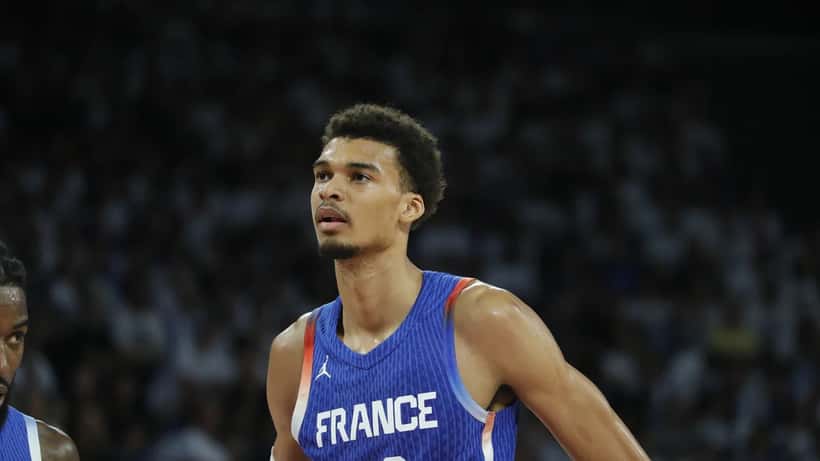
Victor Wembanyama scored 39 points, grabbed 15 rebounds and blocked five shots to lead the San Antonio Spurs to a 115-108 road win over the Minnesota Timberwolves on May 8, 2026 — putting the Spurs up 2-1 in the Western Conference semifinals. Game 4 tips off tonight at 7:30 p.m. ET on NBC, and millions of Americans will have money on the line. Before they place another bet, there's a legal landscape they should understand.
Sports betting is now legal in 38 states, and 2026 is shaping up to be the year consumer protection finally caught up with the industry's explosive growth.
The Explosion of NBA Playoff Betting — and the Consumer Rights Gap
The Spurs-Timberwolves series has produced wild swings: a 2-point Timberwolves win in Game 1, a 38-point Spurs blowout in Game 2, and Wembanyama's monster performance in Game 3. For bettors, these unpredictable results mean pushes, reversed wagers, and disputed payouts are routine.
Yet most bettors don't know what rights they have when something goes wrong with a platform — whether it's a bet voided without explanation, promotional credit that disappears, or a dispute about in-game odds that changed mid-bet.
As of May 2026, 28 states have introduced new gambling regulations that specifically address consumer protection for online sportsbooks. This wave of legislation marks a turning point: for years, sportsbooks operated under light-touch regulation. That's changing rapidly.
Four Legal Rights Sports Bettors Have Right Now
1. The right to a formal dispute resolution process
Every licensed sportsbook operating in a regulated state is required to offer a dispute resolution mechanism — a formal channel for contesting voided bets, promotional disputes, or payout disagreements. This isn't optional; it's a licensing requirement.
If your bet on Wembanyama's blocks prop was voided after the fact, you have the right to formally contest that decision. Document the bet, the terms of the promotion, and the sportsbook's stated reason for the void. Then file a complaint — first with the sportsbook's customer support, and if unresolved, with your state's gaming commission.
State regulators, not sportsbooks, are the ultimate arbiters of whether a wager was handled correctly. In many states, you can escalate a dispute online in under 30 minutes.
2. The right to transparent, advertised odds
In-play betting — wagering on live moments during a game, like whether Wembanyama will hit his next shot or whether the Timberwolves will cover a first-half spread — is heavily promoted during playoff broadcasts. But those live odds can shift in real time, sometimes faster than the software delivers the confirmation to your screen.
Consumer protection law in regulated states requires that the odds displayed to a bettor at the moment they click "place bet" are the odds honored, unless the sportsbook can prove market movement happened before the bet was officially confirmed. If you received worse odds than shown, that's a valid dispute. Keep screenshots.
3. The right to self-exclusion without penalty
Every regulated sportsbook must offer a self-exclusion program — allowing any bettor to block themselves from wagering for a set period. In many states, this self-exclusion extends across all licensed operators in the state, not just a single platform.
If you've signed up for self-exclusion and a sportsbook allows you to bet anyway — which does still happen due to verification gaps — you may be entitled to a full refund of losses incurred during the exclusion period. Several states have successfully prosecuted sportsbooks for this violation. If this applies to you, a consumer lawyer with gaming experience can evaluate your case.
4. The right to know where your complaint goes
The New York Attorney General's office, which recently joined a 38-state coalition defending states' gambling laws, made clear that state regulators — not federal commodity overseers — hold primary responsibility for protecting bettors. The coalition is specifically pushing back against prediction market platforms that try to operate outside state gambling frameworks.
What this means in practice: if you have a dispute, the complaint goes to your state's gaming commission. It does not go to the federal government. Know your state's body before you need it.
What Colorado's New Law Signals for the Rest of the Country
In May 2026, the Colorado State Senate passed a consumer protection bill that places significant new restrictions on online sportsbooks — including tighter limits on promotional terms, clearer cancellation rights, and mandatory response windows for disputes.
Colorado has historically been a bellwether for sports gambling regulation. If the Governor signs the bill, it will likely become a template for the 10+ states expected to add or upgrade gaming legislation before 2027.
For bettors in states without updated regulations, the legal landscape is thinner — but still not empty. Federal consumer protection law, including the FTC Act's prohibition on deceptive practices, still applies to sportsbooks. A promotion that says "risk-free bet" but refunds only in bonus credit — rather than cash — has already drawn regulatory scrutiny in multiple states.
The Wembanyama Factor and Prop Bet Integrity
Wembanyama's dominance in this series — averaging 34 points, 12 rebounds and 4.5 blocks through three playoff games — has made his prop bets among the most heavily traded in the country. When a player performs at historic levels, the platforms sometimes adjust mid-series or decline to offer certain props.
Sportsbooks do have the right to withdraw or restrict certain bet types at any time. But if a promotion explicitly promised access to specific markets and then withdrew them without notice, that may constitute a deceptive trade practice under state consumer law.
For high-volume bettors who had accounts restricted or promotions pulled during the first three games of this series, consulting a consumer or gaming attorney about potential claims is worth a brief conversation.
Before Game 4 Tonight: A Practical Checklist
If you're placing bets tonight — whether on the spread, the over/under, or Wembanyama's blocks — run through these steps:
- Confirm your state has licensed your sportsbook: Check your state gaming commission's website before depositing
- Screenshot every promoted offer before accepting: Promotional terms can change; a screenshot timestamps what was offered
- Know where to file a dispute: Find your state's gaming complaint portal now, not after a problem arises
- Use only what you can afford to lose: No legal right reverses the math of gambling losses
For NBA-adjacent questions — like whether a sports entertainment contract dispute could affect a player's market availability, or how league labor agreements interact with betting markets — the legal frameworks around sports and contract law are complex. An article on how those rules played out during a different playoff series is a useful primer on what NBA team contracts mean for fans betting on player performance.
Game 4 of Spurs-Timberwolves tips off tonight. The basketball is compelling, Wembanyama's ceiling is enormous, and Minnesota needs a win to reset the series. If you're watching with money on the line, understanding your legal baseline is just good preparation.
