 Charles Jackson
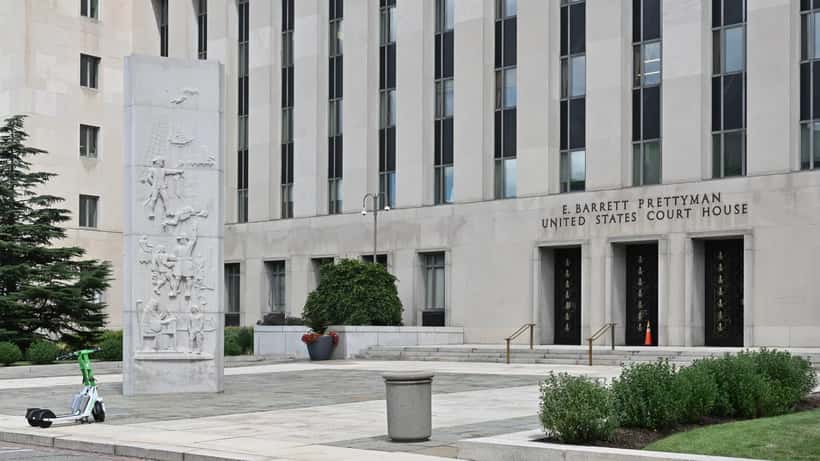
When a DC federal jury convicted Shamell Naquan Joyner on 13 counts of armed robbery and carjacking on August 10, 2026, they handed down more than a verdict — they exposed a serious gap in how physical evidence was handled by federal investigators. During deliberations, the jury itself discovered items inside evidence bags that neither the FBI, the Department of Justice, the defense team, nor the presiding judge knew existed.
A DC Trial That Ended With a Courtroom Bombshell
Joyner was accused of a string of armed robberies targeting 7-Eleven stores, retail businesses, gas stations, and multiple carjackings across Washington, DC, and Maryland in the spring of 2023. The case was substantial: 28 total criminal counts, a month-long trial in US District Court for the District of Columbia, and a government case built on surveillance footage, witness testimony, and physical evidence including clothing items seized from the defendant.
When jurors began deliberating, they examined the physical evidence admitted during trial. Inside a sweatshirt, they found a Chinese yuan coin in the pocket. Inside a jacket, they found a folded piece of paper containing what appeared to be a white powdery substance. Neither item had been inventoried, tested, or disclosed to anyone — not to the defense, not to the prosecution, and not to the court.
Judge Rudolph Contreras, who presided over the case, was visibly shaken. According to CNN's reporting on August 10, 2026, Contreras interviewed each of the 12 jurors separately, making clear that the yuan and the substance had not been formally admitted into evidence and must play no role in the verdict. All 12 jurors confirmed they would disregard the items entirely.
The jury convicted Joyner on 13 counts — covering an armed robbery in mid-April 2023 and four armed robberies plus a carjacking on May 2, 2023 — but deadlocked on the remaining 15 counts. Judge Contreras accepted the partial verdict. Joyner now faces a 31-year mandatory minimum sentence under federal sentencing guidelines.
The Constitutional Problem Nobody Caught
What makes this case legally significant is not the verdict — it is what the FBI and DOJ failed to catch before trial began.
Under the Federal Rules of Criminal Procedure and established case law, the prosecution is required to disclose to the defense all physical evidence it intends to use at trial, along with any evidence material to the defense. This flows directly from Brady v. Maryland (1963), in which the Supreme Court held that suppressing evidence favorable to the accused violates due process when the evidence is material to guilt or punishment.
Chain of custody documentation serves a specific legal function: it proves that physical evidence traveled from the arrest scene to the courtroom in the same condition it was found — without tampering, contamination, or omission. When links in that chain are missing — a signed transfer log absent, an evidence bag unsealed, items in clothing pockets never photographed — a defense attorney has grounds to challenge whether that evidence should be admitted at all.
The items jurors found in the Joyner case had no formal chain of custody. No evidence receipt. No laboratory log. No disclosure to the defense. The fact that jurors — not trained investigators — discovered these items during deliberations is precisely the kind of breakdown that experienced criminal defense lawyers look for when reviewing a prosecution's evidence package before trial.
Judge Contreras handled the situation correctly by instructing the jury to disregard the un-inventoried items and confirming each juror understood. That procedural step protected the verdict from an automatic mistrial. But the underlying failure — law enforcement not fully inventorying physical evidence before submitting it to court — is not an isolated incident, and it does not always end as cleanly.
What a Chain-of-Custody Gap Looks Like in Your Case
Consider this scenario: Marcus, 31, is arrested in late 2026 on suspicion of aggravated robbery in state court. Police seize a dark blue jacket at the scene. The evidence intake log reads: "1 jacket — dark blue, size L." Booking photographs show both jacket pockets bulging. No officer inventoried or photographed the pocket contents. At trial, the jacket is the prosecution's primary piece of physical evidence.
Marcus's criminal defense attorney requests the full chain-of-custody records within the first 30 days of the discovery schedule set at arraignment — a standard but critical step. She spots the discrepancy: the intake form lists the jacket but contains no notation about pocket contents, no secondary search, and no sign-off from an evidence technician. She files a pretrial motion to suppress the jacket under Federal Rule of Evidence 901(a), arguing the government cannot authenticate the evidence as unaltered, because it cannot show the jacket arrived in court in the same condition as when it was seized.
If the judge grants even partial suppression — excluding the pocket contents or instructing the jury to disregard the jacket — the prosecution loses the cornerstone of its physical case. If the missing pocket items had been exculpatory (say, a receipt placing Marcus miles from the robbery at the time of the crime), the failure to disclose them would be a textbook Brady violation: grounds for dismissal of charges or, post-conviction, grounds for a new trial.
The critical window is narrow. In most federal districts, Brady material requests must be formally filed in writing within the first 30 days following arraignment. Without a defense attorney who knows to request the complete evidence intake log — not just the exhibit list submitted at trial — that gap goes unnoticed. In the Joyner case, it went unnoticed for an entire month of court proceedings, until twelve ordinary citizens opened a bag.
Federal Versus State Rules: What Changes, What Doesn't
The Joyner case is a federal prosecution, governed by the Federal Rules of Criminal Procedure and the Federal Rules of Evidence. If your case is in state court — which represents the vast majority of criminal proceedings in the United States — your state has its own evidence code and discovery timeline. But Brady obligations apply everywhere. The Supreme Court held that the duty to disclose material evidence is a constitutional requirement under the Due Process Clause of the 14th Amendment, meaning no state may opt out.
What varies by state: the specific timeline for discovery disclosures, the definition of what counts as "material" evidence, and the remedy when prosecutors fail to disclose. In some states, a proven Brady violation triggers automatic dismissal if the missing evidence was material to the outcome. In others, courts apply a "harmless error" test — upholding the conviction unless the defendant can show a reasonable probability the result would have been different.
Post-conviction, the options remain open longer than many defendants realize. Under federal rules, a defendant can file a motion for new trial based on newly discovered evidence within three years of the verdict. If Joyner's defense team identifies additional un-inventoried items — or demonstrates that the substance found by jurors was materially exculpatory — the 13-count conviction remains subject to legal challenge. That process requires a lawyer who can methodically audit everything the prosecution submitted to court.
Steps to Take the Moment You Face Criminal Charges
The Joyner verdict is a reminder that the legal system's procedural rules exist for a reason — and that those rules protect defendants only when someone is actively enforcing them on your behalf.
If you or a family member is facing criminal charges, take these steps immediately:
File a written Brady disclosure demand within 30 days. Your attorney should put the prosecution on formal written notice of its constitutional obligation to disclose all material evidence, including physical items, lab reports, and witness statements. Verbal requests do not create the same legal record.
Audit the chain-of-custody documentation. Every item in evidence should have a signed intake form, transfer log, and laboratory receipt if it was tested. Your attorney should request these documents separately from the trial exhibit list. Gaps in those records are legal arguments — potentially powerful ones.
File suppression motions before trial begins. A motion to suppress evidence based on chain-of-custody failures must typically be filed pretrial, before a jury is seated. Once deliberations begin, your options narrow sharply — as the Joyner case demonstrates, the outcome at that stage depends on how a judge instructs twelve strangers, not on a motion your lawyer filed.
Don't assume investigators did their job. The Joyner case involved federal prosecutors, the FBI, and a month of court proceedings — and still, clothing pockets were not inventoried. In state court cases with fewer resources and heavier caseloads, evidence handling gaps are, if anything, more common.
A qualified criminal defense attorney audits the evidence against you before trial begins. At ExpertZoom, you can connect with licensed criminal defense lawyers who know what to look for in the prosecution's evidence package — and when to file a motion to suppress it.
This article provides legal information for educational purposes. It is not legal advice. For guidance on your specific situation, consult a licensed attorney in your jurisdiction.
