 Michael Campbell
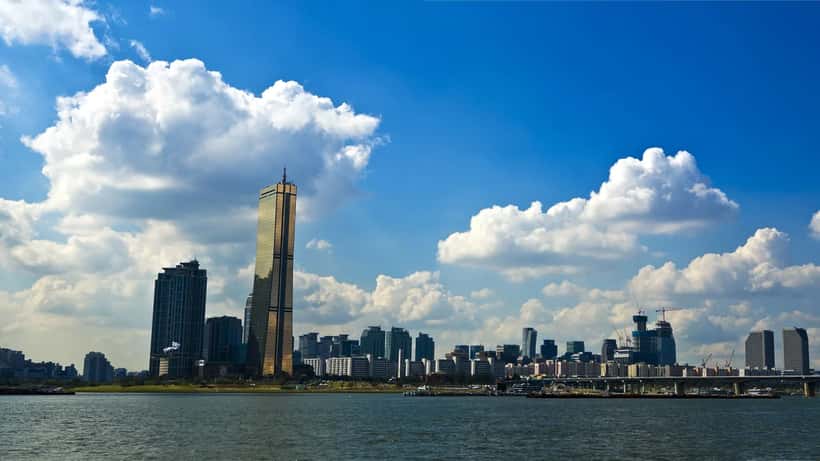
Seoul has just claimed the title of the world's favorite city for the fifth consecutive year, becoming the first destination ever to achieve that distinction according to Trazee Travel, the US-based travel media outlet whose annual rankings reach over 14 million American readers. Five straight years at the top of a field spanning more than 200 global cities is not a streak built on novelty — it reflects sustained infrastructure investment, a cultural export engine that has redefined global entertainment, and underlying economic momentum that US wealth managers are beginning to treat as a portfolio signal in 2026.
Seoul's Record Run: What Five Consecutive Years at #1 Actually Tells Us
South Korea's capital earned its latest title against a backdrop of high-profile public investment. The Seoul Metropolitan Government expanded its summer Hangang River program this season, operating six outdoor pools and water playgrounds with extended hours until 10 p.m. nightly while introducing DJ-led events at two riverfront locations — drawing what the city's tourism officials described as record-breaking summer crowds. BIGBANG, one of K-pop's most influential groups globally, returned to the stage for three consecutive nights at Goyang Stadium in August 2026, signaling that Seoul's live entertainment market has fully recovered from the disruptions of the early 2020s.
According to the Seoul Metropolitan Government's August 2026 official bulletin, the city's push into nighttime economy infrastructure was designed explicitly to make Seoul competitive as a year-round destination — not just a summer draw. That matters economically: cities that maintain visitor appeal across seasons generate more stable occupancy, retail, and transportation revenues, which flow through to publicly traded conglomerates with hospitality and consumer discretionary exposure.
For US travelers, the Seoul story is increasingly accessible. South Korea offers visa-free entry for US passport holders for stays of up to 90 days. Direct flights from New York, Los Angeles, Chicago, and Dallas operate year-round, and US arrivals to South Korea grew approximately 12% year-over-year in 2025, with 2026 data tracking ahead of that pace.
Why Travel Rankings Have Become a Portfolio Signal for 2026
Global destination rankings have historically functioned as a leading indicator for tourism-adjacent equity performance. When a city captures sustained, multi-year global attention — particularly sustained US traveler attention — it tends to precede capital investment cycles in hospitality, retail, infrastructure, and consumer discretionary sectors that all carry listed equity exposure.
South Korea's macroeconomic environment entering 2026 supported the case. GDP growth came in at approximately 3.1% annualized in Q1 2026, driven by semiconductor exports and a recovering domestic consumption cycle. The KOSPI, South Korea's benchmark stock index, rose approximately 14.2% in the first half of 2026, outpacing the S&P 500's roughly 8.5% return over the same period. The South Korean won (KRW) appreciated approximately 6% against the US dollar through August 2026, providing an additional currency tailwind for US investors holding unhedged Korean assets.
The most accessible entry point for US retail investors is the iShares MSCI South Korea ETF (EWY), which tracks large- and mid-cap South Korean equities. Samsung Electronics represents approximately 22% of the fund; SK Hynix (semiconductors), Hyundai Motor, and LG Energy Solution round out the top holdings. The fund's annual expense ratio is 0.59% — within the standard range for developed-market single-country ETFs — and its five-year annualized return through mid-2026 stands at approximately 9.3%. South Korean conglomerates with direct hospitality and retail exposure, including Lotte Corp and Shinsegae, have also benefited from the record tourist volumes, though they are less accessible to US retail investors outside of broader Asia-Pacific funds.
The 2026 South Korea Investment Dashboard
| Metric | 2026 Figure |
|---|---|
| KOSPI return (H1 2026) | +14.2% |
| S&P 500 return (H1 2026) | +8.5% |
| South Korea GDP growth (Q1 2026, annualized) | +3.1% |
| KRW/USD appreciation (Jan–Aug 2026) | +6.0% |
| EWY 5-year annualized return | ~9.3% |
| US arrivals to South Korea (2025 growth rate) | +12% YoY |
These headline numbers come with significant caveats. South Korea's geopolitical environment remains complex: North Korean military activity and the legacy of the domestic political turbulence in December 2024 have not resolved entirely. Currency gains that added 6% on the way up can subtract an equivalent amount if the dollar strengthens sharply in the second half of 2026. And for US investors, international fund holdings in taxable brokerage accounts carry specific IRS compliance risks under Passive Foreign Investment Company (PFIC) rules — a category most American investors do not encounter until they receive an unexpected penalty notice.
What a 5% South Korea Allocation Actually Looks Like: A 2026 Scenario
The following composite scenario is grounded in the 2026 return data above.
Taylor is a 46-year-old operations manager in Denver, Colorado, with a $320,000 investment portfolio currently split 83% US equities (S&P 500 index funds), 12% US bonds, and 5% cash. Taylor's financial planner has flagged a gap that the data supports: zero international exposure, despite broad guidance recommending 10–20% for investors with a 15-plus-year time horizon.
Taylor allocates 5% of the portfolio — $16,000 — to EWY at the start of 2026.
Scenario A — taxable brokerage account, no professional review:
Using H1 2026 return data (KOSPI +14.2%, KRW +6% versus USD), the unhedged USD total return on EWY through mid-August is approximately +20.2%. On a $16,000 position, that produces gains of roughly $3,232 in under eight months. Taylor's remaining $267,000 in US equities, at +8.5%, generates approximately $22,695. Total portfolio gain: approximately $25,927 — a blended return of about 8.1% on $320,000.
However, if EWY has a PFIC classification issue during Taylor's holding period, those $3,232 in gains held in a taxable account could be subject to an excess distribution tax regime rather than the long-term capital gains rate. If Taylor is in the 22% federal bracket, a PFIC misclassification on this position could trigger an additional $150–$400 in federal tax liability plus IRS interest charges — a 5–12% drag on the total gain from that one position.
Scenario B — same $16,000 in EWY, held inside a Roth IRA, PFIC status confirmed with a wealth manager:
The $3,232 in gains are entirely tax-sheltered. No Form 8621 filing obligation. No excess distribution recapture. The full return compounds tax-free. The difference between Scenario A and Scenario B is not the investment — it is a 90-minute conversation with a licensed wealth manager before making the allocation.
If/then summary: If you add South Korea ETF exposure in a taxable account without first reviewing PFIC status and account location with a professional, you may pay $150–$400 in avoidable taxes on gains of just over $3,000. If you make the same allocation inside a Roth IRA after a brief professional consultation, those gains are sheltered for life — and you have a framework for handling future international allocations consistently.
The broader portfolio math also illustrates a point wealth managers make routinely: single-year comparisons between US-only and internationally-diversified portfolios rarely decide the argument either way. The case for South Korea exposure is about volatility management and compound return over 10-plus years, not 2026 alone.
What to Ask a Wealth Manager Before Acting on the Seoul Signal
Seoul's five consecutive years at the top of global city rankings make it a natural entry point for a wealth management conversation in 2026. The investment fundamentals behind South Korea's rise — semiconductor leadership, cultural export revenues, recovering domestic consumption, and a tourism sector drawing record US visitor numbers — are real. But so are the risks. A licensed US wealth manager or fee-only financial planner can help you navigate the following questions before committing capital:
Currency risk: Does your proposed fund use currency hedging? If not, how does a stronger dollar in H2 2026 affect projected returns — and is your time horizon long enough to absorb a 6–10% currency reversal?
PFIC classification: Is EWY currently classified as a PFIC? Most large, US-listed ETFs are not, but classification can change, and smaller or newer South Korea-focused funds may carry higher risk.
Account location: Should South Korea exposure sit in a taxable account, a Roth IRA, or a traditional IRA? The answer depends on your marginal tax rate, contribution limits, and existing account balances.
Concentration in Samsung: Given that Samsung Electronics represents approximately 22% of EWY, are you comfortable with single-company concentration inside a fund you're treating as broad-market exposure?
Geopolitical risk threshold: At what point — North Korean provocation, KOSPI drawdown percentage, or political event — would you reduce or exit South Korea exposure, and how does that threshold align with your overall portfolio rebalancing strategy?
A fee-only US wealth manager typically charges $150–$350 for a 60-minute consultation focused on international allocation review. For a $16,000 position with potential PFIC implications and a multi-decade investment horizon, that cost is proportionally negligible — and far lower than the compounding cost of an improperly structured international allocation over 15 years.
Seoul has spent five years telling US travelers it deserves their attention. The investment case for South Korea in 2026 is making the same argument to a different audience.
Disclaimer: This article is for informational purposes only and does not constitute financial, investment, or tax advice. Consult a licensed financial advisor or certified public accountant before making investment decisions.
