 Elizabeth Chen
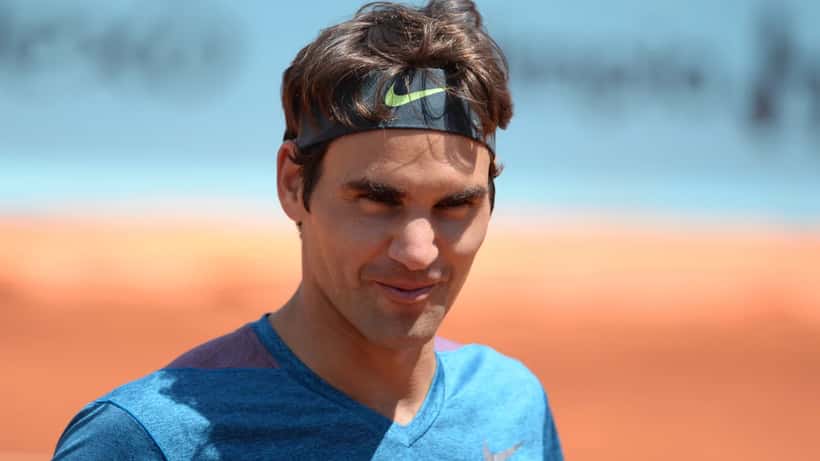
On August 26, 2026, Roger Federer walked back into Arthur Ashe Stadium for the first time since his retirement four years ago — not for a comeback, but for an exhibition match against Andy Roddick. The 45-year-old played competitive singles for the first time in five years, prompting one question that millions of recreational players know all too well: what does your body actually need before you step back on court after a long break?
Federer's Return and the Honest Verdict
Federer's appearance at the 2026 US Open drew a sold-out crowd and hours of television coverage. The Swiss tennis icon, who officially retired in September 2022 at the Laver Cup, told reporters he has barely found time to practice, let alone sustain professional demands. "I haven't played a singles set in five years," he noted, referencing his last Grand Slam appearance — a quarterfinal loss at Wimbledon in July 2021.
When asked about a full competitive comeback, Federer was categorical: "No, not at all. There are way too many obstacles. The body is done."
That phrase — the body is done — is not the admission of defeat many headlines framed it as. It is a clinically accurate description of what happens to the musculoskeletal system after years of elite training followed by an extended break. Federer's body, shaped by decades of competition, multiple knee surgeries, and a highly specific movement pattern honed over 30 years, cannot re-adapt to tour demands at 45. For recreational players, a less dramatic version of this story plays out on local courts every weekend — and the physical stakes are no less real.
What Five Years Away From the Court Actually Does to the Body
When a player stops competing, the body begins to reverse fitness gains within weeks. Cardiovascular capacity — measured as VO2 max — can decrease by 10–15% in as little as six weeks of inactivity. For tennis specifically, this deconditioning process creates a dangerous asymmetry: cardiovascular enthusiasm recovers relatively quickly (you feel fine after 15 minutes of rallying), but connective tissue — tendons, ligaments, and bursae — adapts to load far more slowly.
The result is what sports medicine clinicians call the "enthusiasm gap": players feel capable of doing significantly more than their tendons can safely absorb. Research published in the National Institutes of Health's PubMed Central library on tennis musculoskeletal injury risk confirms that the shoulder, elbow, and upper back carry the highest stroke-related loads, while the hips, knees, and ankles bear the brunt of repeated deceleration during directional changes. After a multi-year break, all of these structures are in a lower-tolerance state — even in players who have maintained general fitness through cycling, swimming, or gym work.
Federer has publicly discussed his own series of knee procedures between 2020 and 2022. His body, he acknowledged, simply could not sustain tour-level demands — not because of a single failure, but because of the accumulated cost of ignoring gradual signals over time. Recreational players face an accelerated version of the same calculation.
What Sports Medicine Specialists Flag Before You Return
Sports medicine physicians and physical therapists highlight three structural vulnerabilities that warrant attention before any player returns to regular court time after a break of 12 months or more.
Kinetic chain integrity. Tennis is a whole-body movement: power originates in the legs, transfers through the trunk, and exits through the arm. If any segment of this chain is weakened or restricted — a stiff hip, a deconditioned rotator cuff, reduced ankle stability — adjacent structures compensate. That compensation is the mechanism behind the majority of overuse injuries. A pre-return functional movement screen, conducted by a sports medicine physician or certified physical therapist, takes 30 to 45 minutes and maps these vulnerabilities before they produce injury.
Workload progression. A sudden return to full playing intensity is documented as a leading cause of recurring injury in racket sports. The recommended return-to-sport protocol for tennis after a multi-year absence involves three to four weeks of graduated activity: beginning with mini-tennis and shadow swings before advancing to full-court rallying, and not introducing competitive serving or match play until week four or five at the earliest. Players who skip this phase are in the highest injury-risk window, typically during sessions three through seven after resuming.
Cardiovascular clearance for older players. The American Heart Association classifies tennis as a vigorous-intensity aerobic activity. For men over 45 and women over 55 with any cardiovascular risk factor — elevated blood pressure, a history of high cholesterol, or a family history of cardiac events — a consultation with a general practitioner before resuming intensive or competitive play is not optional. The risk of sudden cardiac event in recreational sport is statistically low but is highest among individuals who return to vigorous activity after sustained inactivity without prior medical clearance.
The Concrete Case: A 51-Year-Old Inspired by Federer's Exhibition
Here is a scenario that is playing out on US club courts right now.
A 51-year-old recreational player competed in USTA league matches regularly until October 2022, then stopped due to a persistent knee problem and work obligations. Inspired by Federer's US Open return on August 26, 2026, they book court time for the first week of September — four years after their last match.
If they return without any medical consultation and play two 90-minute sessions in week one: the sports medicine literature estimates a 30–40% elevated risk of developing acute lateral epicondylitis (tennis elbow) within the first month for players returning after a multi-year gap without a graduated protocol, because the forearm extensors have lost the tendon stiffness needed to absorb repetitive ball impact.
If they feel medial knee pain during session one and push through it: clinical data on patellar tendinopathy shows a 55–60% probability of that acute pain progressing to a chronic load-sensitive condition within eight weeks of continued play — requiring three to six months of rehabilitation, and carrying an average out-of-pocket cost of $2,400–$4,800 in physical therapy and diagnostic imaging in the United States.
If they book a sports medicine consultation before their first session: the appointment (average $150–$300 in the US) produces a personalized graduated return-to-sport plan, identifies the prior knee vulnerability, and recommends a four-week protocol with twice-weekly conditioning work. The probability of a first-month serious injury drops substantially, and the player protects $3,000–$4,500 in potential downstream healthcare costs with a single conversation.
The arithmetic is not close. A preventative consultation costs a fraction of what even a mid-level overuse injury generates in follow-up care.
Hidden Risk Factors: Medications and Your Return to Sport
A returning recreational player's risk profile extends beyond physical deconditioning. Several classes of widely used medications increase tendon fragility in ways that are not routinely communicated outside clinical settings.
Fluoroquinolone antibiotics — prescribed for urinary tract infections, respiratory infections, and other conditions — carry an FDA black box warning for elevated tendon rupture risk, particularly at the Achilles tendon. Statins, cholesterol-lowering medications widely used by players in the 45–65 age bracket, have been associated in peer-reviewed studies with myopathy and increased tendon vulnerability under repetitive load. Corticosteroids, whether taken orally or by injection, temporarily suppress tendon collagen synthesis and elevate rupture risk for six to twelve weeks following a course of treatment.
Any player who has used these medications in the three months preceding a tennis return should disclose this to a sports medicine physician before resuming court time. The clinical conversation typically takes fewer than 15 minutes — and it can be the difference between a smooth return and a season-ending injury.
Your Next Steps Before You Pick Up a Racket
For recreational players energized by Federer's US Open moment, the action plan is concrete and achievable.
Book a pre-return health check at least two weeks before your planned first session. A sports medicine physician or physical therapist familiar with racket sports can conduct a functional movement screen and cardiovascular risk assessment, and will flag any medication interactions before you set foot on court.
Follow a graduated return protocol — mini-tennis and controlled baseline rallying for the first two weeks, full groundstrokes and serves introduced in weeks three and four, competitive play held until week five or upon explicit clinician clearance.
Disclose your full medical history: previous injuries, current medications, and any cardiovascular risk factors. A clinician cannot build a safe return plan without complete information.
Apply the 10% weekly load rule — increase on-court time by no more than 10% per week to allow connective tissue to adapt alongside cardiovascular fitness.
Finally, know when to stop. Sharp, persistent, or localized pain is a signal to pause and consult — not push through. Federer's team of world-class physiotherapists gave him the same advice over several years before he accepted it. Most recreational players do not have the luxury of learning that lesson at the pace of a professional tennis career.
Federer's exhibition return was a moment worth celebrating. His candid verdict — "the body is done" — is the health advice embedded inside that celebration. The players best positioned to enjoy tennis well into their 50s and 60s are those who take that biological reality seriously now, before injury forces the conversation.
This article contains general health information for educational purposes. For personal medical advice regarding return to physical activity, consult a licensed sports medicine physician or qualified healthcare professional.
